I've lately become quite a follower of the site Retronaut. It's collections of old materials about random things that bring you up short because, without a lot of explanation, you can see exactly how things were, and more often than not, how people expected them to be.
For instance, Tips for Single Women, 1938 includes such important dicta as "Don't sit in awkward positions" and "Don't be familiar with the headwaiter talking about the fun you had with someone else another time." Absolutely. These are definitely things I personally look for single women not to do, at least not regularly. The Invisible Mother is just... weird. Back in the 19th century, before iPhones had a built-in flash, you had to sit still for the photographer. If you wanted a baby picture, mother would cover herself up in a rug or something to hold the baby still. I guess a picture of mother and child would have been just too normal or something.
One recent post I liked was on Pepsi Ads, 1950s. It all looks like Mad Men dressed to the nines, except they're all grasping their bottles of Pepsi. You have to think that, at least in some of these cases, a nice glass of champagne might be more appropriate, or a martini or a Manhattan or whatever people drank back then when they were wearing evening gowns, but no, it's a bottle of Pepsi, as often as not without even a glass to drink it from. Some of them are less formal, though, as you scroll through, and they still look like creatures from Mars. The 1950s? How'd they ever make it to the 1960s? And no wonder everybody started wearing jeans and letting their hair grow: they just couldn't keep up all the work to look so damned formal all the time. But then again, there's probably similarly bizarre Pepsi ads for the 1960s somewhere.
This is a fun site, worth checking out.
.
Thursday, May 17, 2012
Wednesday, May 16, 2012
Woz
There's something charming about Steve Wozniak. He's so aggressively interested in technology and engineering, and seems as proud about solving the problem of cheap color on the Apple II as he does about starting the process that put a computer in virtually every home in the world. (That's Woz and his wife Janet on the left.) He's interviewed here by Australian reporter Chris Uhlmann (ABC is the Australian Broadcasting Corporation), who asks him pretty much every question you would ask him if you had the chance. Honestly, I wish there was more depth, but as a starter conversation, it's a winner.
[Via Apple Insider]
.
[Via Apple Insider]
.
Anne Boleyn
I love these articles that tell you all about someone who you previously knew some little thing about, and now you feel like you really do know the story. Like Henry VIII's second wife. We know she was number two, and that she was beheaded, because we know the names of Henry's wives in order, thus:
Divorced
Beheaded
Died
Divorced
Beheaded
Died
Those are the names, right?
Anyhow, why exactly did Henry marry Anne in the first place, did he really have to invent a new religion, and then why did he kill her? Honestly, I had only the vaguest idea. Having read Hilary Mantel's Anne Boleyn: witch, bitch, temptress, feminist, now I know.
I love the internet.
.
Biff will not be answering your questions directly
Comedian Tom Wilson, who will always be remembered by fans as the Back to the Future trilogy's Biff Tannen (and also Griff Tannen and Buford "Mad Dog" Tannen) has all the answers to your questions about the classic movies. In fact, he's written them on a card, so that he doesn't have to answer them live. Again. Included among them are such gems as, "There are many tiny plot points hidden in the movie, but I don't know what they are."
Here's the link to the card from Letters of Note's Twitter feed.
And here's a recent video. Funny guy!
[Via THR]
.
Here's the link to the card from Letters of Note's Twitter feed.
And here's a recent video. Funny guy!
[Via THR]
.
Eat your heart out, Elton (and every other over the top performer)
Liberace, born on this date in 1919, got there first. He invented it, polished it, and kept improving it. You knew if you were going to see Liberace, you'd see the outfits, you'd see the entrances, you'd see, in a word, a show. That's what Liberace was all about.
His piano playing wasn't a wow with the critics, but audiences loved him.
Vegas wasn't really the birthplace of the over-the-top performance. You'd have to go back to the old Ziegfeld days for that. But it was Liberace in Vegas that made it personal. Compare the Hendrix concert we posted a couple of days ago. Once upon a time serious rock was a reaction to all the Vegas-like hoopla. Nowadays most rock is nothing but Vegas-like hoopla. I will duck down under the desk for a minute after typing this, but who the hell goes to see Lady Gaga for the music?
If you dig into the Liberace persona, you'll find a real personal connection with his fans. Who doesn't wish that the Liberace Museum had stayed open? I'd visit it in a minute. When you go to Vegas nowadays you feel sort of empty knowing that it's not there anymore.
Happy Birthday, Lee. You made the world a more fun place.
.
His piano playing wasn't a wow with the critics, but audiences loved him.
Vegas wasn't really the birthplace of the over-the-top performance. You'd have to go back to the old Ziegfeld days for that. But it was Liberace in Vegas that made it personal. Compare the Hendrix concert we posted a couple of days ago. Once upon a time serious rock was a reaction to all the Vegas-like hoopla. Nowadays most rock is nothing but Vegas-like hoopla. I will duck down under the desk for a minute after typing this, but who the hell goes to see Lady Gaga for the music?
If you dig into the Liberace persona, you'll find a real personal connection with his fans. Who doesn't wish that the Liberace Museum had stayed open? I'd visit it in a minute. When you go to Vegas nowadays you feel sort of empty knowing that it's not there anymore.
Happy Birthday, Lee. You made the world a more fun place.
.
Tuesday, May 15, 2012
Stan the Man
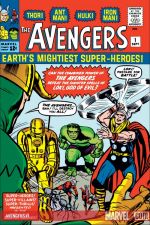
For whatever reason, the batch of Marvel movies made since Spider-Man have been, for the most part, pretty good. Not just successful, but basically good stuff. Sure, a few of them have been throwaways, and a few just didn't make it (Eric Bana's—and Ang Lee's!—Hulk was enough to keep me away from Edward Norton's Incredible Hulk, and I think Edward Norton walks on water, except there's no way Hulk is walking on any water, so you know I was totally Hulked out by the first flop), but most of them have been good, entertaining pop movies, the kind that insist you grab some popcorn and sit in a movie theater and go whole hog with them. The Avengers, something of a culmination of a whole bunch that came before, with the bonus of Joss Whedon at the helm (I'm still waiting for season 2 of Firefly), is one of the best of the bunch. For once even the Hulk works, although they do keep him under wraps most of the time. Smart idea. Smart movie, with Whedon the icing on the cake. How many billions is this thing going to make, anyhow? And how right was Disney to buy out this franchise?
Of course, the movies are a phenomenon that couldn't exist without the comics that established these characters. And those comics came out originally over a very short period, a sort of Golden Age when we went from zero to Hulk, Spidey, Fantastic 4, Thor, Iron Man and, every philosopher's favorite, the Silver Surfer, in sixty seconds. (Silver Surfer: Now there's a character who's gotten short shrift in the movies, if you ask me. The Fantastic 4 pictures are the least of the franchise, for some reason. Too bad. The Surfer deserved better.) And all of this had the thumbprints of good old Stan Lee.
What, exactly, did Lee do in creating these characters and these stories? Well, there's the rub. None of those comics exist without a little thing called the artists, most especially Jack Kirby. There's no question that over the years Marvel pushed its artists in their promotion, but when all was said and done, the artists were hired guns, literally work for hire as it's called. Which means that, whatever his contributions, Lee is still getting the credit. Everyone else? Find their names in the movie credits. It's reached a point where certain members of the comic community are boycotting the Marvel films. But as Alex Pappademas says in his article The Inquisition of Mr. Marvel, the world at large has taken these films to heart; they don't need the comics community anymore.
I liked Pappademas's article a lot. It gives the history, and it goes mano a mano with Lee today. It's one of the best I've read (Grantland has to be among the best sites out there), and given that we are now in an Avengers feeding frenzy, now is the time to read it.
'Nuff said.
.
Of course, the movies are a phenomenon that couldn't exist without the comics that established these characters. And those comics came out originally over a very short period, a sort of Golden Age when we went from zero to Hulk, Spidey, Fantastic 4, Thor, Iron Man and, every philosopher's favorite, the Silver Surfer, in sixty seconds. (Silver Surfer: Now there's a character who's gotten short shrift in the movies, if you ask me. The Fantastic 4 pictures are the least of the franchise, for some reason. Too bad. The Surfer deserved better.) And all of this had the thumbprints of good old Stan Lee.
What, exactly, did Lee do in creating these characters and these stories? Well, there's the rub. None of those comics exist without a little thing called the artists, most especially Jack Kirby. There's no question that over the years Marvel pushed its artists in their promotion, but when all was said and done, the artists were hired guns, literally work for hire as it's called. Which means that, whatever his contributions, Lee is still getting the credit. Everyone else? Find their names in the movie credits. It's reached a point where certain members of the comic community are boycotting the Marvel films. But as Alex Pappademas says in his article The Inquisition of Mr. Marvel, the world at large has taken these films to heart; they don't need the comics community anymore.
I liked Pappademas's article a lot. It gives the history, and it goes mano a mano with Lee today. It's one of the best I've read (Grantland has to be among the best sites out there), and given that we are now in an Avengers feeding frenzy, now is the time to read it.
'Nuff said.
.
Whatever happened to chess?
I remember the Fischer-Spassky games in the early '70s. This was the championship, American versus Russian, and the games were broadcast live on PBS as they happened. There was this local New York chess player, Shelby Lyman, who stood in front of a big chess board on the wall, and after every move, he'd comment and show alternate moves and whatnot. Which may sound like the most boring thing in the universe, but somehow, if you knew even just the tiniest bit about chess, it was fascinating. Chess, for a little while, was front page news. Chess books sold like crazy (and I bought a few and, as an editor, worked on a few), chess clubs saw their memberships grow, and in general, chess was cool, and everybody was doing it.
Not so much anymore.
There's two things going on, I think. First, there's the game itself, which has an awful lot of new competition from video games. There is just so much game time in the day, and today's kids simply have more to choose from. Not that many won't choose chess, but the competition is stiff. And second, there's the institutional aspects of the game, which seem to be in disarray. If you want to attract new players on the local level, you need star players on the national and international level, and at the moment, those stars aren't there.
But they may be coming. How America Forgot About Chess explains how we got to this state of inertia, and how a few young players on the scene today may be potential breakthroughs.
Chess will, unquestionably, survive its competition and its organizational disarray. Its roots go back 1500 years, and the game as we know it today is centuries old. And you don't have to upgrade whenever a new console is released. But will it ever be as popular as it was when it was a Fischer-Spassky analog to the Cold War? Probably not.
.
Not so much anymore.
There's two things going on, I think. First, there's the game itself, which has an awful lot of new competition from video games. There is just so much game time in the day, and today's kids simply have more to choose from. Not that many won't choose chess, but the competition is stiff. And second, there's the institutional aspects of the game, which seem to be in disarray. If you want to attract new players on the local level, you need star players on the national and international level, and at the moment, those stars aren't there.
But they may be coming. How America Forgot About Chess explains how we got to this state of inertia, and how a few young players on the scene today may be potential breakthroughs.
Chess will, unquestionably, survive its competition and its organizational disarray. Its roots go back 1500 years, and the game as we know it today is centuries old. And you don't have to upgrade whenever a new console is released. But will it ever be as popular as it was when it was a Fischer-Spassky analog to the Cold War? Probably not.
.
C. G. P. Grey
I have no idea who this person is. But then there's this:
That's just one video from the collection at Grey's Blog. Grey has a channel on YouTube you can follow, to watch these as they come out. Some of them seem rather timely (daylight saving's time explained, leap year, death to pennies), so catching them as they arrive could make you the local expert on whatever the subject is, provided you don't give away the source.
Napoleon wasn't short? Damn!
[Via Open Culture]
.
That's just one video from the collection at Grey's Blog. Grey has a channel on YouTube you can follow, to watch these as they come out. Some of them seem rather timely (daylight saving's time explained, leap year, death to pennies), so catching them as they arrive could make you the local expert on whatever the subject is, provided you don't give away the source.
Napoleon wasn't short? Damn!
[Via Open Culture]
.
Oz
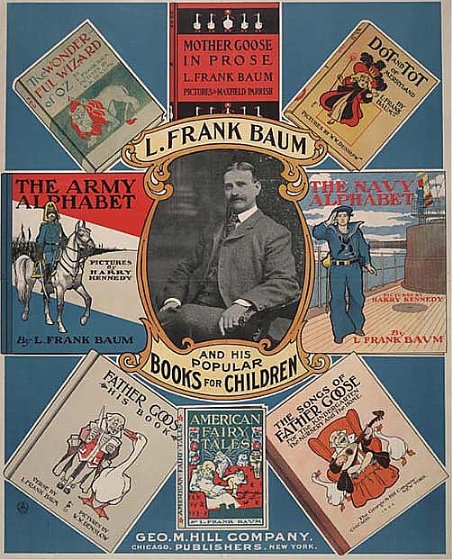
L. Frank Baum was born on this date in 1856. He attended the Peekskill Military Academy in Peekskill, NY, when he was 12. There is a small stretch of yellow brick down by the train station that those of use who live in the area like to believe was a particular inspiration to him, in that he was given directions to the school, on first getting off the train, to follow the yellow brick road. This story is, maybe, true. The idea that the word Oz comes from looking at a filing cabinet labeled O-Z may also be true. Maybe not.
What is true is that the book The Wonderful Wizard of Oz, published in 1900, was a big success. Baum followed it with 13 other Oz novels, as well as some Oz-like novels taking place in the surrounding territories, like Ev and Ix, and a warm-hearted biography The Life and Adventures of Santa Claus. But Oz was the big achievement.
You need to know a few things about Oz. It is not, as a certain movie would lead you to believe, an imaginary place, although it did cut itself off from communication with the rest of the world. In the original book, the Kansas part lasts about as long as it takes for the storm to brew, and then, whoosh, we’re not in Kansas anymore. For the first couple of stories, Baum has to transport Dorothy back and forth from Oz to Kansas, but eventually he moves her lock, stock and barrel to Oz permanently, along with her aunt and uncle. Much easier that way. And, of course, those shoes are silver, not ruby. And like the other animals in Oz, Toto can talk: he just usually chooses not to.
The Oz stories are wonderfully whimsical, with characters like the Woggle-Bug and the Patchwork Girl and Jack Pumpkinhead (who looks suspicially like Jack Skellington, if you ask me, but then again, any skinny guy with a round head is going to come out like that one way or the other). They are also filled with strong female characters who get things done, and don’t wait around to be rescued by princes of the charming persuasion. Baum himself had four sons; maybe he just longed for a daughter. Then again, he was a staunch feminist himself, and a strong supporter of women’s suffrage. It shows.
Oz survived Baum. The next set of novels were by Ruth Plumly Thompson, who stuck to the canon while adding some wonderful touches of her own. You can put her books beside Baum’s and give them to any kid just discovering chapter books, and you will have passed along a wonderful world of enchantment and fun (which, needless to say, had its share of librarians banning the books over the years, as they are wont to do, the reason being their lack of literary merit; so much for librarians). Other writers have taken a different tack from the canon, most notably Gregory Maguire’s recent series, begun with Wicked. He's not alone. Science fiction writers like Philip Jose Farmer and Robert A. Heinlein have also had a go at the place, and there are all sorts of television visits and comics and whatnot.
The best Oz remains the original, though. Even the Oz of MGM pales by comparison, even though it may be the most beloved movie ever. The thing about the real Oz is that it is almost endlessly rich, with all those Baum (and later Thompson) books. By the time you read them all, you can just go back and read them again. It’s a whole world, originally imagined by one man.
Baum died on May 6, 1919. Oz shows no sign of dying, ever.
.
What is true is that the book The Wonderful Wizard of Oz, published in 1900, was a big success. Baum followed it with 13 other Oz novels, as well as some Oz-like novels taking place in the surrounding territories, like Ev and Ix, and a warm-hearted biography The Life and Adventures of Santa Claus. But Oz was the big achievement.
You need to know a few things about Oz. It is not, as a certain movie would lead you to believe, an imaginary place, although it did cut itself off from communication with the rest of the world. In the original book, the Kansas part lasts about as long as it takes for the storm to brew, and then, whoosh, we’re not in Kansas anymore. For the first couple of stories, Baum has to transport Dorothy back and forth from Oz to Kansas, but eventually he moves her lock, stock and barrel to Oz permanently, along with her aunt and uncle. Much easier that way. And, of course, those shoes are silver, not ruby. And like the other animals in Oz, Toto can talk: he just usually chooses not to.
The Oz stories are wonderfully whimsical, with characters like the Woggle-Bug and the Patchwork Girl and Jack Pumpkinhead (who looks suspicially like Jack Skellington, if you ask me, but then again, any skinny guy with a round head is going to come out like that one way or the other). They are also filled with strong female characters who get things done, and don’t wait around to be rescued by princes of the charming persuasion. Baum himself had four sons; maybe he just longed for a daughter. Then again, he was a staunch feminist himself, and a strong supporter of women’s suffrage. It shows.
Oz survived Baum. The next set of novels were by Ruth Plumly Thompson, who stuck to the canon while adding some wonderful touches of her own. You can put her books beside Baum’s and give them to any kid just discovering chapter books, and you will have passed along a wonderful world of enchantment and fun (which, needless to say, had its share of librarians banning the books over the years, as they are wont to do, the reason being their lack of literary merit; so much for librarians). Other writers have taken a different tack from the canon, most notably Gregory Maguire’s recent series, begun with Wicked. He's not alone. Science fiction writers like Philip Jose Farmer and Robert A. Heinlein have also had a go at the place, and there are all sorts of television visits and comics and whatnot.
The best Oz remains the original, though. Even the Oz of MGM pales by comparison, even though it may be the most beloved movie ever. The thing about the real Oz is that it is almost endlessly rich, with all those Baum (and later Thompson) books. By the time you read them all, you can just go back and read them again. It’s a whole world, originally imagined by one man.
Baum died on May 6, 1919. Oz shows no sign of dying, ever.
.
Monday, May 14, 2012
Pure Hendrix
This may be the quintessential 60s concert. The band comes on and futzes around with their instruments for a while, and you wonder if they've ever heard of roadies. There's no (literal) fireworks, no changes of costume, no giant video screens. You get the feeling that the venue isn't particularly large (and you really wonder what they played for an encore, since they just sort of walked off and the emcee begrudgingly suggests that they'll do one more song but it's nine o'clock and time for—what?). The music isn't perfect. Drummer Mitch Mitchell just bangs away for an hour and you wonder if he'll pass out from exhaustion, and bassist Noel Redding could be playing along with anyone in the world other than, arguably, the greatest guitarist who ever lived.
And what about that greatest guitarist who ever lived? The music speaks for itself. But more important, watch the way he plays. Watch the way he treats his guitar (which, sadly, he never sets on fire, it not being that kind of a concert). It has been said that he makes love to the damned thing as he plays it, and I won't argue that.
Favorite fact: This band was once an opening act for the Monkees. In the Venn diagram of Monkees fans and Hendrix fans at the time, there was maybe one guy, and he was no doubt not entirely in full possession of all his senses. But according to Wikipedia, this may have just been a publicity stunt. That makes more sense than anything else. They only played together a few times. That was probably more than enough for the poor Monkees fans who were wondering what, exactly, they had bought into.
As I said, this isn't great. But it's amazingly real. And it is absolutely what concerts used to be in the early days.
Via Dangerous Minds
.
And what about that greatest guitarist who ever lived? The music speaks for itself. But more important, watch the way he plays. Watch the way he treats his guitar (which, sadly, he never sets on fire, it not being that kind of a concert). It has been said that he makes love to the damned thing as he plays it, and I won't argue that.
Favorite fact: This band was once an opening act for the Monkees. In the Venn diagram of Monkees fans and Hendrix fans at the time, there was maybe one guy, and he was no doubt not entirely in full possession of all his senses. But according to Wikipedia, this may have just been a publicity stunt. That makes more sense than anything else. They only played together a few times. That was probably more than enough for the poor Monkees fans who were wondering what, exactly, they had bought into.
As I said, this isn't great. But it's amazingly real. And it is absolutely what concerts used to be in the early days.
Via Dangerous Minds
.
Horror movies
The best age to enjoy horror movies may be the middle school years. Maybe I'm just extrapolating from my own experience, but that's an age where this material is both new and unexpected. There is an amazing number of ways to dispatch living beings from their livingness, and preadolescents can relish each and every one of them in much the same way as they can relish all the other somewhat forbidden treats of adulthood. Of course, it turns out that adulthood does not consist of one dispatched human being after another (or at least my adulthood hasn't), but you don't know that then.
There are plenty of ways to get horror into one's diet, but none better than through the movies. Horror wasn't the first thing to get filmed, but it did come up now and then in the early years. Originally it was non-American filmmakers who did the best work. Then there was Lon Chaney and the short-lived series of Universal classic talkies, and the US was in the race. Other countries, especially Italy and Japan, I think, still do it better than we do, or at least seem to have more of a taste for it, but that may just be from my own limited experience of the genre lately. After I exited those middle school years, it wasn't that I didn't watch horror anymore, but it wasn't one of my favorite genres. I literally never saw all those popular slasher pictures, for instance; I could imagine them, and that was enough. (Except, of course, for Psycho, the movie that opened the Americanbloodgates floodgates, but then again, Hitchcock is Hitchcock and everyone else isn't; even once in a while Hitchcock isn't, burt he comes closer than most.) My vicarious thrills were more likely to come from science fiction; Star Wars was released in 1977, to Halloween's 1978. Put me in an X-wing fighter over a haunted house any day of the week.
If you have a taste for horror, or at least want to know more about it, Fandor's Primer: Horror is an excellent guide to the genre, going back to day one. You could easily use it to create a must-see list, if you must see some horror. And if you happen to be a middle schooler, you can start cataloguing methods of dispatching your fellow human beings; after all, it's never to early to learn a useful trade.
.
There are plenty of ways to get horror into one's diet, but none better than through the movies. Horror wasn't the first thing to get filmed, but it did come up now and then in the early years. Originally it was non-American filmmakers who did the best work. Then there was Lon Chaney and the short-lived series of Universal classic talkies, and the US was in the race. Other countries, especially Italy and Japan, I think, still do it better than we do, or at least seem to have more of a taste for it, but that may just be from my own limited experience of the genre lately. After I exited those middle school years, it wasn't that I didn't watch horror anymore, but it wasn't one of my favorite genres. I literally never saw all those popular slasher pictures, for instance; I could imagine them, and that was enough. (Except, of course, for Psycho, the movie that opened the American
If you have a taste for horror, or at least want to know more about it, Fandor's Primer: Horror is an excellent guide to the genre, going back to day one. You could easily use it to create a must-see list, if you must see some horror. And if you happen to be a middle schooler, you can start cataloguing methods of dispatching your fellow human beings; after all, it's never to early to learn a useful trade.
.
Glenn Frey goes all cabaret on us
Let's take a look:
Can I have the next dance?
All right, I admit it. I expected little, and was pleasantly surprised. The Eagles were never on my must-listen list; I didn't dislike them, but they didn't move the needle for me (although I have a real fondness for "Smuggler's Blues"). Not that I'd call this a needle-mover, but it's awfully good. A lot of rockers (does the name Rod Stewart ring a bell?) go into the classic American songbook and just sort of plop down and go nowhere with it. It's almost as if they've run out of their own music, and in order to keep the electricity bill paid back in the homestead, they decided they'll bring this gold down to from the hills to the rubes who've never heard it before. I pity the rubes. Some folks, though, approach it with an innate understanding, and do a fine job with it. Frey is doing that kind of fine job.
Frey talks about his music and the new album on Speakeasy, Glenn Frey Loves Classic Pop, Hates Frank Ocean’s ‘American Wedding’. There's also a clip of "Route 66" to listen to.
I'm definitely acquiring this album.
.
Can I have the next dance?
All right, I admit it. I expected little, and was pleasantly surprised. The Eagles were never on my must-listen list; I didn't dislike them, but they didn't move the needle for me (although I have a real fondness for "Smuggler's Blues"). Not that I'd call this a needle-mover, but it's awfully good. A lot of rockers (does the name Rod Stewart ring a bell?) go into the classic American songbook and just sort of plop down and go nowhere with it. It's almost as if they've run out of their own music, and in order to keep the electricity bill paid back in the homestead, they decided they'll bring this gold down to from the hills to the rubes who've never heard it before. I pity the rubes. Some folks, though, approach it with an innate understanding, and do a fine job with it. Frey is doing that kind of fine job.
Frey talks about his music and the new album on Speakeasy, Glenn Frey Loves Classic Pop, Hates Frank Ocean’s ‘American Wedding’. There's also a clip of "Route 66" to listen to.
I'm definitely acquiring this album.
.
Eno on music and the arts
Brian Eno is really smart. He's obviously also a really good musician, having worked with just about everybody you can think of in the last few decades. But he's also a thinker. In this lecture he puts recorded music into its place in musical history, and he weaves a great narrative about recorded music and producers (like himself) and players. Then he goes into painting (he has an art training background), explaining abstract painting, for instance. It takes time to get started, and the introduction is in Russian, but once Eno comes on, you'll be in for the long haul: Brian Eno lecture on music and art
Here's a little Eno to get you in the mood:
.
Here's a little Eno to get you in the mood:
.
Friday, May 11, 2012
In defense of Superman
It isn't easy being Superman. You're virtually indestructible, you always have to do the right thing, and you're not even human. Once upon a time, it was easy to keep up with Kal-El; there was one story line that had had a beginning with the Kents and worked its way up to the comic you were holding in your hand. Then things went all over the map, and I can't remember anymore if Clark and Lois are married, or maybe it's Superman and Lois that are married. Or is it Clark and Superman? Whatever. In any case, the issue of the invulnerable hero still remains.
Thom Dunn takes this on in Superman: Stuffy Boy Scout, or Charming Folk Hero? Why, exactly, do we take this character so to heart?
Superman might represent an impossible ideal for us to live up to — but maybe that’s just what we need him to do. We don’t empathize with Superman, the way we often do with the heroes in our stories. Instead, we aspire to be him. Like John Henry, Superman stands up to the Machine, both so we don’t have to, and more importantly, so that we believe we can.
This is fun and smart. Superman is our longest-lived new god. How can you not wonder why?
.
Thom Dunn takes this on in Superman: Stuffy Boy Scout, or Charming Folk Hero? Why, exactly, do we take this character so to heart?
Superman might represent an impossible ideal for us to live up to — but maybe that’s just what we need him to do. We don’t empathize with Superman, the way we often do with the heroes in our stories. Instead, we aspire to be him. Like John Henry, Superman stands up to the Machine, both so we don’t have to, and more importantly, so that we believe we can.
This is fun and smart. Superman is our longest-lived new god. How can you not wonder why?
.
Freemasons: The original geeks
The building of cathedrals, for a while, was the epitome of tech. We can look at some of the old classics today and still have our breath taken away by the scope and spiritual majesty of these buildings. But they weren't easy to build, and only a handful of people knew how. Cathedrals were built by the Church, but not by local members of the religion. The Church had to find the people who had the knowledge, the ones who called themselves the free masons, to do the job. And the free masons, recognizing in one another kindred spirits, started hanging out together to share ideas and skills.
But then something happened that changed Masonry completely, and (I believe) did eventually turn it into an occult conspiracy. Upper–class men who weren’t trained masons wanted to join Scotland’s Masonic lodges. They were refused at first, but were later accepted under the provision that they paid double the dues of working masons... This new membership policy gradually detached Masonry from its engineering roots, and within a couple of generations, more Masons were wealthy gentlemen than actual builders.
That's from Flashback: Masonic Conspiracy Revealed! a really good article on a) cathedrals and b) secret societies.
.
In which we step back and wonder
Hmmmm.
I’m up in the air about handling the other blog. Our story so far: I wanted to do a blog for the DJ, and eventually did, reaching the point of averaging 4 posts a day. Then they cut it, and I went cold turkey, but I was so obsessed by it that I brought it back under my own (well, Grinwout’s) auspices. Now the DJ is relaunching blogs as I had originally suggested, with all editors contributing, but something tells me that they won’t all be doing 4 a day. They asked me for 1 a week. Whatever.
I see those DJ posts as being more chatty and less aggregation-ish, but they’re very beta at the moment so nobody really knows. I know I went chatty on my first tries. But then again, I’m a chatty guy (on paper; in person, you’re unlikely to get a word out of me).
This leaves me with this blog and the Grinwout’s blog. I tweet Grinwout’s automatically, and otherwise hardly ever look at Twitter, even though I regularly tell myself I have to. I’ve got too many Twitter accounts, I think. That could be the problem.
I also have Grinwout’s as a separate Facebook page. I did this because, well, everything nowadays has a separate Facebook page, but the fact that blog posts don’t automatically replicate to FB anymore means that all the G’s fb content has to be manually entered.
In other words, I’ve got a lot of accounts that require way more maintenance than I really want to do. What I want to do is write about debate, life in general and the arts. I can do the former here, the latter on Grinwout’s, and the middler on both, depending. I’ll probably change things around a bit over the next few days. I’ve got to organize my brain around keeping some content for the DJ separate from Grinwout’s, for one thing (although I may try it out on Grinwout’s first, with a different approach). I don’t really want to merge everything into one blog; I tried that with the Coachean Feed and found that it just diluted the pool. I may rethink what I’m doing on Facebook, though. I may put the G’s page aside for a while and promote Grinwout’s directly on my own page. It’s not like I post much else there, and everybody in the universe does seem to use fb every two minutes.
Interesting times.
I’m up in the air about handling the other blog. Our story so far: I wanted to do a blog for the DJ, and eventually did, reaching the point of averaging 4 posts a day. Then they cut it, and I went cold turkey, but I was so obsessed by it that I brought it back under my own (well, Grinwout’s) auspices. Now the DJ is relaunching blogs as I had originally suggested, with all editors contributing, but something tells me that they won’t all be doing 4 a day. They asked me for 1 a week. Whatever.
I see those DJ posts as being more chatty and less aggregation-ish, but they’re very beta at the moment so nobody really knows. I know I went chatty on my first tries. But then again, I’m a chatty guy (on paper; in person, you’re unlikely to get a word out of me).
This leaves me with this blog and the Grinwout’s blog. I tweet Grinwout’s automatically, and otherwise hardly ever look at Twitter, even though I regularly tell myself I have to. I’ve got too many Twitter accounts, I think. That could be the problem.
I also have Grinwout’s as a separate Facebook page. I did this because, well, everything nowadays has a separate Facebook page, but the fact that blog posts don’t automatically replicate to FB anymore means that all the G’s fb content has to be manually entered.
In other words, I’ve got a lot of accounts that require way more maintenance than I really want to do. What I want to do is write about debate, life in general and the arts. I can do the former here, the latter on Grinwout’s, and the middler on both, depending. I’ll probably change things around a bit over the next few days. I’ve got to organize my brain around keeping some content for the DJ separate from Grinwout’s, for one thing (although I may try it out on Grinwout’s first, with a different approach). I don’t really want to merge everything into one blog; I tried that with the Coachean Feed and found that it just diluted the pool. I may rethink what I’m doing on Facebook, though. I may put the G’s page aside for a while and promote Grinwout’s directly on my own page. It’s not like I post much else there, and everybody in the universe does seem to use fb every two minutes.
Interesting times.
Dali
Take a look at that Carl Van Vechten photo of the artist as a young man. Devilish? You betcha.
Salvador Dali was born on May 11, 1904, and was active in all sorts of media, including the movie Un Chien Andalou with the ants and the eye (if you haven't seen it, and you're a movie fan, you have no choice but to go to YouTube and watch it now—we'll wait here for you), and the short for Disney, Destino, only recently completed and released. His most famous painting is "The Persistence of Memory," and some of his best work was for an illustrated Bible. But his masterpiece, without doubt, was his creation of Salvador Dali. He was born at the perfect time to capitalize on the nascent mass media of the 20th Century, and his fame, much of which was based (surrealistically) on his fame, put Andy Warhol to shame by that particular standard. Dali was one of the founding fathers of modernism and postmodernism both, and knew what he was doing every step of the way.
There's a fun little interview on Open Culture, with some further links if you want to dig deeper in general. Since Grinwout's is an acknowledged fan of World's Fairs, we'll just note that his sojourn in New York (around the time the photo above was taken) was well publicized, to put it mildly. He took the city by storm, above and beyond what he did at the fair. I'm not sure what fair promoters were expecting from Dream of Venus, but this is what they got. Racy? Well, the '39 Fair was racy, in its way. (Look it up, if you don't believe me.)
Dali left behind some remarkable art. We can probably now evaluate the work aside from the man, but since we have the man around if we want (thank God for film!), I don't know if we really should.
.
Salvador Dali was born on May 11, 1904, and was active in all sorts of media, including the movie Un Chien Andalou with the ants and the eye (if you haven't seen it, and you're a movie fan, you have no choice but to go to YouTube and watch it now—we'll wait here for you), and the short for Disney, Destino, only recently completed and released. His most famous painting is "The Persistence of Memory," and some of his best work was for an illustrated Bible. But his masterpiece, without doubt, was his creation of Salvador Dali. He was born at the perfect time to capitalize on the nascent mass media of the 20th Century, and his fame, much of which was based (surrealistically) on his fame, put Andy Warhol to shame by that particular standard. Dali was one of the founding fathers of modernism and postmodernism both, and knew what he was doing every step of the way.
There's a fun little interview on Open Culture, with some further links if you want to dig deeper in general. Since Grinwout's is an acknowledged fan of World's Fairs, we'll just note that his sojourn in New York (around the time the photo above was taken) was well publicized, to put it mildly. He took the city by storm, above and beyond what he did at the fair. I'm not sure what fair promoters were expecting from Dream of Venus, but this is what they got. Racy? Well, the '39 Fair was racy, in its way. (Look it up, if you don't believe me.)
Dali left behind some remarkable art. We can probably now evaluate the work aside from the man, but since we have the man around if we want (thank God for film!), I don't know if we really should.
.
Thursday, May 10, 2012
Fan fiction
So I'm reading this article about fan fiction, and they reference fanfiction.net, and I go there, and, well, there's a lot of fan fiction out there. Let me put it this way: if someone wrote something that got published, ever, regardless of how popular, then somebody else has probably added on to it. Plays, movies, TV, you name it. Some you could imagine would inevitably happen, for instance, 28,283 Star Wars pieces. But 26 for Fiddler on the Roof? 424 for The Good Wife? (But only 30 for The Andy Griffith Show? What's wrong with these Mayberry fans?)
All this bumbling around in make-believe venues can't be good.
But, apparently, it is. These folks, mostly young, presumably, are creating what are called paracosms, and in doing so, are setting themselves up nicely for a rich and productive adult life. This is from Wired:
Paracosms are the fantasy worlds that many dreamy, imaginative kids like to invent when they’re young. Some of history’s most creative adults had engaged in “worldplay” as children. ... MacArthur fellows were twice as likely as “normal” nongeniuses to have done so. Some fields were particularly rife with worldplayers: Fully 46 percent of the recipients polled in the social sciences had created paracosms in their youth.
A full and rich life of the imagination would seem to be a good thing. Read the article, Clive Thompson on the Importance of Fan Fiction, then explore a bit on the fan fiction website. You'll be surprised at what you see. And I'll bet you anything you read a bunch of them.
And maybe you'll even write one!
.
All this bumbling around in make-believe venues can't be good.
But, apparently, it is. These folks, mostly young, presumably, are creating what are called paracosms, and in doing so, are setting themselves up nicely for a rich and productive adult life. This is from Wired:
Paracosms are the fantasy worlds that many dreamy, imaginative kids like to invent when they’re young. Some of history’s most creative adults had engaged in “worldplay” as children. ... MacArthur fellows were twice as likely as “normal” nongeniuses to have done so. Some fields were particularly rife with worldplayers: Fully 46 percent of the recipients polled in the social sciences had created paracosms in their youth.
A full and rich life of the imagination would seem to be a good thing. Read the article, Clive Thompson on the Importance of Fan Fiction, then explore a bit on the fan fiction website. You'll be surprised at what you see. And I'll bet you anything you read a bunch of them.
And maybe you'll even write one!
.
Bean Trivia
It was a veritable bloodbath.
Turnout was about average; no alums or passers-by, but the usual suspects in spades. Getting off to my usual good start, I forgot to bring the beans with me, but we’ve overcome this beginner’s error in the past and we did it again by keeping track on the board. I did this to begin with; in apparent disgust with my efforts, Meh took over the bean counting halfway through. You can’t please everybody.
I had hoped for an answer like the classic one about Muppets, “Hermit the Crab,” but only came close once. For reasons obvious to anyone who has ever seen Spons at a computer, I put her in charge of the computer, and when attempting to google which president went on to become chief justice, she somehow managed to come up with the answer “Chris Palmer.” I don’t know if I was more surprised that CP was a chief justice or a former president, but I had to mark the answer as incorrect. If there is evidence to the contrary, I’m willing to reconsider.
The lifelines of daughter and O’C proved lively and productive, although I did occasionally steer people away from asking questions about things I knew they would know nothing about. Between the two of them, this is a small area, but it does exist. Then again, it was not a competition between the two of them, even if O’C did keep texting that he was getting asked more questions than she was. I mean, really. She gave four answers to who was the princess of Oz; he never gave more than one answer to anything. What a piker.
When we tried to eliminate down to the lightning round, we ended up eliminating no one, but that was okay. Eliminations went fast, since every now and then someone knew an answer, which is unusual. Crappy prizes flew by, including Portuguese Reader’s Digests and a fine selection of DVD made-for-French-TV movies. Then we got into the big prizes. Third was a box with a piece of Styrofoam promoting some dumb TV show on Fox (is that redundant?). Second was a giant orange Styrofoam thumbs-up; there was obviously a Styrofoam theme to the night. And then there was the first prize: an unclaimed overnight bag from Bump, with no i.d. of course, but with clean underwear. This is the sort of treasure that any Sailor will hold close to heart for a lifetime. It also provides an answer to the question of what to do with unclaimed Lost & Found items from Bump. Our experience is that no one ever finds anything that gets lost, and no one ever lost anything that gets found: these concepts do not seem to travel the same tracks, and make Schrodinger’s cat look positively decisive.
And so another season ended (except for Panivore Junior’s CatNat entry at the end of the month). Excelsior!
Turnout was about average; no alums or passers-by, but the usual suspects in spades. Getting off to my usual good start, I forgot to bring the beans with me, but we’ve overcome this beginner’s error in the past and we did it again by keeping track on the board. I did this to begin with; in apparent disgust with my efforts, Meh took over the bean counting halfway through. You can’t please everybody.
I had hoped for an answer like the classic one about Muppets, “Hermit the Crab,” but only came close once. For reasons obvious to anyone who has ever seen Spons at a computer, I put her in charge of the computer, and when attempting to google which president went on to become chief justice, she somehow managed to come up with the answer “Chris Palmer.” I don’t know if I was more surprised that CP was a chief justice or a former president, but I had to mark the answer as incorrect. If there is evidence to the contrary, I’m willing to reconsider.
The lifelines of daughter and O’C proved lively and productive, although I did occasionally steer people away from asking questions about things I knew they would know nothing about. Between the two of them, this is a small area, but it does exist. Then again, it was not a competition between the two of them, even if O’C did keep texting that he was getting asked more questions than she was. I mean, really. She gave four answers to who was the princess of Oz; he never gave more than one answer to anything. What a piker.
When we tried to eliminate down to the lightning round, we ended up eliminating no one, but that was okay. Eliminations went fast, since every now and then someone knew an answer, which is unusual. Crappy prizes flew by, including Portuguese Reader’s Digests and a fine selection of DVD made-for-French-TV movies. Then we got into the big prizes. Third was a box with a piece of Styrofoam promoting some dumb TV show on Fox (is that redundant?). Second was a giant orange Styrofoam thumbs-up; there was obviously a Styrofoam theme to the night. And then there was the first prize: an unclaimed overnight bag from Bump, with no i.d. of course, but with clean underwear. This is the sort of treasure that any Sailor will hold close to heart for a lifetime. It also provides an answer to the question of what to do with unclaimed Lost & Found items from Bump. Our experience is that no one ever finds anything that gets lost, and no one ever lost anything that gets found: these concepts do not seem to travel the same tracks, and make Schrodinger’s cat look positively decisive.
And so another season ended (except for Panivore Junior’s CatNat entry at the end of the month). Excelsior!
Frederick Austerlitz
He was born May 10, 1899. Was a kid in a brother-sister act in vaudeville, and broke big in the theater. Rumor has it that Adele was the real star of the act, and he almost quit after she quit the act to get married.
Introducing Fred to the movies: It's hard to believe he didn't immediately pack up and leave Hollywood after this, his film debut, but fortunately for us, he stuck it out. Key thing: look at how his head is held up at all times, and how she keeps looking at either his feet or her feet. That's not acting; that's being Joan Crawford in a dance number with Fred Astaire.
His best partner? Some say it was the one with whom he made it to the top:
But, obviously, this was his best partner, if you're just talking about dancing skill:
If you go to 2:34 in this clip, you'll see one of the last times he ever danced on film. Watch it without a tear in your eye, if you can. Coppola knew how to frame an exit. (Fred did do a little more hoofing in That's Entertainment Part 2, but it wasn't quite the same. It was sort of fun, though.)
We can say, with complete certainty, that there will never again be anyone like Fred Astaire. The world in which he could arise is long gone. No one will ever dance that way again. No one could. Thank God for movies, and the fact that we can still watch him whenever we want.
.
Introducing Fred to the movies: It's hard to believe he didn't immediately pack up and leave Hollywood after this, his film debut, but fortunately for us, he stuck it out. Key thing: look at how his head is held up at all times, and how she keeps looking at either his feet or her feet. That's not acting; that's being Joan Crawford in a dance number with Fred Astaire.
His best partner? Some say it was the one with whom he made it to the top:
But, obviously, this was his best partner, if you're just talking about dancing skill:
If you go to 2:34 in this clip, you'll see one of the last times he ever danced on film. Watch it without a tear in your eye, if you can. Coppola knew how to frame an exit. (Fred did do a little more hoofing in That's Entertainment Part 2, but it wasn't quite the same. It was sort of fun, though.)
We can say, with complete certainty, that there will never again be anyone like Fred Astaire. The world in which he could arise is long gone. No one will ever dance that way again. No one could. Thank God for movies, and the fact that we can still watch him whenever we want.
.
Wednesday, May 09, 2012
Dick Tracy E-ticket attraction at Disney MGM Studios
Dick Tracy was going to be big. The Disney studio was going all in on this one, with star upon star in the cast, and a very hot Warren Beatty at the director's helm (and in the bright yellow trench coat of the lead character). It was a unique film, if you've ever happened to see it, especially visually. It was all about color, despite the fact that it's harder to imagine a more b&w bland character than the comic strip Dick Tracy. Whatever. One thing I always loved about the strip was the character names: B.O. Plenty, Sparkle Plenty, Pruneface, Flattop. The Sunday strips had a little box at the top designed as a couple of inch square looseleaf page called the Crimestopper's Textbook, with advice for being safe one way or the other. When I was a kid I was stymied by the idea of people actually cutting these things out and trying to make a book out of them. The fact that they were godawful dull, even to a kid, may have played into my interest. The fact that the resulting book would be beyond bizarre was also why I was so entranced by it.
Even though the Dick Tracy franchise was hardly a blockbuster in 1990, Disney expected this film to be big. BIG! It was going to be their blockbuster, and they poured a lot of money into it (which Disney exec Jeffrey Katzenberg famously, publicly, regretted). Before it all went down the tubes, the company saw that what was on the screen could also be on the ground, and began planning to bring Tracy into the parks, specifically at what was then Disney MGM Studios.
The 1990's press release was saying that " Guests will literally get "into the act" in this new high-tech action-adventure featuring the very latest in Audio-Animatronics, simulation, sound and special effects." And also: "Guests will join America's favorite comic-strip detective in a high-speed chase with his gangster adversaries."
That's from the Disney and More blog. They've got the whole story, and some luscious artwork. It definitely looks like an E-ticket attraction. Unfortunately, the movie's failure at the box office meant that it never got built, and we won't have to worry about running right to it at the rope drop next time we're down there.
Too bad. It looks like it would have been a good one.
.
Even though the Dick Tracy franchise was hardly a blockbuster in 1990, Disney expected this film to be big. BIG! It was going to be their blockbuster, and they poured a lot of money into it (which Disney exec Jeffrey Katzenberg famously, publicly, regretted). Before it all went down the tubes, the company saw that what was on the screen could also be on the ground, and began planning to bring Tracy into the parks, specifically at what was then Disney MGM Studios.
The 1990's press release was saying that " Guests will literally get "into the act" in this new high-tech action-adventure featuring the very latest in Audio-Animatronics, simulation, sound and special effects." And also: "Guests will join America's favorite comic-strip detective in a high-speed chase with his gangster adversaries."
That's from the Disney and More blog. They've got the whole story, and some luscious artwork. It definitely looks like an E-ticket attraction. Unfortunately, the movie's failure at the box office meant that it never got built, and we won't have to worry about running right to it at the rope drop next time we're down there.
Too bad. It looks like it would have been a good one.
.
Why they invented the interwebs
One thing that has been true about the internet since the day Al Gore invented it is that it can provide a home for the narrowest of narrowcasting. The history of popular culture in the 20th Century was the development of the mass market. Radio, movies, television, books. Each one came along and, through the development of an appropriate mainstream media mechanism, found the largest possible audiences. A movie or television show wasn't a hit because a lot of people saw it; it was a hit because just about everyone saw it. Mainstream media did, indeed, become the monster (and often the idiot) many people think of it as.
The internet and attendant technologies changed that, putting the means of production into the hands of just about anyone. If you wanted to make a good-looking TV show in 1970, you had to be NBC or CBS. To do it today, you need a couple of hundred bucks and an email account. At the most base level, the web page, the internet has been available to anyone who wanted to be on it from day one, at virtually no cost whatsoever. Everyman publishing communities were one of the first thing to pop on on the internet. Suddenly anyone could have a website about anything. For collectors, for enthusiasts, for people really interested in something that not too many other people were interested in, this was the paradigm shift. Factor in searching, and there you were. If you were interested in hunting for killer owls in the Antarctic, you could put in a search for "hunting for killer owls in the Antarctic" and a second later you were connected to huntingforkillerowlsintheantarctic.com, where like-minded owl seekers were already posting photos of their latest darkly feathered trophy. Absolutely nothing was so small that not only could a website be built around it, but a community could develop around that website.
There's been no turning back.
Today, which is turning out to be an all-Disney day here at Grinwout's, we have discovered what has to be the narrowest subject matter to yet hit the interwebs. It is a site called DSR - Disneyland's Secret Restroom, devoted to one very special (?) restroom in the Happiest Place on Earth.
This website is a loving tribute to the Secret Restroom, filled with photographs, comments, details, and even secrets about the secrets! We hope you'll enjoy it, and that you'll share your photos and remembrances with us.
Oh, yeah. The Disney fans are lining up (so to speak). The site has pages devoted to the door, the mirror, the towels, the vent—everything you could want to know about the DSR, lovingly presented as only the internet can. Sure, there are sites on the Haunted Mansion and POTC, but those are so...broad. So popular. So obvious. Everyone knows that the real Disney fan's interest lies elsewhere. Disneyland's Secret Restroom: check it out. (If you're going to be there for a while, bring a magazine in with you.)
[Via BoingBoing]
.
The crappy prizes will flow like water
I’m thinking that, maybe, I might start blogging for the DJ again. I’ll at least be doing book reviews (there’s a no-brainer for you); more than that, it’s hard to say. Having sort of invented the category for them, then gotten bumped without notice, then gotten thrown into a random group of other editors, I’m not terribly hopeful, but at the same time, I strongly believe that our brand can do some serious good stuff on the interwebs that we’re just not doing.
I just wasn’t made for these times. It may require reworking of the new sister site. We’ll see.
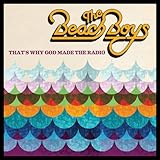
Speaking of which, I was really taken by that clip of the Beach Boys on Grinwout’s. Previously I was thinking that at best we were talking just another oldies act, but that new song is really good. Can they pull off a whole album like that? We’ll know next month. I’ve been following Brian’s solo career, which has been, in a word, mixed. Sometimes aggressively overproduced misses, sometimes one of my favorite albums ever (“Orange Crate Art”): you never knew what to expect. The jury is still out on the Gershwin album and the Disney album. Interesting choices, though. Anyhow, as a group, the band looks awfully well fed (those royalties must be still coming in), and somebody needs to tell Mike Love that we know he’s lost a hair or two and it’s okay and we’ve known it since 1971, but they sounded incredible. Then again, does anyone look unhappier on stage than Brian Wilson? I’ve seen proctology patients with bigger smiles. (I hope that last sentence doesn’t come across the wrong way.)
Finally, tonight, the Bean Trivialists will get their due. The daughter and O’C are poised to provide their lifelines (I can’t imagine that they’d miss any of these). There’s also a new lifeline, the Spons Google Catastrophe. Can our speech coach Google the answer on the top page of the iPhone? Her computer skills are, uh, well, I’ve seen proctology patients with bigger smiles, so this should be interesting. She’ll be doing it on my iPhone. Of course, she doesn’t know this yet…
I just wasn’t made for these times. It may require reworking of the new sister site. We’ll see.
Speaking of which, I was really taken by that clip of the Beach Boys on Grinwout’s. Previously I was thinking that at best we were talking just another oldies act, but that new song is really good. Can they pull off a whole album like that? We’ll know next month. I’ve been following Brian’s solo career, which has been, in a word, mixed. Sometimes aggressively overproduced misses, sometimes one of my favorite albums ever (“Orange Crate Art”): you never knew what to expect. The jury is still out on the Gershwin album and the Disney album. Interesting choices, though. Anyhow, as a group, the band looks awfully well fed (those royalties must be still coming in), and somebody needs to tell Mike Love that we know he’s lost a hair or two and it’s okay and we’ve known it since 1971, but they sounded incredible. Then again, does anyone look unhappier on stage than Brian Wilson? I’ve seen proctology patients with bigger smiles. (I hope that last sentence doesn’t come across the wrong way.)
Finally, tonight, the Bean Trivialists will get their due. The daughter and O’C are poised to provide their lifelines (I can’t imagine that they’d miss any of these). There’s also a new lifeline, the Spons Google Catastrophe. Can our speech coach Google the answer on the top page of the iPhone? Her computer skills are, uh, well, I’ve seen proctology patients with bigger smiles, so this should be interesting. She’ll be doing it on my iPhone. Of course, she doesn’t know this yet…
Labels:
Grinwout's,
Music,
Rude,
Sailors
Main Street Electrical Parade
Speaking of Disney, how about your own, personal lighted parade down Main Street? I love when people decide to build something like this; it makes me wish I had the time and dedication (or, well, at least the time), not that I'd necessarily do it, but I'd like to think I could.
Beautifully mechanised miniature Disneyland Main Street Electrical Parade.
.
The Mouse in the lab
Disney Research is exactly what it sounds like, a branch of the company dedicated to research. Areas covered include computer graphics, wireless and mobile computing, robotics, behavioral sciences—everything you'd think a company like Disney might be interested in, and some things that sound a little bit out there. Of course, the basic Disney corporation has been innovative since Walt was sitting around in Kansas City trying to come up with cartoon ideas for Laugh-O-Gram, so an arm of the company dedicated to pure research (it was launched in 2008) makes sense, especially a big company like Disney.
Okay, that's the background. Get a load of this. (That breakfast-eating training system: is that the scariest thing you've seen in a while?):
Impressive, eh. We caught it via Wired, which started us looking into what, exactly, Disney was up to when it wasn't counting its money from the release of The Avengers (they own Marvel Studios). Now we know.
.
Okay, that's the background. Get a load of this. (That breakfast-eating training system: is that the scariest thing you've seen in a while?):
Impressive, eh. We caught it via Wired, which started us looking into what, exactly, Disney was up to when it wasn't counting its money from the release of The Avengers (they own Marvel Studios). Now we know.
.
Tuesday, May 08, 2012
So, we like the Beach Boys
You gonna fault us for that? Watch this:
Beach Boys Perform New Song on 'Fallon'
If the whole album is like this, they've really done it. And here's more from the show, if you're interested.
.
Beach Boys Perform New Song on 'Fallon'
If the whole album is like this, they've really done it. And here's more from the show, if you're interested.
.
Why I’m Disconnecting from Foursquare
The following is taken directly from my Foursquare account. They represent the sum total of the check-ins on a given day.
Jon C @ Bronx High School of Science (75 W 205th St) at 4:00 pm.
Jon C @ subway entrance near Bronx High School of Science at 4:04 pm.
Jon C @ seat next to wino on subway at 4:06 pm.
Jon C @ standing up to get away from wino at 4:08 pm.
Wino @ following guy in sweater vest to more comfortable seat at 4:08 pm.
Jon C @ Union Square subway station at 4:32 pm.
Wino @ Union Square subway station at 4:32 pm.
Wino @ comment: Where’d he go? At 4:34 pm.
Jon C @ podiatrist office 4:47 pm.
Jon C @ Epsom salts foot bath at 4:52 pm.
Jon C @ FedEx with suspicious package at 5:22 pm.
Jon C @ on street corner 11th and 5th waiting on his bagman at 5:32 pm
Jon C @ walking past Japonica at 5:45 pm.
Japonica @ staring out window wondering why Jon C didn’t come in at 5:46 pm.
Jon C @ FedEx with another suspicious package at 6:03 pm.
Jon C @ Socks r Us All Argyles One Dollar at 6:07 pm.
Wino @ following guy with big bag of socks at 6:22 pm.
Jon C @ Union Square Shoeshine at 6:32 pm.
Wino @ Union Square Shoeshine getting Oxfords polished by Jon C at 6:34 pm.
Jon C @ Japonica at 7:15 pm. Comment: Dinner with Josh.
Josh @ Japonica at 7:17 pm. Comment: Who is this Jon C guy and why does he keep taking me to dinner at Japonica?
Wino @ comment: How come nobody asked me to dinner at Japonica at 7:17 pm?
Japonica @ comment: breathing sigh of relief that Jon C is back. Who is that wino with the great shoeshine?
Jon C @ Japonica at 7:22. Comment: taking bite of spicy tuna.
Jon C @ Japonica at 7:24. Comment: taking bite of spicy tuna.
Jon C @ Japonica at 7:26. Comment: passing the low sodium soy sauce.
Jon C @ Japonica at 7:28. Comment: taking bite of spicy tuna.
Jon C @ Japonica at 7:30. Comment: could we get some more spicy tuna?
Jon C @ Chez Cruz at 8:44.
Jon C @ brushing teeth at Bathroom Mirror at 9:24.
Jon C @ watching TOS reruns at MacBook Pro, again, at 9:33.
Jon C @ bed under poster of Willow at 10:18.
Next day:
Same as previous day. With different wino.
Jon C @ Bronx High School of Science (75 W 205th St) at 4:00 pm.
Jon C @ subway entrance near Bronx High School of Science at 4:04 pm.
Jon C @ seat next to wino on subway at 4:06 pm.
Jon C @ standing up to get away from wino at 4:08 pm.
Wino @ following guy in sweater vest to more comfortable seat at 4:08 pm.
Jon C @ Union Square subway station at 4:32 pm.
Wino @ Union Square subway station at 4:32 pm.
Wino @ comment: Where’d he go? At 4:34 pm.
Jon C @ podiatrist office 4:47 pm.
Jon C @ Epsom salts foot bath at 4:52 pm.
Jon C @ FedEx with suspicious package at 5:22 pm.
Jon C @ on street corner 11th and 5th waiting on his bagman at 5:32 pm
Jon C @ walking past Japonica at 5:45 pm.
Japonica @ staring out window wondering why Jon C didn’t come in at 5:46 pm.
Jon C @ FedEx with another suspicious package at 6:03 pm.
Jon C @ Socks r Us All Argyles One Dollar at 6:07 pm.
Wino @ following guy with big bag of socks at 6:22 pm.
Jon C @ Union Square Shoeshine at 6:32 pm.
Wino @ Union Square Shoeshine getting Oxfords polished by Jon C at 6:34 pm.
Jon C @ Japonica at 7:15 pm. Comment: Dinner with Josh.
Josh @ Japonica at 7:17 pm. Comment: Who is this Jon C guy and why does he keep taking me to dinner at Japonica?
Wino @ comment: How come nobody asked me to dinner at Japonica at 7:17 pm?
Japonica @ comment: breathing sigh of relief that Jon C is back. Who is that wino with the great shoeshine?
Jon C @ Japonica at 7:22. Comment: taking bite of spicy tuna.
Jon C @ Japonica at 7:24. Comment: taking bite of spicy tuna.
Jon C @ Japonica at 7:26. Comment: passing the low sodium soy sauce.
Jon C @ Japonica at 7:28. Comment: taking bite of spicy tuna.
Jon C @ Japonica at 7:30. Comment: could we get some more spicy tuna?
Jon C @ Chez Cruz at 8:44.
Jon C @ brushing teeth at Bathroom Mirror at 9:24.
Jon C @ watching TOS reruns at MacBook Pro, again, at 9:33.
Jon C @ bed under poster of Willow at 10:18.
Next day:
Same as previous day. With different wino.
The real history of the blues
We have this vision of the old Delta bluesman, some poor guy just getting by, moaning the blues that reflect the horrors of his life. But the truth might be a lot different. This is what B.B. King wrote: “It angers me how scholars associate the blues strictly with tragedy. As a little kid, blues meant hope, excitement, pure emotion.”
The thing is, the performer, including the old Delta blues folk, was recognized as special. They probably did better than their farming kin, for one thing. And they were probably pretty good:
The bluesman traveled and performed alone or with a single companion. Audiences expected him to perform everything from traditional European social dances to blues and ragtime. He had to be able to provide enough rhythmic propulsion to move a dance floor one night and enough sensitivity to accompany storytelling ballads the next morning while busking on the street corner. A number of bluesmen even doubled as journeyman preachers, a topic pointedly addressed in Son House’s “Preachin’ Blues.” To survive, a bluesman had to be versatile, mobile, and cheap. And so did his instrument.
And what was that versatile, mobile and cheap instrument? The banjo had been the original instrument of choice, but it was eventually replaced by the steel string guitar, as sold by Sears, Roebuck! As Sears innovated, so did the performers, until the blues morphed into what we know today. Sears, in its way, is the source of the blues.
Delta Dawn, by Chris Kjorness, is essential reading for music fans.
.
The thing is, the performer, including the old Delta blues folk, was recognized as special. They probably did better than their farming kin, for one thing. And they were probably pretty good:
The bluesman traveled and performed alone or with a single companion. Audiences expected him to perform everything from traditional European social dances to blues and ragtime. He had to be able to provide enough rhythmic propulsion to move a dance floor one night and enough sensitivity to accompany storytelling ballads the next morning while busking on the street corner. A number of bluesmen even doubled as journeyman preachers, a topic pointedly addressed in Son House’s “Preachin’ Blues.” To survive, a bluesman had to be versatile, mobile, and cheap. And so did his instrument.
And what was that versatile, mobile and cheap instrument? The banjo had been the original instrument of choice, but it was eventually replaced by the steel string guitar, as sold by Sears, Roebuck! As Sears innovated, so did the performers, until the blues morphed into what we know today. Sears, in its way, is the source of the blues.
Delta Dawn, by Chris Kjorness, is essential reading for music fans.
.
First of all, it's not true
I would not wish to argue with John Cleese, because even if I were right and he were wrong, I have a feeling that I would be on the losing end of things. Witness the correspondence between Cleese and a newspaper that reported he had done something that, as he claims over and over, he didn't do.
John Cleese vs. The Sun.
.
John Cleese vs. The Sun.
.
Louis Moreau Gottschalk
Chopin predicted great things for this young New Orleans-born pianist who came to Paris to study at the age of 13. Born May 8, 1829, he eventually became the first American virtuoso to travel extensively, first in Europe, then later in Latin America. He was apparently something of a roue, and he collapsed on stage during a performance in Rio, dying a few weeks later at the age of 40.
There is something quintessentially New World about his compositions (even when he's not quoting Stephen Foster). He was not terribly prolific, and he's not terribly well known anymore, but his his music is infectious. Try some.
.
There is something quintessentially New World about his compositions (even when he's not quoting Stephen Foster). He was not terribly prolific, and he's not terribly well known anymore, but his his music is infectious. Try some.
.
Monday, May 07, 2012
Please keep your hands inside the vehicle at all time
It's quiet out there. Too quiet.
If you ask me, the first climb is the scariest part. Details at The Coaster Critic. I love how they warn you not to try filming like this yourself. As if. My eyes would be filled with tears and my hands folded in prayer: who's got time for a camera?
I love films like this. All of the thrills and none of the sheer terror of actually doing it. I've been collecting a bunch, but felt like throwing this one up as a teaser.
.
If you ask me, the first climb is the scariest part. Details at The Coaster Critic. I love how they warn you not to try filming like this yourself. As if. My eyes would be filled with tears and my hands folded in prayer: who's got time for a camera?
I love films like this. All of the thrills and none of the sheer terror of actually doing it. I've been collecting a bunch, but felt like throwing this one up as a teaser.
.
Thoroughbred racing
There is a certain beauty to a Thoroughbred racing full steam, an animal doing what it was born to do. Every year, the best of these animals (the three-year-olds, at least) come together for the Triple Crown races. These races are an American ritual, attended live and on TV by multitudes. The horse people—the trainers, the breeders, the owners, the whole lot of them—are on their best behavior because their world is on display, and they want it to be entirely the glory of animals doing what they were born to do.
But there is more to racing than that, and a lot of it isn't pretty. In fact, the coverage of the Triple Crown could be part of the problem, a conspiracy by horse people with the willing suspension of disbelief by the fans, to cover up the way things really are.
The industry rallies around these races, and rightly perceives them as a smart way to attract new fans and to remind the old ones of why they love the sport... But there is more to marketing than putting on a good show and the industry would do well by moving beyond its parochial view about what it perceives to be "bad" news. Horse racing is too big, and too regulated, to labor under the delusion that its problems and its villains are the sort of "inside baseball" stories that the rest of the world doesn't need to worry its pretty little head about. And yet the industry is too small, evidently, to sustain a sufficiently independent reporting corps that is willing and able to consistently provide critical coverage of the reasons for the sport's decline.
The Kentucky Derby and the Slow Death of Horse Racing by Andrew Cohen is a balanced and smart look at the sport as it is, and as it should be. If you watched the Derby, or plan to watch the Preakness or the Belmont, you should know what you're looking at. It's beautiful, but it isn't the total story.
.
But there is more to racing than that, and a lot of it isn't pretty. In fact, the coverage of the Triple Crown could be part of the problem, a conspiracy by horse people with the willing suspension of disbelief by the fans, to cover up the way things really are.
The industry rallies around these races, and rightly perceives them as a smart way to attract new fans and to remind the old ones of why they love the sport... But there is more to marketing than putting on a good show and the industry would do well by moving beyond its parochial view about what it perceives to be "bad" news. Horse racing is too big, and too regulated, to labor under the delusion that its problems and its villains are the sort of "inside baseball" stories that the rest of the world doesn't need to worry its pretty little head about. And yet the industry is too small, evidently, to sustain a sufficiently independent reporting corps that is willing and able to consistently provide critical coverage of the reasons for the sport's decline.
The Kentucky Derby and the Slow Death of Horse Racing by Andrew Cohen is a balanced and smart look at the sport as it is, and as it should be. If you watched the Derby, or plan to watch the Preakness or the Belmont, you should know what you're looking at. It's beautiful, but it isn't the total story.
.
What, me worry?
Mad magazine is now 60 years old? Older than either the Stones or the Beach Boys?
It's probably hard to understand the significance and impact of Mad back in the day. When it first came out, it was mostly parodies of comics, irreverent and funny but not terribly important. But slowly and steadily kids took it to heart (as did a few adults), and by the 60s the magazine was parodying just about everything, still irreverent and funny, at a time when everything seemed to be ripe for parody. They took no sides (although whoever you were, you assumed they were with you); they would lambaste your favorite film or book or whatever with just as much glee as they would lambaste your least favorites. You could rely on the usual gang of idiots to do their job month after month, and they were, honestly, one of the few aboveground presses doing what they were doing. They were up front about it. And meanwhile, they were ostensibly for kids? There are those who say that the whole 60s thing was brought on, in part, by the attitude adjustments of youth as persuaded by Mad, and although they certainly weren't alone in this, they were definitely in it. It had to be the most subversive legitimate magazine of all time.
Topless Robot has collected The 30 Nerdiest Mad Magazine Covers. Maybe, maybe not. But as a snapshot of how iconic Alfred E. Neuman is, as he takes on other icons, it's right on.
Mad isn't what it used to be in influence. But if you happen to pick one up, you'll see that it is still irreverent and funny. What more do you want, anyhow?
.
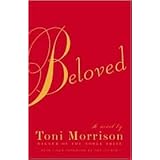
Toni Morrison
Chloe Wofford became Toni Morrison by chance: childhood nickname and ex-husband's surname. It was Toni Morrison who won the Nobel Prize, and whose Beloved has been ranked as the top novel of the last 25 years. But there is more than just the dichotomy of real and pen names. There is the dichotomy of polemic and literary writer.
Morrison writes—more and more consciously, it seems—for posterity. Having once spearheaded the elevation of black women in culture—Maya Angelou, Alice Walker, Oprah—she now finds herself struggling to cut them loose, to admit at long last what she’s always believed: that she’s not only the first, but the best. That she belongs as much with Faulkner and Joyce and Roth as she does with that illustrious sisterhood. That she will pass the test that begins only after Chloe Wofford is gone, and Toni Morrison is all that’s left.
Boris Kachka's profile of Morrison in New York—Who Is the Author of Toni Morrison?—will make you pull down a Morrison book or two from the shelf.
.
Morrison writes—more and more consciously, it seems—for posterity. Having once spearheaded the elevation of black women in culture—Maya Angelou, Alice Walker, Oprah—she now finds herself struggling to cut them loose, to admit at long last what she’s always believed: that she’s not only the first, but the best. That she belongs as much with Faulkner and Joyce and Roth as she does with that illustrious sisterhood. That she will pass the test that begins only after Chloe Wofford is gone, and Toni Morrison is all that’s left.
Boris Kachka's profile of Morrison in New York—Who Is the Author of Toni Morrison?—will make you pull down a Morrison book or two from the shelf.
.
Friday, May 04, 2012
Gratuitous George Lucas link for Star Wars Day
Gratuitous? Maybe. Except it's a real good one, May 4 or no May 4. It starts with the THX sound system, and goes on from there. It's biographical, and very inside baseball. I think that sometimes we forget how important Lucas is to popular culture; after all, all that Star Wars stuff came directly out of this one man's brain. Now it's in all our brains. And that doesn't take into consideration, say, Indiana Jones, or Industrial Light and Magic.
The interview is by Michael Milken, for the Milken Institute. Settle in. It's about 45 minutes long.
[Via Hollywood Reporter.]
.
The interview is by Michael Milken, for the Milken Institute. Settle in. It's about 45 minutes long.
[Via Hollywood Reporter.]
.
Synchronized swimming
This may be one of the hardest Olympics sports to appreciate. It doesn't seem to relate to anything except, well, synchronized swimming. One of the contestants in this film calls it gymnastics in the water, except you don't have the ground to work with. When you see what they're doing underwater—remarkable!
It's 2012. London is coming. Watch this. It's called Sync or Swim. These are amazing athletes. You may not get through all of it (it's a real film, at real film length), but you'll appreciate what you do watch.
.
It's 2012. London is coming. Watch this. It's called Sync or Swim. These are amazing athletes. You may not get through all of it (it's a real film, at real film length), but you'll appreciate what you do watch.
.
Must See TV
I can remember watching television in the 70s. There was one big block, Saturday nights on CBS. MASH, All in the Family, Mary Tyler Moore, Bob Newhart. If you were home on Saturday night, you watched these. You'd be crazy not to. And keep in mind, there were no VCRs then, much less DVRs and Netflix and Hulu. You watched what was on, and that was the end of it.
Those shows marked a golden age that wasn't repeated until NBC conquered Thursday night in the 90s. Cheers, Friends, Seinfeld, ER. Must see TV, they called it.
Warren Littlefield was the President of NBC Entertainment in the 90s, and he's out on the circuit pushing an oral history of the shows of Must See TV. You might have caught him on the radio or TV, talking about it. The Atlantic has a major interview by Kevin Fallon. Take the genesis of Will and Grace for instance, a show that might have a hard time getting on the air in 2012.
Management said, "What the hell are you doing? Why are you developing Will and Grace?" It's network television, and we have advertisers to answer to. Advertisers are not ready to embrace, at the core of a show, a relationship between a gay man and straight woman. What are you doing? To make matter worse, we're in business with these writers. We own them. They're under a deal to our company. So it's not like you're wasting somebody else's time and money. You're wasting ours.
Very inside baseball, but worth a read. The Death of Must See TV: A Former Executive on NBC's Rise and Fall.
.
Those shows marked a golden age that wasn't repeated until NBC conquered Thursday night in the 90s. Cheers, Friends, Seinfeld, ER. Must see TV, they called it.
Warren Littlefield was the President of NBC Entertainment in the 90s, and he's out on the circuit pushing an oral history of the shows of Must See TV. You might have caught him on the radio or TV, talking about it. The Atlantic has a major interview by Kevin Fallon. Take the genesis of Will and Grace for instance, a show that might have a hard time getting on the air in 2012.
Management said, "What the hell are you doing? Why are you developing Will and Grace?" It's network television, and we have advertisers to answer to. Advertisers are not ready to embrace, at the core of a show, a relationship between a gay man and straight woman. What are you doing? To make matter worse, we're in business with these writers. We own them. They're under a deal to our company. So it's not like you're wasting somebody else's time and money. You're wasting ours.
Very inside baseball, but worth a read. The Death of Must See TV: A Former Executive on NBC's Rise and Fall.
.
The King of the Surf Guitar
Dick Dale was born on this date in 1937. Audrey Hepburn was also born on this date, in 1929, but she could never do this:
Dale is a great story. He really was a surfer (unlike, say, the Beach Boys, who seemed more to want to be surfers and wish they were with the girls of the beach, when in fact they were mostly spending their time fantasizing in their room) and he invented a music that would sound like what surfing was when he was doing it. Once he captured that sound, which as a left-hander he did upside now, rather than restringing the guitar, he also needed to project it, so he got some folks to invent an amp that could blast from somewhere in California roughly as far away as Cleveland. He claims to be the first person to set an amp at ten (or, actually, TEN!).
You know that line from Hendrix, "You'll never hear surf music again"? Dale got hit by rectal cancer in the 60s, and Jimi was sending a tribute to one of his own idols. Fortunately, Dale bounced back.
If you want, you can play Misirlou as part of Guitar Hero 2. And if you're wondering about the source of the guitar version of Saint-Saens on Disneyland's Space Mountain, now you know.
Happy birthday to a surfing and guitar-playing legend.
.
Dale is a great story. He really was a surfer (unlike, say, the Beach Boys, who seemed more to want to be surfers and wish they were with the girls of the beach, when in fact they were mostly spending their time fantasizing in their room) and he invented a music that would sound like what surfing was when he was doing it. Once he captured that sound, which as a left-hander he did upside now, rather than restringing the guitar, he also needed to project it, so he got some folks to invent an amp that could blast from somewhere in California roughly as far away as Cleveland. He claims to be the first person to set an amp at ten (or, actually, TEN!).
You know that line from Hendrix, "You'll never hear surf music again"? Dale got hit by rectal cancer in the 60s, and Jimi was sending a tribute to one of his own idols. Fortunately, Dale bounced back.
If you want, you can play Misirlou as part of Guitar Hero 2. And if you're wondering about the source of the guitar version of Saint-Saens on Disneyland's Space Mountain, now you know.
Happy birthday to a surfing and guitar-playing legend.
.
Thursday, May 03, 2012
Playmobil
The official toy of Grinwout's would be the Lego, if there were an official toy of Grinwout's. Many are our hours spent building everything from little houses to intergalactic space vehicles. Even without children in the house anymore, the Legos still come out on holidays. One of our visitors used them to make the flags of many nations, which was about as un-mechanical as you can get with Legos without being banned forever. We prefer our Legos to be more complicated. That seems to be the whole point of them in the first place.
The Playmobil toys, on the other hand, would seem to appeal more to the flag-making set. You don't really build anything with them, of course. Their entire purpose is different from Legos, as they are meant to be toys for role-playing games. Of course, once you build a castle out of Legos there are plenty of options for role-playing, but that may be beside the point. These toys are apples and oranges, intended for different parts of the young brain. We never had an Playmobil toys that I can remember in our Lego household, though. Maybe we were shortchanging the younger generation in the role-playing arena. We never claimed to be expert child-rearers.
The Geek Dad blog at Wired offers a look at Playmobil in A New Generation of Playmobil Fans. We go from unboxing to assembly (some of which is required) to playing. Pretty interesting.
I’ll confess: I was never much of a Playmobil kid. I may have had a figurine or two (and, presumably, some sets to go with them) but honestly I can’t remember them and I no longer have them... Recently I was offered the chance to try out a few Playmobil sets, and I was curious: how would my daughters respond to them?... While we were at the toy store, I even showed them the Playmobil aisle to see what they thought of them. My younger daughter picked out an alligator for herself, but both of them were kind of “meh” about the idea of the sets. Until the sets arrived.
Reading this makes you just want to stop reading and, instead, do a little basic playing. Whether you'll be convinced about Playmobil remains to be seen, but at least, if you a Legonian, you'll begin to see the appeal.
.
The Playmobil toys, on the other hand, would seem to appeal more to the flag-making set. You don't really build anything with them, of course. Their entire purpose is different from Legos, as they are meant to be toys for role-playing games. Of course, once you build a castle out of Legos there are plenty of options for role-playing, but that may be beside the point. These toys are apples and oranges, intended for different parts of the young brain. We never had an Playmobil toys that I can remember in our Lego household, though. Maybe we were shortchanging the younger generation in the role-playing arena. We never claimed to be expert child-rearers.
The Geek Dad blog at Wired offers a look at Playmobil in A New Generation of Playmobil Fans. We go from unboxing to assembly (some of which is required) to playing. Pretty interesting.
I’ll confess: I was never much of a Playmobil kid. I may have had a figurine or two (and, presumably, some sets to go with them) but honestly I can’t remember them and I no longer have them... Recently I was offered the chance to try out a few Playmobil sets, and I was curious: how would my daughters respond to them?... While we were at the toy store, I even showed them the Playmobil aisle to see what they thought of them. My younger daughter picked out an alligator for herself, but both of them were kind of “meh” about the idea of the sets. Until the sets arrived.
Reading this makes you just want to stop reading and, instead, do a little basic playing. Whether you'll be convinced about Playmobil remains to be seen, but at least, if you a Legonian, you'll begin to see the appeal.
.
Trebek for $100
Alex Trebek has been monitoring the answers (i.e., questions) on Jeopardy for 28 years, which makes him one of the icons of television. There are a few other folks who go on, reliably delivering their material again and again, but not many. And even fewer come across quite as smart.
Spoiler alert: Trebek already knows the answers (i.e., questions).
Profiling Trebek, Dan Zak at WaPo doesn't exactly rake through the dirt. There is no dirt. Trebek is not a Jekyll and Hyde, is not a secret high-lifer, and appears to be exactly the same onstage or off. And let's face it. Onstage he's not exactly a house a'fire. But he's not supposed to be. He's the man with the answers (i.e., questions).
[He] remains apart, behind a lectern near a wall of flat-screen TVs. He is also cordial and sedate. He is the host of the show. He cracks few jokes. He hugs no one. He wears suits in gray and navy. He announces categories and reads clues and says “Right” or “Correct” or “Yes” and, sometimes, “No.” He has all the answers, which means he knows all the questions. He used to stand behind the lectern but now he sits. He used to have a mustache but now he doesn’t.
That almost completely sums him up. Except he likes to read Immanuel Kant in his spare time. Immanuel Kant??? Maybe he does know all the answers. And all the questions, for that matter.
Jeopardy is the show we like to watch to feel smart. If you want to feel smart for reading a web article, check out Alex Trebek, thinking deep after 28 seasons of ‘Jeopardy!’ (By the way, halfway through we had to log in via Facebook to continue reading. We were not harmed in the process.)
.
Marginal valediction
The questions are finalized for Bean Trivia. The event is next Wednesday. The crappy prizes are ready.
The season is over…
Last night we TVFTed. It was me, O’C and CP, talking mostly about TOC. This may also be the end of the TVFT season. I mean, things are winding down, aside from CatNats and NatNats, both of which are the same as they’ve always been. (You will debate all day Saturday at CatNats and complain royally about it, you will have mixed feelings about Baltimore, you’ll think the award ceremony is never going to end, and you’ll be glad to get home. As for NatNats, never been, no longer a member, and got nothing more to say.)
It was good to hear that TOC is getting its act together a bit under its new leadership. People regard this tournament very highly, and it should measure up to that esteem. In slow, steady steps, it is getting there, and as we said in the podcast, only slow, steady steps will work. Witness what CP had to do with the various college tournaments, some of which made TOC, at its worst, look like the Emerald City. I still think the colleges walk a thin line, but we’re keeping an eye on them, or at least on the ones we’re affiliated with. We did pretty well this year. We did Yale without CP and were none the worse for wear. We kept Princeton spinning at its peak. We pared down Columbia and kind of pulled it out of the ashes. UPenn grew some more, as we had always hoped it would. Not bad, overall. Come to think of it, looking back at the year as a whole, I’m pretty satisfied, except for the Incredible Shrinking Boat of Sailors, over which I don’t have much control. Needless to say, we’re working on it. And it must be admitted that our Speecho-American side was thriving, so it’s not totally off the tracks.
What was learned this year? I think that the message of MJP needs to be clearer, but we’ve got it down pat as far as tabbing it. It needs to be recognized as a tool to protect different styles of debate rather than a tool for solely promoting circuit debate, which it de facto becomes if traditional schools don’t pref. PF continues to grow everywhere but in New York, but that won’t last long because the attraction of accessibility for students and judges will sooner or later be too strong to deny. New programs keep getting started, and around here, I don’t recall losing any old ones, so that’s good. On the negative side, O’C discovered Foursquare and has checked into hotels, motels, his subway stop, Bronx Science (multiple times), Japonica (enough times that they’re taking away his wasabi privileges), his podiatrist, Attica, Mos Eisley, Bette Midler’s dressing room and the locked gates of the Liberace Museum, to name a few. In other words, it’s been a pretty good year, mostly moving forward.
Excelsior! This would be the perfect time for me to announce my retirement, but once again I am going to disappoint those who are rooting for me to disappear and have done with it. Sorry, guys. You can't win 'em all.
The season is over…
Last night we TVFTed. It was me, O’C and CP, talking mostly about TOC. This may also be the end of the TVFT season. I mean, things are winding down, aside from CatNats and NatNats, both of which are the same as they’ve always been. (You will debate all day Saturday at CatNats and complain royally about it, you will have mixed feelings about Baltimore, you’ll think the award ceremony is never going to end, and you’ll be glad to get home. As for NatNats, never been, no longer a member, and got nothing more to say.)
It was good to hear that TOC is getting its act together a bit under its new leadership. People regard this tournament very highly, and it should measure up to that esteem. In slow, steady steps, it is getting there, and as we said in the podcast, only slow, steady steps will work. Witness what CP had to do with the various college tournaments, some of which made TOC, at its worst, look like the Emerald City. I still think the colleges walk a thin line, but we’re keeping an eye on them, or at least on the ones we’re affiliated with. We did pretty well this year. We did Yale without CP and were none the worse for wear. We kept Princeton spinning at its peak. We pared down Columbia and kind of pulled it out of the ashes. UPenn grew some more, as we had always hoped it would. Not bad, overall. Come to think of it, looking back at the year as a whole, I’m pretty satisfied, except for the Incredible Shrinking Boat of Sailors, over which I don’t have much control. Needless to say, we’re working on it. And it must be admitted that our Speecho-American side was thriving, so it’s not totally off the tracks.
What was learned this year? I think that the message of MJP needs to be clearer, but we’ve got it down pat as far as tabbing it. It needs to be recognized as a tool to protect different styles of debate rather than a tool for solely promoting circuit debate, which it de facto becomes if traditional schools don’t pref. PF continues to grow everywhere but in New York, but that won’t last long because the attraction of accessibility for students and judges will sooner or later be too strong to deny. New programs keep getting started, and around here, I don’t recall losing any old ones, so that’s good. On the negative side, O’C discovered Foursquare and has checked into hotels, motels, his subway stop, Bronx Science (multiple times), Japonica (enough times that they’re taking away his wasabi privileges), his podiatrist, Attica, Mos Eisley, Bette Midler’s dressing room and the locked gates of the Liberace Museum, to name a few. In other words, it’s been a pretty good year, mostly moving forward.
Excelsior! This would be the perfect time for me to announce my retirement, but once again I am going to disappoint those who are rooting for me to disappear and have done with it. Sorry, guys. You can't win 'em all.
Labels:
CFL,
NFL,
Sailors,
The View from Tab,
TOC,
Tournaments
Neil Gaiman interviews Stephen King
What? I know. You don't need to hear anything more for us, and want to go read this sucker. But we can't resist a teaser:
I was down here in the supermarket, and this old woman comes around the corner this old woman – obviously one of the kind of women who says whatever is on her brain. She said, 'I know who you are, you are the horror writer. I don’t read anything that you do, but I respect your right to do it. I just like things more genuine, like that Shawshank Redemption.'
“And I said, 'I wrote that'. And she said, 'No you didn’t'. And she walked off and went on her way.”
A Stephen King Interview.
[Via The Browser.]
.
I was down here in the supermarket, and this old woman comes around the corner this old woman – obviously one of the kind of women who says whatever is on her brain. She said, 'I know who you are, you are the horror writer. I don’t read anything that you do, but I respect your right to do it. I just like things more genuine, like that Shawshank Redemption.'
“And I said, 'I wrote that'. And she said, 'No you didn’t'. And she walked off and went on her way.”
A Stephen King Interview.
[Via The Browser.]
.
The Godfather of Soul
AKA, The Hardest Working Man in Show Business. AKA James Joseph Brown, born on this date in 1933.
He performs like a house a fire. His band is nonstop, and he's even more nonstop. He is always in motion. How can anyone go on for so long? Finally, his DJ comes to help him off the stage. But no, he can't stop. He has to go on! It's one of the best bits in show biz, ever:
And here he is, just straight, just doing his job.
Brown toured with seriously big bands, and seemed to do one-nighters every night of the year. He was a notorious task master, from his band's playing to the shine on their shoes. He was a political activist committed to many causes, and his activism worked its way into his songs, most noticeably with 1968's "Say it Loud — I'm Black and I'm Proud."
“The song is obsolete now... But it was necessary to teach pride then, and I think the song did a lot of good for a lot of people... People called "Black and Proud" militant and angry – maybe because of the line about dying on your feet instead of living on your knees. But really, if you listen to it, it sounds like a children's song. That's why I had children in it, so children who heard it could grow up feeling pride... The song cost me a lot of my crossover audience. The racial makeup at my concerts was mostly black after that. I don't regret it, though, even if it was misunderstood.” [From Brown's autobiography, quoted on Wikipedia]
Brown in his lifetime received just about every honor there was to get.
Ain't it funky now? (And yeah, that's Bootsy's older brother on guitar.)
.
He performs like a house a fire. His band is nonstop, and he's even more nonstop. He is always in motion. How can anyone go on for so long? Finally, his DJ comes to help him off the stage. But no, he can't stop. He has to go on! It's one of the best bits in show biz, ever:
And here he is, just straight, just doing his job.
Brown toured with seriously big bands, and seemed to do one-nighters every night of the year. He was a notorious task master, from his band's playing to the shine on their shoes. He was a political activist committed to many causes, and his activism worked its way into his songs, most noticeably with 1968's "Say it Loud — I'm Black and I'm Proud."
“The song is obsolete now... But it was necessary to teach pride then, and I think the song did a lot of good for a lot of people... People called "Black and Proud" militant and angry – maybe because of the line about dying on your feet instead of living on your knees. But really, if you listen to it, it sounds like a children's song. That's why I had children in it, so children who heard it could grow up feeling pride... The song cost me a lot of my crossover audience. The racial makeup at my concerts was mostly black after that. I don't regret it, though, even if it was misunderstood.” [From Brown's autobiography, quoted on Wikipedia]
Brown in his lifetime received just about every honor there was to get.
Ain't it funky now? (And yeah, that's Bootsy's older brother on guitar.)
.
Wednesday, May 02, 2012
Malcolm X
There's certainly a lot that has been said about Malcolm X, while he was alive and after his death, not the least of which is The Autobiography of Malcolm X, ghost-written by Alex Haley. But when was the last time you actually saw Malcolm X? This video from 1963 [via Dangerous Minds] is a reminder of, as the article says, his personal grace under pressure. More, it's an artifact of a time not terribly long ago that in some ways seems so close, and in other ways so far. The issues of race in America have not been resolved, even though America is a radically different country from what it was 50 years ago. Watch this for a snapshot of that time, and for a gestalt of Malcolm's personality. It's startling.
.
.
Quick take - Comic book advertising heroes
Like, for instance, Captain Tootsie, the hero who gets his strength from Tootsie Rolls. Poor guy. I mean, Captain Tootsie?
10 Strangest Advertising Superheroes of the 1940s
.
10 Strangest Advertising Superheroes of the 1940s
.
How does your brain leak, then?
I’m hoping to TVFT tonight. I’m rather curious to hear about TOC. O’C said in a comment that it was an improvement in many ways, and that is good to hear, I guess. At the same time, I wonder how many people who broke in LD at TOC in 2002 would have been able to adjudicate the rounds among people who broke in 2012. Oh, well. The $ircuit is the $ircuit, and either you play the game or you don’t. I’ve discussed this ad nauseum.
The Sailor Speecho-Americans, I’m happy to say, acquitted themselves well at the NYSFL championships. Panivore Junior came in 3rd in his DI division, and one of our sophomores managed to break as well in Oy. (Actually, I think they call it OI, but Oy sounds so much better. “Did you break?” “Oy!”) That’s half the contingent that we sent, so proportionately, who else broke 50%? They’ll spend the rest of the year working toward pieces for next year. Except for next week, when they play Bean Trivia. Best (worst?) crappy first prize ever! But I don’t want to give it away here. I don’t want to frighten anyone away.
I’m working on editing a complex book at the DJ, and after an hour or so of bearing down, my brains start to leak, so I look for ways to take short breaks. Yesterday I was pricing hotels at WDW, doing a little early comparison shopping for the DisAd. The problem is, you can pay way over twice as much for a hotel as we did in the DiDeAd, but you probably won’t get more than twice as much out of it. Let’s face it; most WDW time is not spent in the room, or even in the hotel, for that matter. And if you want to take advantage of something at another hotel, it’s no big deal to truck over there and do so. (There’s a lot of trucking at WDW. Like the doo dah man… Speaking of which, or not, I finally found out why Jimi Hendrix speaks that line about never hearing surf music again, but I won’t explain it here. That’s what Grinwout’s is for.) I can’t believe I’m thinking about this more than a year early, but as I say, complex work requires short breaks for leaky brains. This is how my brain leaks. Could be worse, I guess.
The Sailor Speecho-Americans, I’m happy to say, acquitted themselves well at the NYSFL championships. Panivore Junior came in 3rd in his DI division, and one of our sophomores managed to break as well in Oy. (Actually, I think they call it OI, but Oy sounds so much better. “Did you break?” “Oy!”) That’s half the contingent that we sent, so proportionately, who else broke 50%? They’ll spend the rest of the year working toward pieces for next year. Except for next week, when they play Bean Trivia. Best (worst?) crappy first prize ever! But I don’t want to give it away here. I don’t want to frighten anyone away.
I’m working on editing a complex book at the DJ, and after an hour or so of bearing down, my brains start to leak, so I look for ways to take short breaks. Yesterday I was pricing hotels at WDW, doing a little early comparison shopping for the DisAd. The problem is, you can pay way over twice as much for a hotel as we did in the DiDeAd, but you probably won’t get more than twice as much out of it. Let’s face it; most WDW time is not spent in the room, or even in the hotel, for that matter. And if you want to take advantage of something at another hotel, it’s no big deal to truck over there and do so. (There’s a lot of trucking at WDW. Like the doo dah man… Speaking of which, or not, I finally found out why Jimi Hendrix speaks that line about never hearing surf music again, but I won’t explain it here. That’s what Grinwout’s is for.) I can’t believe I’m thinking about this more than a year early, but as I say, complex work requires short breaks for leaky brains. This is how my brain leaks. Could be worse, I guess.
Labels:
Disney,
Disney Debate Adventure,
Speech,
The View from Tab,
TOC
Vinyl music
Vinyl LPs are coming back? Once again we can listen to our music in 45 minute doses, on a machine with a needle guaranteed to destroy the medium, which will as a result start to snap, click, pop, hiss and, eventually, skip? On the positive side, when mothers yell at their children telling them they sound like a broken record, once again the kids will know why they're being yelled at.
Or put another way: After a quarter of a century of obsolescence, the LP is making a comeback worthy of any religious resurrection. How it has risen from charity shop basement to wealthy living room is a parable for our times, a classic example of popular resistance to the overwhelming weight of scientific evidence and market forces. This is a turnaround equivalent to the vindication of homeopathy, the revival of newsprint and the return of the French monarchy, a romantic defiance of intellect and reality.
What's going on here? Well, for the cognoscenti, it's the battle of the perceived warm beauty of the analog recording versus the icy cold nastiness of the digital recording. You can't possibly compare CDs to LPs. Impossible! (Or, as the French say, Impossible!) Norman Lebrecht tracks down that battle in Vinyl Revival Causes Discord. Needless to say (?), digital wins by a knockout, but at the end Lebrecht gets to where the real action is: recordings versus downloads. One thing we are not doing with mp3s is raising a generation of audiophiles. The most tone deaf listener can detect the difference between a CD and a download, on the chintziest equipment. Are we really going to settle for the latter every time?
It's a point to ponder.
[Photo by Zecas]
.
Or put another way: After a quarter of a century of obsolescence, the LP is making a comeback worthy of any religious resurrection. How it has risen from charity shop basement to wealthy living room is a parable for our times, a classic example of popular resistance to the overwhelming weight of scientific evidence and market forces. This is a turnaround equivalent to the vindication of homeopathy, the revival of newsprint and the return of the French monarchy, a romantic defiance of intellect and reality.
What's going on here? Well, for the cognoscenti, it's the battle of the perceived warm beauty of the analog recording versus the icy cold nastiness of the digital recording. You can't possibly compare CDs to LPs. Impossible! (Or, as the French say, Impossible!) Norman Lebrecht tracks down that battle in Vinyl Revival Causes Discord. Needless to say (?), digital wins by a knockout, but at the end Lebrecht gets to where the real action is: recordings versus downloads. One thing we are not doing with mp3s is raising a generation of audiophiles. The most tone deaf listener can detect the difference between a CD and a download, on the chintziest equipment. Are we really going to settle for the latter every time?
It's a point to ponder.
[Photo by Zecas]
.
God Only Knows
The Beach Boys are recording and touring again. They've had a complex, storied past, not the least part of which has been the personal trials of Brian Wilson. But for quite some time now, Wilson has had a productive solo career, and seems to be in good shape. We can only wish him continued prosperity.
Of all the songs he has written, one stands out as, perhaps, the best of the best. You might have other favorites, but listen to the vocals, removed from the accompaniment.
Here's Brian looking relatively unhappy, performing it in 1981. He was not in the best of shape, but this song conquers its creator.
Brian got himself together and started performing again, and was looking good in 2002. He still doesn't look like a happy performer, though.
But Elton John, by contrast, is an ecstatic performer. You feel like he's holding himself in, but also you feel like he's doing exactly what he needs to do for this song. (Stick with it for the second number.)
There are other versions of the song out there, including one by David Bowie that is way too Bowie and way not enough Wilson. But mostly, no matter who performs it, it's a beauty. Too bad the McCartney/Wilson collaboration that's on YouTube doesn't sound too good; "Pet Sounds" was one of McCartney's great inspirations, and he claims it gave him the spiritual nod to experiment on Sgt. Pepper.
There's plenty of other amazing Wilson music in addition to this. It's nice that the Boys are on the road again, with Wilson a part of them. Sometimes there really are happy endings.
[Inspired by The 25 Best Beach Boys Covers.]
.
Of all the songs he has written, one stands out as, perhaps, the best of the best. You might have other favorites, but listen to the vocals, removed from the accompaniment.
Here's Brian looking relatively unhappy, performing it in 1981. He was not in the best of shape, but this song conquers its creator.
Brian got himself together and started performing again, and was looking good in 2002. He still doesn't look like a happy performer, though.
But Elton John, by contrast, is an ecstatic performer. You feel like he's holding himself in, but also you feel like he's doing exactly what he needs to do for this song. (Stick with it for the second number.)
There are other versions of the song out there, including one by David Bowie that is way too Bowie and way not enough Wilson. But mostly, no matter who performs it, it's a beauty. Too bad the McCartney/Wilson collaboration that's on YouTube doesn't sound too good; "Pet Sounds" was one of McCartney's great inspirations, and he claims it gave him the spiritual nod to experiment on Sgt. Pepper.
There's plenty of other amazing Wilson music in addition to this. It's nice that the Boys are on the road again, with Wilson a part of them. Sometimes there really are happy endings.
[Inspired by The 25 Best Beach Boys Covers.]
.
Link Wray
I saw Link Wray back in the 70s at a club called the Bottom Line in New York City. My ears are still ringing.
Wray was born 5/2/29, and was one of the inventors of rock guitar playing. In 1958 he recorded "Rumble," which is pretty much the first thing that comes up when his name is mentioned. He kept playing it for the rest of his career.
Link Wray was probably the coolest person in the room, no matter what room he was in. He's credited with inventing heavy metal and punk, but personally, my greatest regard is for his rockabilly work (Retro-rockabilly, actually).
As you can see, Wray is still the coolest person in the room, but that bass player is giving him a little competition. "My gal is red hot, you're gal ain't doodly squat," has to be one of the great lines of modern music. Rumor has it that Cole Porter had considered it for inclusion in "Miss Otis Regrets," but ultimately decided against it.
One last taste of Wray's guitar, sound only this time.
Link Wray died in 2005. Why isn't he in the Rock and Roll Hall of Fame???!!!
.
Wray was born 5/2/29, and was one of the inventors of rock guitar playing. In 1958 he recorded "Rumble," which is pretty much the first thing that comes up when his name is mentioned. He kept playing it for the rest of his career.
Link Wray was probably the coolest person in the room, no matter what room he was in. He's credited with inventing heavy metal and punk, but personally, my greatest regard is for his rockabilly work (Retro-rockabilly, actually).
As you can see, Wray is still the coolest person in the room, but that bass player is giving him a little competition. "My gal is red hot, you're gal ain't doodly squat," has to be one of the great lines of modern music. Rumor has it that Cole Porter had considered it for inclusion in "Miss Otis Regrets," but ultimately decided against it.
One last taste of Wray's guitar, sound only this time.
Link Wray died in 2005. Why isn't he in the Rock and Roll Hall of Fame???!!!
.
Tuesday, May 01, 2012
Dissing the Stones
Well, 50 years of the Rolling Stones does seem like an awful lot, even for Stones fans.
When the group first appeared, they were the flip side of all the neat and clipped British groups that, once you got past the need of a haircut, you could take home to mother. It wasn't just the Beatles. There were all these other groups like the Dave Clark Five and
Gerry and the Pacemakers (not a reference to automated heartbeats) and Chad and Jeremy, and they all wore suits and they were all on the British Sound bandwagon, and it was all rather fun. Cute, in its way. But the Stones were not cute. Call them what you will, they never looked as if you could bring them home to mother, and more to the point, you couldn't bring home their music. They started out playing a rough R&B blend that matured into a unique Stones sound around the time of "Street Fighting Man" and they eventually started billing themselves as the World's Greatest Rock and Roll Band. They billed themselves as the World's Greatest Rock and Roll Band for long enough for all of them to become grandparents.
Stones fans, owning a clutch of amazing albums from a period of a few years beginning in the late 60s, have had to go through a lot of aging themselves, and if they've continued buying new Stones releases, a little bit of a disappointment. Let's face it. Real rock really is a young person's game. There's some good old rockers out there, don't get me wrong, but nobody starts out as an old rocker. And if you look at the Stones today, they actually look older than most. Time isn't kind to former junkies:
Their original appeal, as the New York Times pointed out in 1972, was as a scandalous symbol of "generational independence"; now that we baby-boomers are too rickety to do much dancing, the Stones serve as a precious relic of our teenage days. Encouraged by them, we can all grow old disgracefully.
Peter Conrad writes a review: The Rolling Stones: Fifty Years by Christopher Sandford, and he manages to dish enough dirt on one page to make that whole 50 years of Stones just fly by. The thing is, he sort of nails it. The music still stands, though, the old stuff that is. I meant it when I cited "Street Fighting Man": go back and listen to the original.
Rock and roll was never better. Can the Stones help it if it's not 1968 anymore?
.
When the group first appeared, they were the flip side of all the neat and clipped British groups that, once you got past the need of a haircut, you could take home to mother. It wasn't just the Beatles. There were all these other groups like the Dave Clark Five and
Gerry and the Pacemakers (not a reference to automated heartbeats) and Chad and Jeremy, and they all wore suits and they were all on the British Sound bandwagon, and it was all rather fun. Cute, in its way. But the Stones were not cute. Call them what you will, they never looked as if you could bring them home to mother, and more to the point, you couldn't bring home their music. They started out playing a rough R&B blend that matured into a unique Stones sound around the time of "Street Fighting Man" and they eventually started billing themselves as the World's Greatest Rock and Roll Band. They billed themselves as the World's Greatest Rock and Roll Band for long enough for all of them to become grandparents. Stones fans, owning a clutch of amazing albums from a period of a few years beginning in the late 60s, have had to go through a lot of aging themselves, and if they've continued buying new Stones releases, a little bit of a disappointment. Let's face it. Real rock really is a young person's game. There's some good old rockers out there, don't get me wrong, but nobody starts out as an old rocker. And if you look at the Stones today, they actually look older than most. Time isn't kind to former junkies:
Their original appeal, as the New York Times pointed out in 1972, was as a scandalous symbol of "generational independence"; now that we baby-boomers are too rickety to do much dancing, the Stones serve as a precious relic of our teenage days. Encouraged by them, we can all grow old disgracefully.
Peter Conrad writes a review: The Rolling Stones: Fifty Years by Christopher Sandford, and he manages to dish enough dirt on one page to make that whole 50 years of Stones just fly by. The thing is, he sort of nails it. The music still stands, though, the old stuff that is. I meant it when I cited "Street Fighting Man": go back and listen to the original.
Rock and roll was never better. Can the Stones help it if it's not 1968 anymore?
.
Toward the understanding of the appeal of horses
Coming from a family where there is at least one rider—or maybe former rider, it's hard to say—horses have loomed a little larger for us than if they just happened to be grazing away as we drove by in a perfectly good automobile. Then again, as we edge into the Derby this weekend, we do admit a fondness for the Sport of Kings (although we regret that lately there are practices that are, to put it mildly, appalling at some less storied barns than the ones in Louisville). I fondly recall going out to Belmont a few times when the legendary Forego was racing, and watching this giant gelding come from behind—always from way behind—and win, and win, and win. Of course, people who ride, while admiring race horses, aren't that interested in them. Riders do events that are far removed from galloping around a track at top speed while the people in the stands pray that they'll win the Daily Double. They don't dislike racers; they just happen to be in a different business.One thing you can say about riders that differentiates them from the rest of us is that they love horses. I have nothing against horses, but nothing particularly for them, either (unless they're running like Forego or winning me the Daily Double). I prefer cats. Cats are cuter than horses, for one thing, and can more easily fit on your lap. They also use a litter box, which means that they don't require any mucking of the stables. But horse people don't see it like that. Horse people look at horses and—Well, what is it that they see when they look at horses?
You are not vitally important to your horse, not really, not like you are to your dog, ever. They never figure out who you are, and why you do the silly things you do. You have to forge a relationship with your horse while knowing that, given the chance, they'd probably rather hang out with their buddies than spend time with you. But then, one day you pull up to the barn, and you realize that your horse has memorized the sound of your car, as opposed to other people's cars, and has wandered over to the gate to greet you.
Nicole Cliffe attempts to uncover the appeal of these animals that seem rather difficult to love. Unless, I guess, you already happen to love them. The article is The Horse, Explained.
Don't get us wrong, by the way. We have ridden the odd horse on occasion, and both we and the noble steeds between our legs have managed to survive the ordeal without too much permanent damage. But it takes more than riding them to understand them.
My cat, on the other hand, is perfectly content not to be ridden, and both of us are quite satisfied with the situation.
The Newsroom
Ten to one if you're reading this you're an Aaron Sorkin fan, and you're going to want to watch The Newsroom when it hits the airwaves. You already know it's coming, and you're just tapping your foot, waiting.
Here's a piece from Vanity Fair to tide you over. It includes the line, “I’m pretty wordy when I write,” Sorkin said.
Really?
Have at it: The Sorkin Way.
And a little bonus, an interview following The Social Network:
Here's a piece from Vanity Fair to tide you over. It includes the line, “I’m pretty wordy when I write,” Sorkin said.
Really?
Have at it: The Sorkin Way.
And a little bonus, an interview following The Social Network:
Got Klout?
You learn something new every day. Like there's such a thing as a Klout score. You have one whether you know it or not, and most likely, it's down in the basement somewhere. It's a measurement of how well you are known, collected using social media. You're a zero? Probably, unless you Tweet a lot, which will give you at least a couple of points. Justin Bieber is 100. Then again, he has 18 million Twitter followers. I can't even come up with 18 million people that aren't following me! And not only is your Klout a number floating in air (and a mighty suspect one at that), the higher your number is, the more likely you'll start actually acquiring benefits, like room upgrades at casinos and discounts at retail stores.I gotta get my number up!
Throughout our lives, we are tagged with scores, some of them far more crucial to our well-being than anything [Klout CEO Joe] Fernandez has handed out. Credit scores are maddeningly opaque and can be used against us in infinitely more harmful ways than a Klout score ever could. Our health records are used by huge organizations to segment and sift us behind closed doors. And yet there is something uniquely infuriating about the Klout score. “They’re calculating a Q score for everybody, and it turns out there’s a lot of emotion tied up in that,” [Rutgers adjunct marketing professor Mark] Schaefer says. And the fact that Klout users’ status is so explicitly linked to material gain makes it an even more freighted situation, he says. “This is the intersection of self-loathing with brand opportunity.”
Seth Stevenson explains it all at Wired: What Your Klout Score Really Means. Great. Something else to worry about.
.
Subscribe to:
Posts (Atom)