Showing posts with label History. Show all posts

Thursday, July 05, 2012

Random links

These pages speak for themselves, and don't need me adding anything to them.

(Why I used that hokey clipboard pic from Microsoft's clipart library is beyond me.)
.

Wednesday, July 04, 2012

The amazing true story of the American Revolution

Or not, as the case may be.

First of all, we have Kermit the Frog to thank for getting the Boston Tea Party straightened out:


Those who maintain that a frog had nothing to do with the American Revolution know perfectly well that it was, in fact, a mouse who made all the difference. This Disney short seems all but forgotten nowadays:


Speaking of all but forgotten, we definitely should revisit "Stan Freberg Presents The United States of America, Volume One: The Early Years." The album feels really dated, but it's still funny. I used to play this for my family on all national holidays, until they threatened to disown me. (There's not much to watch on the video, just an LP spinning around on a turntable. If you have young kids, you might want to show it to them. They may never have seen such one of these.)


If the Revolution didn't happen any of the ways, we don't want to know about it!
.

Tuesday, June 19, 2012

Fire plaque

Here's an example:


.


Door-to-door Part Two

Come to think of it, my family had door-to-door experience on both sides, the knocker and the knockee.

In 1960, my mother took on temporary employment as a census taker. Basically a stay-at-home mom, this was the perfect job for her, as she got to stalk around the neighborhood knocking on people’s doors and asking how many people there were hanging from the rafters. This was back in the day when the rafters were pretty empty (illegal immigrants were barely a glint in Arizona’s eye) so there wasn’t much to it, but the Constitution demanded it and it earned her a little extra spending money, so it seemed like the good deal. The problem was, not everyone was there when you knocked on the door, which meant going back. Therein lay the rub. My mother, who is about as extroverted and people-oriented as a squid, could get through the first level in the daylight, but going back, usually at night (even then she was fairly anti-nocturnal, a trait that grew in proportion over the years as her vision deteriorated and she began comparing night driving to a Mars landing), was beyond the pale, Constitution or no Constitution. This forced my father into the fray, he being the opposite of the squid personality, a friendlier and more outgoing fish by far. The two of them would go out, and eventually all the doors got knocked on, and the Constitution was upheld.

Whew.

My own door-to-doorness was, first, the regular business every year of selling chances on a turkey, our annual grammar school fundraiser. I imagine it was every grammar school’s annual fundraiser. You could buy a raffle ticket for a quarter, five for a dollar. Given the price of turkeys nowadays, which isn’t all that steep, unless there’s been an amazing population explosion of gobblers since my youth this wasn’t all that great an investment. Worse, all the kids in school would get their raffle books at the same time, and each of us would stop at every house on our way home that first day (we had no school buses back then, being forced like everyone at the time to walk five miles uphill in the snow in both directions) to sell the stay-at-homes chances on a turkey. This was a mug’s game, because once the first kid got in, the rest of us were shut out. And I’d bet anything the locals got advance word from the school that the tickets were coming, and most of the time when you knocked on the door there was no response whatever, except perhaps the tiniest movement of a curtain on the second floor as the natives hid in fear and trembling. (This is much the same way door-to-door censuses are today, where the natives aren’t exactly natives, but that’s a different story.)

Needless to say, the most chances were sold by parents who took the books to their jobs and shamed their coworkers into buying them. The same holds true today with Girl Scout cookies, which has built an entire entrepreneurial empire of children based on the fact that the children aren’t entrepreneurs, which is pretty amazing when you think about it. For me, the sad thing was that my father’s office was small, and the number of people he could shame into buying chances on a turkey that they didn’t want was pretty small, which means that I never won a prize for selling the most chances. And yes, there was a prize; this being a Catholic school, there was always a reward for good works, although the prize was probably a missal or a collection of holy pictures or something, I can’t remember exactly what, having never partook. Childhood for me was, alas, cruel.


On the other hand, I did luck into a gig at some point collecting back subscription fees for the Catholic News. People would subscribe to the paper, but stop paying for it, but the Pope kept sending them weekly issues anyhow. Then kids like me, dusty-faced urchins looking like poor starving orphans (which actually wasn’t me, but go with me here), would appear at your door with an Oliver Twist plea for paying the back funds. I was paid a share of the proceeds, plus some people tipped, although why they tipped me I can’t say, given that I didn’t deliver the paper, just the arrears. Guilt, I guess. I mean, it was the Catholic News; what was wrong with these people, stealing it from the Vatican in the first place? This proved to be a lucrative but sadly isolated venture in my career. I had a sheet of names and addresses and amounts owed (some of them going back for years), and over the space of a couple of weekends I cleared it as many names as possible (except for the lurkers behind the second-floor curtains), and made the most money I had ever made so far in my young life. I learned a great lesson from that, namely, that if you’re in the right place at the right time you can get a quick gig and make a few bucks and never look back. It’s the right place and the right time that are key.
.

Door-to-door

If you think back really long and hard, sometimes you can come up with things from your youth that seem to be from so long ago that they must be from someone else's youth altogether. For instance, I distinctly remember the show "Gunsmoke" when I was a kid. Except it wasn't the long-running television show that I remember, it's the radio show that my mother used to listen to before we even owned a television. Come to think of it, I remember a time when we didn't own a television, and then we did, and it was a big hit and all the neighbors came over to see it. The great thing (?) about early televisions was that every now and then they sort of blew up: some vacuum tube or other would burn out, which was no big deal, but it smelled like the doors of hell had been opened, and was usually accompanied by a bit of smoke and, of course, loss of television. You'd call the television repairman, and he'd come over and fix things, and in my memory the tv repairman was our most regular visitor, but that may just be my imagination. Do they still have tv repairmen?

I bring this up because I was looking at this article on the Fuller Brush Company. Now that brought me back, because I distinctly remember that our home town was lousy with Fuller Brush men, door-to-door salesmen who literally went door-to-door selling their wares. Even when I was the proverbial knee high, I wondered about the economics of brush sales, which sounded woefully penny ante, but the Fuller Brush company in one iteration or another has been around for over a hundred years, and as far as I could tell in my research, still sells door-to-door to this day. College graduates looking for employment in these bleak times should take notice. Fashions come and go, but people will always need brushes.

We also had a milkman for a while, who if I remember correctly left his wares on our fire escape, but that part may just be my imagination. The Avon company was in the next town over, so we had our fair share of Avon ladies who not only sold cosmetics but no doubt also acted as escorts to the Fuller Brush men. They certainly sound like a perfect pairing. And yes, we had the odd encyclopedia salesman, and I remember distinctly having an encyclopedia, so that guy did good work. I like to think I also remember a knife sharpener going up and down the streets too, and I think that's true. Then again, I also remember Ali Hakim, the Persian peddler, but that may just be because I've seen Oklahoma too many times.

It's interesting the things that pass through your mind, if you only let them.
.

Thursday, May 31, 2012

Queen Victoria's diaries


The youngest child of Victoria was, of course, Princess Henry of Battenberg. Which immediately raises the question, where exactly is Battenberg? That's the great thing about looking this stuff up. You learn all sorts of things that you didn't need to know. Battenberg, in addition to being a sponge cake, is located somewhere in Germany. Once upon a time on the continent semi-autonomous states were all the rage, and European royalty was rather, uh, common, so to speak. You couldn't swing a cat without hitting the odd duke, but that was then, and nowadays they're all on the Euro and things ain't what they used to be.

Princess Beatrice of the United Kingdom, the aforementioned princess of Battenberg, was designated by her mother to always be by her side as her unofficial secretary, a chore to which she resigned herself apparently quite gracefully. Her Majesty intended for Beatrice to remain single unto the grave, but Bea managed to find the rather dashing Prince Henry of Battenberg, and convinced her mother to allow the marriage. Unfortunately Hank died young; Beatrice on the other hand carried on admirably, the last child of Victoria and Albert to pass away, in 1944. She also acted as the literary executor for her late mother. Most notably, she transcribed Victoria's diaries which, thanks to QEII (the woman, not the boat), we can now read online.

Let me put it this way: once you start diving into this material, you will surprise yourself with how long you will stay there. I guess you can't be Queen of England for, well, ever and not leave behind a thing or two of interest. Nice sketches. Interesting writing. Check this site out; if you have any interest in history, you'll really enjoy it.
.

Tuesday, May 22, 2012

How are things on Rapa Nui?

Apparently, all those famous statues are actually guys standing in holes. Who says you don't learn something new every day?

Check out the slide show: Easter Island statues have full bodies and contain ancient petroglyphs.
.


Wednesday, May 16, 2012

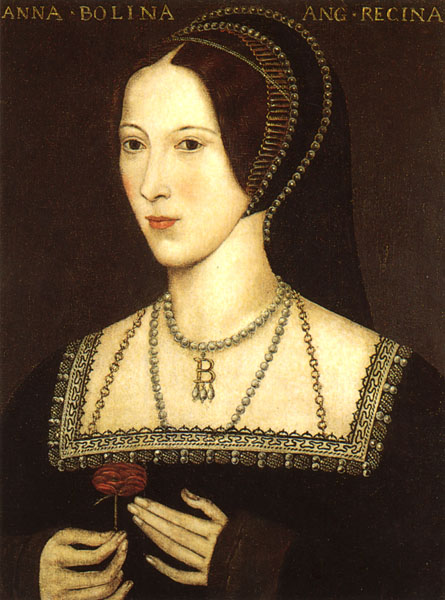
Anne Boleyn


I love these articles that tell you all about someone who you previously knew some little thing about, and now you feel like you really do know the story. Like Henry VIII's second wife. We know she was number two, and that she was beheaded, because we know the names of Henry's wives in order, thus:

Divorced
Beheaded
Died
Divorced
Beheaded
Died

Those are the names, right?

Anyhow, why exactly did Henry marry Anne in the first place, did he really have to invent a new religion, and then why did he kill her? Honestly, I had only the vaguest idea. Having read Hilary Mantel's Anne Boleyn: witch, bitch, temptress, feminist, now I know.

I love the internet.
.

Thursday, May 06, 2010

Animal Kingdom

The last of the major WDW parks to be built was Animal Kingdom. (There are also minor ones like the two water parks, and the virtually extinct Pleasure Island, home of the Adventurers’ Club, which we won’t go into.) For once it seems as if Disney Corp was on its own track, neither banging up against some local competition or reviving/extending some idea from the past, until you remember all the True Life Adventureland programming from the old Disney days, and the fact that the studio pioneered nature programming. The TV show was divided into those 4 categories: Adventureland, Frontierland, Fantasyland and Tomorrowland. I’ve already admitted that Fantasyland was my favorite. Frontierland came in second. This was back at the height of the popularity of Westerns, remember, into which Disney tossed the Davy Crockett mythos, which became one of the first real television fads. If you’ve ever wondered why Westerns were so popular in the 40s and 50s, it might help to recall that the parents of adults in those years were, indeed, the pioneers of history. The so-called Old West wasn’t that long ago from their perspective. So the tales and culture were still fresh, with recent generational spin on them. It wasn’t old history, it was virtually the history of the people watching it. There’s more to the popularity than this, metaphorically and culturally, but that’s not an insignificant part of it.

My third favorite “land” was Tomorrowland, and I did eventually become quite the SF fan as a youth. Unfortunately, if you watch any of those old science shows today, I guarantee you will not be able to stay awake. Many people credit Disney as one of the people who made the space race happen, instilling in the youth of America a desire to explore the moon and Mars and whatnot, and that’s certainly true, but still, you’ll need lots of Red Bull today to get through them. They’re just…stodgy. And dated. Let me tell you, that Wernher von Braun was no Davy Crockett!

And finally there was Adventureland, the 50s version of the Nature Channel, which was my least favorite. Later on as an adult I got into this sort of thing, but as a kid, watching dancing scorpions was a lot less interesting to me than watching dancing hippos. What can I say? When the adventure was somebody Indiana Jonesing through the great unexplored, fine, but when it was True Life? True life was as stodgy as Wernher von Braun. (If you don’t believe me, ask Mrs. von Braun.)

So Disney was a pioneer in nature programming, although they did get a lot of flak over anthropomorphism. Today in this kind of programming you see animals doing whatever animals do; back then, the Disney folk thought you had to make, ta-da, a narrative out of it. Big surprise. In any case, nature is in the Disney DNA, so the idea of a nature park isn’t a stretch at all. Originally the plan was to combine real (extinct and active) and imagined animals in separate lands, but of course that never happened. Animal Kingdom comprises a DinoLand (a take on the roadside Dino park of the Southwest, the sort of thing you’d see on Route 66), an African quarter (with a safari and a walking tour), an Asian quarter (with another walking tour and Expedition Everest, a coaster visit with the Yeti), and some odds and ends, making it, in essence, a Disney zoo (which is a word that they don’t like to use, but let’s call a place with a lot of animals that you walk by and look at in simulated environments what people usually call it). AK is the least popular of the parks with the general public, who see it as a half-day park, because it doesn’t have all the E-ticket attractions of even DHS, but I like it quite a bit. In fact, it’s how I’ll open the Disney Debate Adventure.

As I’ll explain next.

Wednesday, May 05, 2010

Disney Hollywood Studios

Universal Studios had tours back in the silent cinema days, as we’ve said, and Disney himself had considered a studio tour/park in the 30s. In the 60s Universal brought back its Hollywood tour, no doubt inspired by the success of Disneyland down in Anaheim, and over time it grew to include all sorts of attractions and shows. I was there on my trip to LA with my cousin that I mentioned earlier; there were stunt folks and a tram ride and strolling Frankenstein and Dracula types. There was also a strolling Invisible Man, but I actually didn’t see him.*

After WDW’s great success, Universal next decided to go big time in Orlando, planning on opening Universal Studios Florida, where you could “ride the movies.” Disney Corp, at this point under the leadership of Michael Eisner, didn’t like the looks of that, or so the story goes. Disney-MGM Studio raced to beat Universal to the punch; the former opened in 1989, the latter in 1990. I guess you can say Disney won the race. (There were other theme parks that tried, unsuccessfully, to cash in on WDW’s success, by the way. Not far down the road was a circus park, which failed and was replaced by a baseball park, which also failed. There was Splendid China, and there was also going to be a new age park where people would levitate, and I even vaguely remember a Jesus park. The SeaWorld folks, already in operation elsewhere, opened in Orlando in ‘73, making them one of the earliest and, of course, one of the few successful competitors to WDW other than Universal. Some folks believe that the Seas attraction at Epcot is nothing more than WDW’s water revenge…)

Disney-MGM Studio, obviously a joint venture like so much else under Disney’s park management, combined the classic films of MGM with the classics of Disney (especially featuring animation), plus there was active filmmaking from Disney’s real functioning studios. For that matter, real animation happened there; if I'm not mistaken they were pushing Aladdin one time when I was down there, which I gather was mostly being created there. In other words, there was some real studio work going on there (as there was at Universal, home of Nickelodeon). While Universal went for recreations of various films and some theming, DHS (let’s call it by its present acronym, Disney Hollywood Studios—MGM is out of the picture these days) went for recreating Hollywood in its heyday with full-blown theming. It’s an interesting experiment to walk down the streets of Universal and compare that to walking down the streets of DHS. Every now and then Universal pulls it off, but somehow it seems to lack the thoroughness of the Disney approach. Given that much of Universal was built by WDW grads, one should expect it to come close. Certainly many of the attractions are absolutely top drawer. But what DHS had going for it in the beginning was the glue of MGM, which was a lot sturdier than the glue of Universal. MGM meant Wizard of Oz and Gone with the Wind (and when Turner bought the library, a combining with Warner to include Casablanca and the old Cagney films). Universal went more for the latest hits, like Jaws and ET. Not bad, but not with the same cultural resonance. Still, both parks are fine, and my preference for DHS is an offshoot of my connection to those old films, a bit of which is lost nowadays without the MGM connection being active. One would be hard-pressed to explain why the Twilight Zone Tower of Terror ought to be in one park rather than the other, or why it would be any different if it were. What DHS does have now to cement its Disneyness, imported from Disneyland, is Fantasmic, which is a nighttime show that puts it all together, with all the Disney characters paraded out in a son et lumiere that simply blows you away.

DHS is in transition as it Pixarizes itself. While there is a little Pixar everywhere in WDW (some might say too much, but I disagree, as this is what kids today are seeing first and loving the most), at DHS it will eventually dominate. I have nothing against DHS, and I like it a lot, but I don’t love it. It’s got some great attractions, though. Star Tours (in Tomorrowland in Disneyland), the vastly entertaining Aerosmith roller coaster, Twilight Zone (which they keep plussing, as Disneyspeak defines improvement), the Sci Fi Diner, the aforementioned Fantasmic. (I haven’t seen Toy Story Midway Mania yet.) All good stuff. A fine park to enjoy, but not one to die for. I wouldn’t mind going during Star Wars Weekends, though, when the place is crawling with cosplay types and armies of stormtroopers and dancing Darths. I mean, that I could love. Especially in the company of O’C, who himself might be in dancing Darth attire. One never knows.

*This is what some people affectionately refer to as a joke.

Tuesday, May 04, 2010

Epcot

Epcot fit the World’s Fair pattern perfectly. First, it was a collection of pavilions pushing one or another look at science or the future or both, presented by a major corporation. (Those attractions cost money, and Disney has always been big on sharing the expenses, going back to ABC TV investing in Disneyland.) You had Horizons, showing us how we’d live in space, on deserts and underwater in the future (extending the same family as the one in Carousel of Progress). You had the past and future of communications in Spaceship Earth. You had lots of hands-on stuff in Communicorp, you had dinosaurs in Energy, you had whimsy (and 3D) in Kodak, you had modern farming in the Land. Any of these could have been built at any World’s Fair of the day, except that these were permanent, and therefore better. Calling Epcot a permanent World’s Fair, in fact, was pretty common. Matching the futuristic stuff there were exhibits from various countries displaying their wares and their people and their culture, a modern ethnographer’s (and theme park’s) look at countries, a little more sophisticated than savages in a zoo and a little less sophisticated than Michelangelo’s Pieta. With restaurants, of course. The countries that participated did, indeed, like the corporations, front money to Disney for the privilege. Hell, it made me want to go to Norway, so I guess it worked.

Epcot, opening in 1982, closes the connection between Disney and Fairs, connecting back to Disney’s father in 1893, to Disney himself in 64-65, and to all the business of fairs in between. By this time, World’s Fairs were certainly no longer what they used to be, and while they still existed, no one cared much. Epcot was good enough for most people.

Epcot when it opened got the reputation as being the educational park, and a lot of folks avoided it. We took Kate there her first time, in 1984, and she loved it. Unlike some of the scary aspects of MK, Epcot was very bright and friendly and welcoming. No witches lurking behind the rocks, for instance. But for most people, the idea of an educational park was anathema, and over time Epcot has revised itself into more entertainment and less World’s Fair, to its detriment if you ask me. Mission Space has none of the depth and sense of wonder of Horizons. It’s okay, but it doesn’t make you wonder about living in the future, it just makes you think that they’ve taken special effects and done a good job of plunking you into them. There’s a big difference. Still, I enjoy the park, and set aside two days for it. I love roaming the countries, I love the food, I love Illuminations (the nightly extravaganza). The attractions are all fine, but as I say, more theme park than World’s Fair, which in my opinion is the wrong direction, but what are you going to do? It is what it is. And one thing it isn’t is what Walt himself had envisioned. From this point on, WDW was a machine that ran on its own, separate from its namesake. At its best, it reflects that namesake. At its worst, it’s just another ride. Those of us who go back a ways love it at its best and make the best of it at its worst. We are going, I think, through a good period, with a lot of promising new stuff coming up. Time will tell.

Which leaves us two other parks.

Monday, May 03, 2010

Theme Parks

Some sources do not distinguish much between amusement parks and theme parks, but we will. A theme park is more than just rides and amusements: it is an immersion of visitors into a narrative. While one would like to officially credit Walt Disney with the idea of narrative immersion, to do so would be to ignore little parks like “Santa’s Workshop,” which predated Disneyland (and which was not the first of the Santa parks, but was the only one I ever visited; I was in kneepants at the time). In other words, the idea of creating amusement villages was not completely new.

But the scope of Disneyland, combined with some other things, allows it to take pride of place as the real original that it is. Take away names and descriptors, and it unquestionably stood alone. Disney brought to its design a corporation with a backlog of narrative and the skills to work that narrative into three dimensions, both in attractions and ambience. If any proof that what he was doing was different, think about Sleeping Beauty’s castle. It was pure theme. There was no ride there, no nothing. It was simply decorative, setting the tone of Fantasyland (and, of course, the whole park). In 1955 you didn’t spend money on something in a park that served no useful purpose, but of course, the castle did serve a useful purpose; it just happened to be a new purpose unlike a ferris wheel or a tilt-a-whirl.

The narratives of Disneyland were pretty broad. History, adventure, fantasy, the future, plus an old-timey main street. You could fit a lot of storytelling into those categories. And they did (and still do). Disneyland was of limited space, but if you walk through it now it seems as if there’s something every inch of it, and none of it is wasted. But it was limited, and that’s why WDW came into existence. WDW would solve the problem of space presumably forever. The territory that the Disney corporation bought in Florida was about the size of San Francisco; given that California is able to put all of San Francisco into San Francisco, it is reasonable to assume that this is more than enough space for the Disney folks. And so far this has proven true. They have plenty of room for a lot of parks and a lot of hotels and resort functions. It’s hard to imagine that they would need much more space because even the hardiest WDW fan would eventually run out of either time or interest.

Walt’s plan for Florida was more than just a version of Disneyland in Florida. As we said, he was a dedicated futurist, and his vision included a city (Experimental Prototype Community of Tomorrow) where all the people who worked at the park would live. The idea is that you have some large industry (in this case a theme park) serviced by a city, all of it planned. With that city, you solve all the problems of city life. You eliminate slums, unemployment, eyesores, traffic jams. You provide well-thought-out living spaces surrounded by greenery, with easy (perhaps underground transit) access to shopping and entertainments and churches and schools. Cars do not interrupt the life of the community. Everyone is happy as a clam in a modernist science fiction environment, and all they need is futuristic science fiction pajamas to finish it off.

This vision of the future, which we saw promoted by the world’s fairs, was not uncommon in the first half of the Twentieth Century. The cities designed by, say, Le Corbusier were not unlike this. The sterility of this vision did not deter anyone, and that sterility was, in fact, one of its great appeals. But in the real world of cities and city planning, sterility (as opposed to cleanliness) doesn’t work. The prosperity of cities is affected through its mishmash of services and offices and apartments and whatnot, the organic growth and decline and rebirth, the rhythm of neighborhoods. Most people don’t want to live on the set of a sci-fi movie. They want to live within walking distance of a decent Chinese restaurant, maybe a park, a newspaper stand and a sidewalk café to watch everybody else.

Promoting his vision of EPCOT was one of the last things Walt Disney did before he died in 1966. See for yourself here. Would this have worked? Hard to say, but probably not. The Disney machine was, as this video (which includes the one above, if you’ve got the time) points out, pretty good at planning large spaces successfully and moving lots of people through them. But a city to live in? A popular idea for a long time that was probably on the way out. Or, maybe the promise of a new age that someone else will have to take on someday hence. Whichever, after Disney died, although the building of Disney World (later Walt Disney World) continued under the leadership of Walt’s brother Roy, the EPCOT idea was put aside and, ultimately, discarded.

But at Disney, nothing is ever truly discarded. Ideas and materials may lie in attics for decades, but then someone remembers them and revitalizes them, maybe as originally intended or maybe as something totally new. The Disney Corp, after WDW was a reality, wanted to move forward, and so they reimagined EPCOT as another theme park. And gave us the Epcot (without the capital letters) that we know today. Curiously enough, this new theme park was, for all intents and purposes, a World’s Fair. Which shouldn’t be surprising at all.

Sunday, May 02, 2010

Amusement parks

Distilling the history of amusement parks as separate from World’s Fairs is a bit dishonest in a way, because they have similar roots. So let’s establish one essential difference (although there are many differences): amusement parks were permanent, or perennial. World’s Fairs were one-time events.

Still, the roots of both are trade fairs and farm fairs and whatnot, going back centuries. One way or the other, people like to get together, and they like to have fun. They like to be amused, in other words. In the 19th Century, we finally have amusements that go beyond performances from singers and players. Now we have the technology to build physical amusements, like carousels and railroads. We start seeing parks permanently set aside for such amusements. Tivoli, in Copenhagen, opened in the 1840s. The Prater in Vienna precedes that by a hundred years or so (but as a place of amusement, not yet a place with amusements, as it became). We commoners love to be amused!

It is what are called trolley parks that started the amusement park business in the US. In the late 18th Century, newfangled trolley companies were jumping during the week, but were pretty quiet on weekends when no one needed them to get to work. So the trolley companies started building amusement areas at the end of the line outside of town, and people would go out to those areas on the trolleys, and there you go, the idle-trolley problem solved. (It is unclear how many fat guys were thrown off the bridges to stop the trolleys, if those of you who debated Sept-Oct of '08 were wondering.) The idea caught on, and others aside from transportation companies started to realize that if you could find cheap land at the end of the line somewhere, people might come for amusements. Coney Island, therefore, was a natural place for amusement parks to spring up, because people had been going there for years just for the beach. Throw in railway traffic, and eventually a number of parks opened (the original of what we think of as Coney Island was a number of parks, not just one big one). Milton Hershey built a park for his employees near his chocolate factory, which he later opened to the general public. Next door to my home town, Port Chester, we have Rye Playland, a beach area that was already popular when it was turned into a bona fide amusement park in 1928. The early part of the previous century was the golden age of amusement parks, as the growing middle class came into its own. Add to this that the parks were relatively cheap entertainment, they remained popular during the Depression into the war years.

Amusement parks didn’t hold up that well after WWII. Maybe people had other things on their mind: adults were busy doing what was necessary to make the Baby Boom happen, and maybe the move to suburbia was a factor, or maybe the operators’ money was running out, but there wasn’t much movement anymore in terms of development and in some cases upkeep. There certainly weren’t many new ideas. Maybe the amusement parks just became old hat. Now you could go see movies in 3D, in glorious Technicolor, breathtaking Cinemascope and Stereophonic Sound (thank you, Cole Porter). You could watch television. Sure, you’d take the tots to kiddyland, but the bloom was off the rose. This was what Disney was saying when he spoke the myth of going with his two daughters to an amusement park and being bored. The parks weren’t relevant anymore.

Disney changed that by inventing the theme park. (We’ll go into detail on what that means, distinct from amusement parks, next time.)

The success of the Disney enterprises did not go unnoticed by others. Not only were there theme parks emulating Disney’s success in their own way, there was also a rebirth of amusement parks, mostly revolving around thrill rides. This may be connected to the rise of the group known as teenagers, which didn’t exist as a cultural force before WWII, with their own transportation and disposable income and the ability to ride rides that would turn adults into pea soup. (Ultimately this spurt of new or improved parks evolved into coaster wars: the highest, the fastest, the meanest.) Plus there was the runoff from the more tony enterprises. You couldn’t go to Disney World without getting on a plane and staying for days, but you could go to AroundTheCornerWorld easily because it was, well, around the corner and it claimed to be a theme park. It wasn’t, but it was close enough on an off day if you did enough squinting.

Recently amusement parks have hit some hard times, thanks to the recession, but that’s probably just temporary. After all, the theme parks were also hit, and no one is predicting that WDW will go out of business. I sort of think that we’ll see less on that coaster war front: you can just go so fast or so high and it isn’t fun anymore, even if you’re a total masochist. But I could be wrong at that. As a fan of wooden coasters, I’m looking for something else anyhow.

So amusement parks go on, and Worlds Fairs go on, and theme parks go on. So where was Disney in all of this after Disneyland opened in 1955?

Saturday, May 01, 2010

New York Fairs

I have seen the future. Or at least that’s what the buttons said after you rode Futurama, the General Motors ride at the 1939 New York World’s Fair. The famous quote it echoes is, “I have seen the future and it works,” Lincoln Steffens’s comment on the new Communist Russian state. Well, maybe not, in Steffens’s case.

But the 1939 Fair was indeed the future, and it did work. There’s a variety of reasons why this fair stands out in the collective cultural mind more than many others. It was New York, it lasted two seasons, it was 1939 (and Poland and Czechoslovakia did not return in 1940), it just happened to hit the zeitgeist the right way. Whatever. By now Fairs looked not only at the past and present but at the future, and one of the most popular attractions was Futurama. Check it out:


And compare Democracity, the exhibit inside the Perisphere.

Makes you want to live in 1960, doesn’t it? Futurama and Democracity offered a great dream of these wondrous cities with great transportation, all coming real soon now. The narrators of the day were full of confidence; you might even say that their unshakeable belief in what they were promising was their distinguishing characteristic. They didn’t sound like people, they sounded like the voice of God. And the point is, if you think about it, this promised future actually happened! By the 60s almost everybody did have a car. There were interstate highways. Airports were right outside the main cities. There were suburbs.

( Note that these future cities are very much of a piece with Disney’s own future city, EPCOT. You could easily say, in fact, that Walt’s vision in the 60s was nothing more than this vision updated. Add to this the mechanics of Futurama: the ride was a set of continuous seats that moved across the panorama. Is this starting to seem familiar?)

In the 1964-65 New York World’s Fair, the one that I hung out at, we were treated to the fulfillment of the 1939 Fair. Much of this fair simply proved that the earlier fair had gotten things right. That was '64's glory and its tragedy. While 1939 made all sorts of promises for the future, 1964, while demonstrating how ‘39’s future had arrived, didn’t get much right about our future thenceforth, or for that matter even have all that much to say that was new about out our future thenceforth. Not to detract from it, because it had a lot to offer in terms of entertainment and culture, but what it didn’t have was God promising a future that actually happened. We are not living on nuclear fusion power. We do not use machines that eat rain forests on one end and spit out six-lane highways on the other. We don’t call each other on videophones; well, all right, we sort of do, but not really, because mostly we text. At the point where 1964 did not predict the personal computer, it absolutely failed to predict our true reality. 1964 was 25 years after 1939, and 1939 got it mostly right. 1989 was 25 years after 1964, and almost everything had been gotten wrong. Futurology ain’t what it used to be.

Some other side notes. The site of '39 and '64 was the same; before it was a fair site, it was that valley of ashes in The Great Gatsby. The '39 Trylon and Perisphere symbols were torn down; the '64 Unisphere still stands (and is copied in Columbus Circle). Both parks had separate amusement park areas; I admit to never once visiting the '64 amusement area because it couldn’t hold a candle to fair stuff. Both parks had Robert Moses, whose great final goal was to turn Manhattan into a road and eliminate all that pesky city stuff that was already there, replaced with new modern buildings that separated all the parts of our lives into work areas and play areas and living areas, much as Futurama and EPCOT described. This never happened, which is good, because it’s a terrible idea. And, of course, as we stated earlier, '64 was the launching pad for much of what followed in what we could call phase 2 of the Disney theme park era.

There have been plenty of other fairs. This year there’s one in Shanghai, China’s first. Nowadays fairs tend to be dedicated to a theme, like living with the sea or some other ecological or social goal, and are wonderful showcases for architectural follies. Plus, countries show off, as they have always done. If you want to see Copenhagen’s Little Mermaid statue this year, for instance, you’ll have to go to Shanghai. At Hannover in 2000 we saw Lucy the hominid (first time out of Tanzania, I think), among other things. Speaking of which, the '64 fair had a moving sidewalk past Michelangelo’s Pieta; they didn’t want you standing there staring at it blocking others, although when I recently saw it in the Vatican, it was just another statue in St. Peter’s and there was no gawking crowd (but I will admit it is worth the gawk). But despite fairs continuing, they don’t carry the weight they used to. We don’t expect them to limn the future, plus the world has shrunk to easy manageability both physically and via communications, and not only can I get to China in less than a day, I can communicate with China in a nanosecond (and vice versa, if they’re not blocking the internet). So the age of the great fairs is over, although they still go on, explaining how problems might be solved and building sewers and subways in outlying suburbs and selling that newly developed area to international corporations in one way or another after the fair closes. It’s not the same, but nothing is.

We have seen the future, but the future isn’t what it used to be. Our expectation now is change at light speed, unpredictable and totally paradigm-shifting. We don’t bother to predict changes, because they happen faster than we can predict them. We just live through them. I’ll still go to fairs when I can (I’ve got my eye on Milan in 2015), but it won’t be the same as a teenager taking the F train out to Flushing in 1964 to confront the future head on. I can do that at home. So can—and does—everyone else in the world.

Friday, April 30, 2010

Let’s just look at the most important fairs following the Crystal Palace.

The Exposition Universelle of 1889 was the site of a rather large folly created by a successful bridge engineer and roundly excoriated by the culture leaders of the day, who said it would ruin the city. The temporary tower, named after its creator, had some problems going up, especially with elevators (the French, being French, wanted to use local talent rather than hire that upstart American Otis company), but once it was erected, Eiffel was very clever giving those excoriating cultural leaders personal guided tours, and before long the tower was the toast of Paris. They even decided to leave it up until the next exposition! While the fair—commemorating the 100th anniversary of the storming of the Bastille and the birth of the revolution—was happening around the tower, Buffalo Bill and Annie Oakley were wowing them down the road with their Wild West Show, while those pesky “Impressionists” artists were being told that there was no place for their ugly crap at the fair. A marvelous moving sidewalk transported the tired feet of visitors from one site to another on the Champ de Mars.

The World’s Columbian Exposition in 1893 (it was a year late for the 400th anniversary) was, among other things, Chicago’s announcement that it was a world-class city. The White City was a belle époque paradise that inspired, among others, L. Frank Baum and, probably, Walt Disney whose father, as we said, worked on its construction. Because the Eiffel Tower had been so successful, the fair folk decided that they, too, need an engineering marvel. They turned to George Ferris, who created a giant wheel from which hung large gondolas in which you could hold quite a reception. Tweet the mob! The wheel was not permanent, although it was seen again a decade later at bit further south at the Lousiana Purchase Exposition (the “Meet Me in St. Louis” fair). Midway between the fair and, if I’m not mistaken, one of the railroad stops, was an amusement area named the Midway Plaisance where you could see, in addition to displays of funny-looking foreigners, Little Egypt dance the hootchy-kootchy; eventually amusement areas became known as midways. The Columbian Exposition also brought us the hamburger, Cracker Jack, alternating current and, arguably, our first famous serial killer.

For students of fairs, the treatment of those “exotic” people is a real issue. One must, of course, consider the times, but there is no question that, for all practical purposes, we corralled these folks for public display not too unlike zoos, and didn’t take particularly good care of them. You can track down these stories for yourself. Of course, some of these wild natives were anything but, although from our perspective… I mean, the Japanese may have fairly recently had a closed nation, making their presence unusual in downtown Chicago in the 1890s, but they had what one can only call, for lack of a better word, a civilized society, so their reactions to their display was quite different from, say, tribal Africans. Some fairs brought out local tribals for their displays, for instance in the American Northwest, and there is give and take between the integration of their culture into that of the anglos versus their marginalization at the same time, that makes for interesting study. Ultimately there is no question that we did not, at our fairs, display, say, the French and their bizarre ways as we did display, say, the Eskimos. You can answer for yourself if times, and the way we look at others, has changed.

Sticking to an American viewpoint, we sort of reach a fair apotheosis in 1939 in New York. For fair buffs, this is the Big One. We'll do that next.

Thursday, April 29, 2010

The World's Fairs

Our story begins here and there in the 18th Century, when people had what they called exhibitions, where they would display their latest products and technology. The world was, obviously, a different place than now, and if somebody invented a new plow or something, they didn’t accidentally leave it behind in a bar so that Gizmodo could out them on it over the internet two minutes later. These rare, occasional exhibitions were a chance for people to catch up with the latest, although they were relatively local for the same reason they were so important: there wasn’t much in the way of transportation, so if you lived in New York and there was an exhibition in Philadelphia, it was virtually a life commitment to go see it. News traveled slowly, in other words, as did people and technology. But as the world entered into an era of invention, the need to speed things up and the ability to speed things up combined, and by any measure, by the middle of the 19th Century, the world was a totally different place again from the mid-18th. The evolution of technological civilization was picking up speed. It still is, for that matter, but at least we’re used to it. Back then, it was all new. And more than just technology was at stake. The worlds of art and craft were also changing, sometimes in conjunction with techonology and sometimes on their own tracks. There was much to be shared there too.

It is generally agreed that the first bona fide world’s fair was the “Great Exhibition of the Works of Industry of All Nations” in 1851. Held in London in The Crystal Palace in Hyde Park, this was the exhibition that opened itself up to other countries for them to display their stuff too. By 1851, you had railroads and steam-powered boats, and the world was becoming manageably travelable. Which meant that people could get there, not only from nearby but from far away. The exhibition was, by any measure, an extraordinary success, with millions of visitors. The displays—13,000 of them—included samples of the latest art and technology and design and manufacturing from a number of nations, including the US, India and Australia. You could see Matthew Brady’s daguerreotypes, a Jacquard loom (without which there wouldn’t have been computers), the Koh-i-noor diamond, and my new personal favorite that I just discovered, the Tempest Prognosticator, a barometer using leeches (without which the world would probably be exactly the same as it is today).

And that set the initial tone for future fairs. First of all, the host country would be showing off its stuff as better than everybody else’s stuff (a definite underlying theme of the 1851 Exhibition, of which Prince Albert was an organizer). Second, everybody else would be showing off the creme de la creme of their stuff, to counteract the inherent claims of the host nation. Third, it would include both arts and sciences, often introducing something that became extremely popular. Fourth, it would often include great feats of architecture, like the Crystal Palace. Added to this shortly thereafter was, fifth, it would act as a display for exotic native people, and sixth, it would offer a place where the masses could be amused (sometimes mixed with those displays of exotic native people). New wrinkles in the 20th Century were, seventh, that it would offer a view of the future, and eighth, that it would solve a problem in the present. Nowadays you can usually add, ninth, that it would provide an excuse for a city/locality to build infrastructure (roads, mass transit, hotels, offices) and then promote itself to international commerce.

But we’re getting ahead of ourselves.

Wednesday, July 09, 2008

Great Forgotten Debaters

We here at Coachean HQ have come to realize that while other websites document the glorious and illustrious history of our wonderful activity, we are usually skulking around trying to find a pen and wondering if we can sneak out and pick up a double latte. Well, no more. Today Coachean Life inaugurates a new feature: The Great Forgotten Debaters. It is our feeling that anyone can recognize greatness in a student who wins the TOC five times in a row in both policy and LD, but what about the great unwashed, the army of little gray debaters who make up the bulk of this incredible activity? While others may sing of arms and the man, we will sing of the common schmegeggie, the Myrmidon without whom Achilles would be just another slugabed. (And to be honest, we’re just happy to see that both Myrmidon and slugabed made it through our spell-checker unscathed.) So raise up your hearts and your minds now as we celebrate our first in a series:

THE GREAT FORGOTTEN DEBATERS

Theodore P. Moon, Valley Hillsdale Mountain Glen Academy, Various locations in the tri-state area


Teddy Moon was born to debate. He never agreed with anyone on anything, much to his parents’ dismay, and is credited by the Guinness Book of Verbal Records as the creator, at the age of five and a half, of the classic rebuttal, “Am not,” which he used in response to unfortunate and regular verbal assaults by his kindergarten classmates. (Crediting Teddy with the invention of the classic turn, “I know you are but what am I?” is still considered controversial; Guinness cites the possibility that this phrase may in fact go back to the childhood of one J. W. Patterson, who overheard it as a second grader at Bluegrass Country Day School and immediately thought to himself, “You know, someday people might come to a tournament of champignons.” Young JWP had been raised by the French and was taught to venerate the mushroom; this changed during the de Gaulle administration.) Although there was a JNFL chapter in Teddy Moon’s school district to which he would have been perfectly suited, Teddy, a Unitarian, understood this to be the Jewish NFL and not the Junior NFL, and thus deprived himself and a waiting world of what would no doubt have been a distinguished middle school debate career. Upon reaching high school, Teddy immediately signed up for the debate team, only to be flummoxed by his first assignment, which was to read selected works by John Locke, John Stuart Mills and John Rawls, whom he hopelessly confused thenceforth. “The problem with philosophy,” Teddy famously announced, “is that every Tom, Dick and Harry is named John.” As his first official competition neared, Teddy, knowing that he was ill-equipped for the event, purchased three cases online, an affirmative, a negative, and a whatever-just-in-case, for the sum total of $23.87, thus depleting his PayPal account. The tournament was held at the school known familiarly as Bronx Science, which moved Teddy to remark, “What’s the difference between Bronx science and regular science?” No answer to this question was forthcoming, and then tragedy struck. Between rounds three and four, at exactly 2:22 BST (Bronx Standard Time, which is forty-five minutes earlier than EST, or any other ST you can think of for that matter), Teddy Moon, at the bottom of the down-three bracket, disappeared on his way to debate the negative position in the Bronx Science Parapsychic Wing. His disappearance was not noticed by his coach or his teammates until two months had elapsed, at which point Teddy was declared lost at sea. He is said to occasionally be seen haunting the hallways of Regis High School in Manhattan, which makes no sense whatsoever as Teddy didn’t even know Regis existed, but then again, Regis didn’t even know Teddy existed, so there is a certain logic to the whole enterprise if you manage to squint at it just right.

Debbie Muckle, Hoopdedoo School, Dallas, TX

Debbie Muckle had not intended to become a debater. In fact, Debbie Muckle had not intended to take up any extracurricular activities at the Hoopdedoo School whatsoever. Come to think of it, Debbie wasn’t all that excited about the curricular activities either. Debbie, who was given the nickname Throckmorton in the fifth grade after an unfortunate incident regarding a Sony Walkman, a calico cat and a package of frozen lima beans, did her best to get through life without being bothered by anyone, which anyone would agree was the best situation all around. But in 9th grade Debbie Muckle met Bruce (“Not That One”) Lee and instantly fell in love. Bruce, a student at the all-girl Hoopdedoo’s brother school, Upsydaisy Prep, was the opposite of Debbie in many ways, a straight A student and a member of practically every team and club and society the elite school could come up with. For reasons no one could explain, the two were smitten at first sight. And for reasons no one could explain even less, or more, the beginning of their relationship also marked the beginning of Debbie’s Goth period. The young freckle-faced all-American girl suddenly dyed everything she could black, and spent most of her time away from Bruce maintaining her temporary tattoos and patiently waiting to be old enough to get real ones, despite the fact that her mother kept trying to get her to take up knitting, or for that matter any activity that was not quite as obsessed with death as Debbie’s preferred Gothicness. But Debbie was unshakeable. In order to spend more time with her beloved Bruce, who soon became the star novice on the Upsydaisy debate team, Debbie joined Hoopdedoo’s own legendary debate squad and, to the surprise of one and all, sort of took to the activity. It was not until her sophomore year that Debbie was banned from the CFL for sucking all the light out of any room she entered and, according to the court papers, “an unremitting commitment to Satan and his black minions.” The NFL, not to be undone by the CFL, banned Debbie for “not displaying body piercings in keeping with the Ripon standards.” The final blow to Debbie’s debate career was the Texas Forensic League banning her for inadvertently downloading an Abba song, which the state board considered “conduct unbecoming to Goths everywhere.” After graduating high school, Debbie went on to Vassar, where she became a member of the Catholic Sisters of Charity and finally married her longtime love, Bruce Lee. Debbie now teaches earth science somewhere in Kansas where, as she puts it, they have a lot of earth.

She-Ra Varaswamariakulliarumian, Edema HS, Edema, MN

Despite being one of the hardest workers on the legendary Edema HS debate team, She-Ra Varaswamariakulliarumian, known familiarly to her teammates as Varaswamariakulliarumian, had perhaps the most depressing record of any debater in her home state, which, given the weather there, is hard to imagine. If a tournament broke to double octos, Varaswamariakulliarumian was the thirty-third seed. If a tournament broke to octos, Varaswamariakulliarumian was the 17th seed. If a tournament broke to quarters, Varaswamariakulliarumian was the 9th seed. In fact, at one tournament, Varaswamariakulliarumian was the only person in her division due to an accounting error in the physical education department, and she still didn’t break. Rumors abounded throughout her debate career that Varaswamariakulliarumian’s lack of success was directly attributable to the tab rooms’ fear of having to announce her name from the podium to accept an award, but no proof was ever offered to support this claim. In any case, Varaswamariakulliarumian spent four years of heartbreaking loss after heartbreaking loss, but this had no effect on her acceptance into Harvard, where she immediately changed her name from She-Ra Varaswamariakulliarumian to Tiffany Varaswamariakulliarumian, and where she went on to graduate with high honors, provided she didn’t show up at the ceremony and make the dean have to pronounce her name from the podium.

Benny “The Flash” Sparks, Heimlich Maneuver Tech, CA

Benny Sparks, better known as The Flash, has been long celebrated in debate circles as probably the slowest talker in the history of the activity. While many judges, especially parents, appreciate a reasonable rate of speed when trying to adjudicate a round, as this occasionally allows them to understand at least some of what is being said, Benny Sparks let out all the stops when it came to not being too fast, driving all of his judges, parents and coaches alike, into states of often irreversible catatonia. Whereas some students are known to spread, running dozens of lines of argumentation in a six-minute presentation, Benny was known never to finish even one line of argumentation, much less multiple arguments. In fact, he was often known not to finish even his opening quote before the timer went off marking the end of his speech. Needless to say, Benny’s greatest dread was the 1AR, in which he would have to cover both sides of a round in only four minutes. Benny was usually unable to even find his notes in four minutes, much less argue them. As a general rule, judges tended to write up their ballots, giving Benny the loss, and twenty speaker points max, somewhere halfway through his first speech, regardless of which side he was defending. Losing every single round of his career did not deter Benny Sparks, however, who ran for debate team president in 1997. As far as anyone knows, he is still somewhere in the middle of his initial campaign speech.

Look for more exciting Great Forgotten Debaters, coming soon!

Wednesday, January 02, 2008

P v R: A tentative sequel to A v P: R?; Or, Sometimes even I don't get the references

Back at the Day Job: I’d forgotten that I’d cleaned up my office, and I hardly recognize the place. Who knew I had a desk? Or a floor? Remarkable what comes to light if you give it half a chance.

In a quick conversation I had with someone at the Parsnip Ritz, I threw off a line about the difference between a preemptive strike and a retaliatory strike, which could indeed frame the idea of the US squaring off against a newbie nuclear opponent, at least on the affirmative. If all we have is a choice between those two, then there’s no question about which one to choose. If one clearly identifies one’s enemy as an active threat, willing to use nuclear weapons, then there you are. A big issue, of course, is anyone’s willingness to use nukes offensively. The claim is always that a nation is acquiring nukes as a protection against other nation’s nuclear powers. This is certainly the claim that North Korea and Pakistan make, against the US and India respectively. Of course, NK seems to use its weaponry primarily as a trigger for financial aid (and, I guess, as the basis for a business trading technology with other non-US-aligned countries), while the Pakistanis were, as much as anything, building a Moslem bomb in response to the Hindu bomb: I was just listening to the authors of a book about Pakistan’s nuclear capability, and how they got the bomb, and why, and that was their theory, and it’s realistic. To some extent, the Pakistan bomb was built as a bomb for all connected Moslem countries, with support in building it from Iran and Libya (and, not surprisingly, the US), although in the main it was intended by the Pakistanis as a stasis defense against India (whose acquisition of the bomb was welcomed by the US rather than scorned as anti-proliferation—it’s amazing how the US plays all sides of the fence in these affairs). A stasis bomb, i.e., a bomb to balance some other bomb, is not the greatest fear, of course. The greatest fear is nuclear technology in unstable countries, where rogue or renegade groups can get their hands on firepower without the responsibility of their own sovereignty to restrain from its use. But that seems to be, if not non-resolutional, at least damned indirect. Then of course there’s the Baudleroo approach that the weapons’ nature makes them unusable. The OB’s warrant for this is, as I understand it, the consumption of way too many Galouises and way too much absinthe. The realpolitik of the thing strikes me as the most complicated and confusing aspect, while nonetheless ultimately going negative. I mean, all sorts of enemy states have acquired nukes since 1945, and we haven’t attacked one yet (to my knowledge). The closest we came was Iraq, which we attacked for non-existent WMDs, the pseudo-possession of which may merely have been a Gulf of Tonkin for the Middle East. Whatever. I do give arguments why a country might want to acquire nukes in the Geopolitics essay. I also give arguments why the US might want to act against it. What I don’t discuss is either just war or the concept of preemptive strike. I mean, I shouldn’t have to do all the work here, eh?

Meanwhile, one thing you’ve got to love about Pfffft is that every time you turn around, there’s a new resolution. Russia has become a threat to U.S. interests. You know, if this was LD, we’d be arguing about the concept of “has become” as compared to whether Pooty Poot the Eternal is simply up to no good, American-style. [Sigh.] Of course, back in the day, with the USSR at least we had someone our own size to pick on. Not that it kept us completely out of mischief (does the name Vietnam ring a bell?) but at least it concentrated the mind. In fact, the Cold War is the underlying reason for all that other nuclear proliferation being allowed to happen. Our eyes were on the Soviet Godless Red Communists. [Sigh again.] Anyhow, PF does keep our minds, if not our souls, fresh, by forcing focused research after focused research. In the end, the Pffffters may graduate high school as our most educated students (along with, arguably, the Extempers). PF certainly makes for more educated debate coaches. I can’t get away with just reading the funnies in the paper anymore (which is exceedingly hard in the Times but I’m not the kind of guy to give up, but you knew that already).

In other words, oh VCA, welcome back to school. Let the second half of the season begin!

Thursday, August 16, 2007

À la recherche du gigs perdu; Vacation, part two: Newport

I have this continuing problem where I run very close to the edge of Little Elvis’s memory abilities because there’s so little disk space available that the RAM functions threaten to come to a halt. This especially happens when I’m porting over my old cassettes, a true memory hog (the program doesn’t release the temp files until you shut down the machine, which is nice if it crashes and need to recover but murder if you’re trying to do anything else simultaneously). Until I can figure out a way to convince Little E to use one of the ancillary drives for temp files, if ever, I need to keep him as empty as possible, which is really hard. I’m lucky if there’s 2 gigs of his 30 available even with constant vigilance; Little E is one fluffernutter away from crashing all the time. Last night I dumped RCT (which I haven’t played in a while, and I’m sorry, but I prefer the versions prior to V3), but didn’t get much from it, but then I found about 3 gigs of audio backup files, so all of a sudden I’ve got over 5 gigs available of 30 (well, 27 you can actually access), and Little E is as happy as if he were being appointed Special Government Agent Extraoirdinare by Richard Nixon. I’ve barely made a dent in my transfers of cassettes to MP3s (last night I ported over some Phish), and with all this extra space, Little E and I are in memory hog heaven. More Phish tonight. And maybe some early Steve Earle. If only this didn’t have to be done in real time. That’s the story of my life: not enough real time. And not enough hard drive space. You can never have enough time, money or memory (static or dynamic). Always buy the biggest hard drive they sell, and max up the RAM. Trust me on this.

Anyhow, in the continuing debriefing on the short trip, we tootled up to Newport after New Haven. I’d never been to Newport before, but heard good reports from everyone. We stayed at a B&B near the center of things, and mostly walked around just soaking in the place. It’s old, of course, and there’s one part of town with mostly 18th Century houses with tiny well-kept gardens that you walk through and feel you have to photograph each and every one of them. These are the kind of houses that, if you went into them, you’d keep bumping your head on the ceiling because, well, that’s the way they built them then. People were not Lilliputian a couple of hundred years ago, contrary to the popular delusion. We have grown an inch or two, but not enough to throw off the scale of our living quarters. The idea of building big spaces to live in simply didn’t make a lot of sense in pre-central heating times (warm air rises, so why have high ceilings?). Ostentatious housing did indeed exist at the time, both here and in the Mother Country, of course, but that was for the gentry. But normal people lived in normal accommodations, some of which were quite nice, thank you very much. Of course, eventually a certain gentry in the 19th Century discovered the pleasantness of Newport, and ostentatious housing began to be built on the outskirts, and the other half of visiting the town today, in addition to the old area with its restaurants and tourist attractions and historical area, is visiting the mansions. Some of these are paradigmatically “piles” in the worst sense, some of the ugliest buildings you’ll ever see, albeit in their day some of the most expensive. Granted that salt water is destructive of many building materials, you still don’t have to have something that looks like it’s chiseled out of lead. The interiors of these places, on the other hand, define grandness, varying depending on their periods and what was popular at the time, from neo-Gothic to Victorian to Arts & Crafts, so what you’ll like depends on, well, what you like. They’re well worth seeing, in any case. My personal architectural fancy runs more to public than private spaces, but it is nice to imagine yourself dining with the nobs on a summer’s night at the turn of the (19th) century, all duded up and lah-di-dah and witty as all get out. I have the same vision of the great country houses of England, dropping by for a Brideshead weekend, tennis and cocktails and Bertie and whathaveyou. Very evocative.

So in the account book, Newport is definitely worth a stopover. Since every time you turn around you’re eating a lobster, even if you hate walking through people’s old houses, you’ll still have a happy day or two.

Tuesday, July 17, 2007

Looking forward to 2008-9

So if you ask me, the 2007-8 season is practically over. I’ve booked up rooms for Yale, gotten notified by O’C that Big Jake is opening any minute, I’ve got a memo to myself to order a new set of Bump mugs (and every time I drive by the trophy place I think, it won’t be long, plus I’ve got half the website updated), I’ve got a tentative MHL schedule out, I’ve committed to the Gem of Harlem, I’ve filled out a list of which NFL topic I prefer in which season that’s only about half as complicated as putting a man on Jupiter, and I’ve had enough of the WTF Camp Follies to fuel my personal bile through March (although I do thank Bietz for posting the philosophy test, on which I did fine, thank goodness). What else is there?

Last night I started watching a fairly recent PBS series on SCOTUS, and I instantly recommend it to students who may not have this history down pat. Part one went from Jay to Taney, mostly concentrating on the key Marshall cases that made the court what it is today. If you know this stuff already you probably won’t learn much, but as a general survey it was quite well done. Lots of talking academic heads, plus, so far, S. D. O’Connor and (Nabokov fans will rejoice at this reference) J. R., Jr., since presumably HHH was already taken.
http://www.amazon.com/Supreme-Court-David-Strathairn/dp/B000MX7UU8/ref=pd_bbs_sr_3/104-1647674-5607137?ie=UTF8&s=dvd&qid=1184683780&sr=8-3
(I print the whole url rather than putting in a href because lately the hrefs haven't worked here. Go figure.)