The latest Debate Etc.—Drones, drinking, discussions of LD and PF, and more.
The latest The Other Stuff—Archie horror comics, Vincent Price, Bill Watterson, the greatest Beatles performance of all time, and, of course, the proverbial more.
And if you haven't read The House on Summer Street for Halloween, there's simply no hope for you.

Showing posts with label Books. Show all posts
Showing posts with label Books. Show all posts
Friday, October 25, 2013


Friday, October 04, 2013
Readin' & Writin' Friday
Nothing like a day off from debate. I still have a lot to talk about going back to the Pups, and Bump, and the MHL workshop this weekend, and the NDCA, but we'll get to all or some of that eventually, unless I suddenly collapse from brain rot. (I've known it to happen.)
It occurred to my rotting brain this morning, while listening to a podcast about Halloween at WDW, that someone I was born with (me) has written the perfect Halloween book, i.e., a ghost story. It's also sort of aimed at a younger reader, although I think an older reader will enjoy it, and a really really old reader might simply be happy to be alive at such an advanced age and ecstatic to be reading anything. I say that because if you haven't yet gotten your copy of The House on Summer Street, then you're simply not getting into the Halloween holiday spirit. In aid of moving you into that spirit, perhaps a little free sample? Text, not audio. Like Chapter One? Be my guest. And if you want more, click on that link over there on the right and buy the damned thing.
It occurred to my rotting brain this morning, while listening to a podcast about Halloween at WDW, that someone I was born with (me) has written the perfect Halloween book, i.e., a ghost story. It's also sort of aimed at a younger reader, although I think an older reader will enjoy it, and a really really old reader might simply be happy to be alive at such an advanced age and ecstatic to be reading anything. I say that because if you haven't yet gotten your copy of The House on Summer Street, then you're simply not getting into the Halloween holiday spirit. In aid of moving you into that spirit, perhaps a little free sample? Text, not audio. Like Chapter One? Be my guest. And if you want more, click on that link over there on the right and buy the damned thing.
Wednesday, October 02, 2013
Team reading list
Somewhere in my various updatings of my forensics stuff, I seem to have set aside the old reading list created by Marc Matsen, a student at the time, and later updated, revised and generally set upon my me. Meanwhile, I’m recommending reading to my novices right and left. Probably time to put things in writing. This is how I’ll phrase it to my team, so the comments below are for them, not you. But you know what I mean.
Civil Disobedience by Henry David Thoreau
LD novices, start here. If you’re going to debate CD, you might as well read the core source document. HDT can sound a little over-the-top at times, but his influence on Gandhi and King is not to be ignored. Also, it’s short, and available free online (e.g., as a Kindle book).
Justice: What’s the Right Thing to Do by Michael Sandel
This is a very readable overview of things like rights and morality. Sandel covers the classical thinking, but he’s not dense or confusing, and almost everything in here is relevant philosophy for most LD resolutions, and useful philosophy to keep in the back of the mind for PF.
Second Treatise of Government by John Locke
On Liberty by John Stuart Mill
These are the classic original texts, the former on rights and the social contract, the latter on freedom and its limits. Both relatively short and free online. They are not only useful for debate, but for many other subjects that will arise in one’s high school career, one’s college career, and perhaps even one’s life in general. Knowing what is in these books, and being able to quote them appropriately, will serve you well.
Nigel Warburton
Warburton is another great explainer. He’s not essential, but you may like him. For instance, his A Little History of Philosophy, which is just that, is a great start for learning things beyond the ethicists we usually cover, going back to the beginning and the hifalutin Greeks. Among other works, he’s also got a chapbook Free Speech: A Very Short Introduction, and a very absorbing podcast, Philosophy Bites. He’s a good go-to person if for starter materials.
These next two are for after you've absorbed all the others, and are primarily for LDers.
A Theory of Justice by John Rawls
Modern philosopher Rawls developed ideas of distributive rights, including the famous veil of ignorance. If you read this book right up to the first mathematical proof, around page 75, you’ll have read all you need. If you can read past page 75 and still understand it, you’re a better man than me.
Anarchy, State and Utopia by Robert Nozick
The yin to Rawls’s yang (or is it the yang to his yin?). Rawls is liberal, Nozick is conservative. Take it from there.
Civil Disobedience by Henry David Thoreau
LD novices, start here. If you’re going to debate CD, you might as well read the core source document. HDT can sound a little over-the-top at times, but his influence on Gandhi and King is not to be ignored. Also, it’s short, and available free online (e.g., as a Kindle book).
Justice: What’s the Right Thing to Do by Michael Sandel
This is a very readable overview of things like rights and morality. Sandel covers the classical thinking, but he’s not dense or confusing, and almost everything in here is relevant philosophy for most LD resolutions, and useful philosophy to keep in the back of the mind for PF.
Second Treatise of Government by John Locke
On Liberty by John Stuart Mill
These are the classic original texts, the former on rights and the social contract, the latter on freedom and its limits. Both relatively short and free online. They are not only useful for debate, but for many other subjects that will arise in one’s high school career, one’s college career, and perhaps even one’s life in general. Knowing what is in these books, and being able to quote them appropriately, will serve you well.
Nigel Warburton
Warburton is another great explainer. He’s not essential, but you may like him. For instance, his A Little History of Philosophy, which is just that, is a great start for learning things beyond the ethicists we usually cover, going back to the beginning and the hifalutin Greeks. Among other works, he’s also got a chapbook Free Speech: A Very Short Introduction, and a very absorbing podcast, Philosophy Bites. He’s a good go-to person if for starter materials.
These next two are for after you've absorbed all the others, and are primarily for LDers.
A Theory of Justice by John Rawls
Modern philosopher Rawls developed ideas of distributive rights, including the famous veil of ignorance. If you read this book right up to the first mathematical proof, around page 75, you’ll have read all you need. If you can read past page 75 and still understand it, you’re a better man than me.
Anarchy, State and Utopia by Robert Nozick
The yin to Rawls’s yang (or is it the yang to his yin?). Rawls is liberal, Nozick is conservative. Take it from there.
Friday, September 06, 2013
Readin’ & Writin’ Friday
I/ve posted links to the latest Flip magazine updatess. The thing is, they’re updated the minute I read the articles, but it makes sense to me just to promote them when there’s a new amount of critical mass. Needless to say, what with Syria and all, there’s been plenty of transmutable fodder for Sept-Oct PF on the Debate Etc. side, plus there’s just stuff that it strikes me debate people will be interested in. As for The Other Stuff, there’s always plenty of that.
Meanwhile, if you follow me @jimmenick on Twitter, you get a marginal sense of my overall book reading, most of which is for the DJ and doesn’t really engage me. When I tell people what I do for a living, they ooh and aah and say how great it must be to read books all day and get paid for it. They don’t necessarily understand that most of the books I read, it’s only because I am getting paid to do it. Of course, the books I actually choose for the series, even if they are not necessarily something I might seek out for my own personal pleasure (romances, for instance), I enjoy. So that means that I read about 30 or so books a year for the DJ that I enjoy, and all the rest that I don’t. All the rest probably adds up to another 150-200 (although not cover-to-cover; I am paid to select books, not to mindlessly plod through the rejects). All this pouring of words into my head does have its effect on my ability to read at home, needless to say. Someday I’ll be able to read only what I want. The thought is magical.
Along those lines, I am finishing up Camille Paglia’s Glittering Images, which I’ve enjoyed immensely, and recommend to anyone interested in art history, especially those new to the subject. It’s a nice production with full-color illustrations, and short essays on each piece, going back to ancient times up through today. On the one hand, it’s a good, digestible little survey that anyone can get something out of. At a higher level, it’s got some wonderfully controversial readings that, if you already know a little bit, you might be inclined to disagree with. I mean, not to put too fine a point on it, but sometimes a cigar is just a cigar. I felt the same way about her poetry book, Break, Blow, Burn. I’m no expert on Paglia and haven’t read anything but these, but she’s a good writer, regardless of what she’s saying. She’s in my virtual queue for the rest of her books. She makes me think about stuff.
And finally, if you haven’t read The House on Summer Street, have you at least tried the audio sample. Don’t decide that it must suck unless you’ve proven it beyond the shadow of a doubt.
Meanwhile, if you follow me @jimmenick on Twitter, you get a marginal sense of my overall book reading, most of which is for the DJ and doesn’t really engage me. When I tell people what I do for a living, they ooh and aah and say how great it must be to read books all day and get paid for it. They don’t necessarily understand that most of the books I read, it’s only because I am getting paid to do it. Of course, the books I actually choose for the series, even if they are not necessarily something I might seek out for my own personal pleasure (romances, for instance), I enjoy. So that means that I read about 30 or so books a year for the DJ that I enjoy, and all the rest that I don’t. All the rest probably adds up to another 150-200 (although not cover-to-cover; I am paid to select books, not to mindlessly plod through the rejects). All this pouring of words into my head does have its effect on my ability to read at home, needless to say. Someday I’ll be able to read only what I want. The thought is magical.
Along those lines, I am finishing up Camille Paglia’s Glittering Images, which I’ve enjoyed immensely, and recommend to anyone interested in art history, especially those new to the subject. It’s a nice production with full-color illustrations, and short essays on each piece, going back to ancient times up through today. On the one hand, it’s a good, digestible little survey that anyone can get something out of. At a higher level, it’s got some wonderfully controversial readings that, if you already know a little bit, you might be inclined to disagree with. I mean, not to put too fine a point on it, but sometimes a cigar is just a cigar. I felt the same way about her poetry book, Break, Blow, Burn. I’m no expert on Paglia and haven’t read anything but these, but she’s a good writer, regardless of what she’s saying. She’s in my virtual queue for the rest of her books. She makes me think about stuff.
And finally, if you haven’t read The House on Summer Street, have you at least tried the audio sample. Don’t decide that it must suck unless you’ve proven it beyond the shadow of a doubt.
Friday, August 23, 2013
Writin' Friday (including reviews of 2 books)
First of all, Debate Etc is updated with a really interesting analysis of Jared Diamond, sexism in comics, the end of Malthus, and others. I still think that dipping into this every week or two is a good idea. I’m pretty careful about what I post (although, a disclaimer: I don’t necessarily agree with all of it).
Secondly, of course, if you haven’t bought The House on Summer Street, have you at least listened to the free audio sample?
And finally, this week’s recommendations.
Members of the VCA might remember my brief encounter a while ago with Sheryl Sandberg’s Lean In. I read this for a variety of reasons, chief among them being a search for a good book to recommend to students just generally interested in the subject of feminism. I figured it was recent, and certainly written for the general public, so it might be an easy one to wrap the adolescent mind around. Sandberg’s underlying thesis (although I don’t recall how specifically she pinned it as such) is the willingness of people to accept societal roles, even as victims, and how by doing so they perpetuate those roles. That is (and I learned this elsewhere), one of the problems feminism faces is women who willingly (?!) subscribe to the ills of an anti-feminist culture. Sandberg offers advice to break out of that role. The problem is that she is as much a role model for young feminist women as Mozart is a role model for young pianists: that is, she’s too special to really represent (and perhaps even understand) the norm. To call Sandberg unique puts it mildly. She’s too talented and smart by half, which means that ultimately there’s a remoteness to her advice, unless you too are at the top of your class at the top university, and the best at your work at the toughest jobs in the country, you’re probably not there with her. I’ve seen some reviewers knock her because she had enough money for good childcare, hence she was able to succeed. It’s not about that. She’s the smartest person in the room in every room she’s even been in. Because of that, it’s hard to relate to her experiences and advice. And, well, she’s no theorist or philosopher. So while I would absolutely recommend the book to any young woman setting out into the career world, I would only recommend it as a career-guiding book because its practical advice is well worth heeding, and not a book to help one understand feminism.
When I was opining about this originally, CLG recommended that I look at the new translation of The Second Sex, which I did. And I was blown away. This is the book people interested in feminism need to read and understand. It explains the philosophy and sociology of women and culture in terms that make sense to our analytical minds, and on top of that, even though it’s canonical and originally written in 1949, it is almost completely applicable and understandable today. The world has changed a lot, but let’s face it, a lot of that change has been cosmetic, and if the change had been truly deep, there would have been no need for a book like Sandberg’s over 60 years later. De Beauvoir covers soooo much material, starting with the unique otherness of woman in the philosophical sense (compared, if you will, to the other perceived Others) and going on from there. And it's easily readable; I gather the previous translation was a slog. I would suggest that some of the literary analyses can be skimmed (unless they’re actually of intrinsic interest to you), but the rest of it is core material. Instrumental though it may have been in launching the modern feminist movement, it is not only of dry historical interest. Anyone truly interested in women’s rights needs to start here.
Secondly, of course, if you haven’t bought The House on Summer Street, have you at least listened to the free audio sample?
And finally, this week’s recommendations.
Members of the VCA might remember my brief encounter a while ago with Sheryl Sandberg’s Lean In. I read this for a variety of reasons, chief among them being a search for a good book to recommend to students just generally interested in the subject of feminism. I figured it was recent, and certainly written for the general public, so it might be an easy one to wrap the adolescent mind around. Sandberg’s underlying thesis (although I don’t recall how specifically she pinned it as such) is the willingness of people to accept societal roles, even as victims, and how by doing so they perpetuate those roles. That is (and I learned this elsewhere), one of the problems feminism faces is women who willingly (?!) subscribe to the ills of an anti-feminist culture. Sandberg offers advice to break out of that role. The problem is that she is as much a role model for young feminist women as Mozart is a role model for young pianists: that is, she’s too special to really represent (and perhaps even understand) the norm. To call Sandberg unique puts it mildly. She’s too talented and smart by half, which means that ultimately there’s a remoteness to her advice, unless you too are at the top of your class at the top university, and the best at your work at the toughest jobs in the country, you’re probably not there with her. I’ve seen some reviewers knock her because she had enough money for good childcare, hence she was able to succeed. It’s not about that. She’s the smartest person in the room in every room she’s even been in. Because of that, it’s hard to relate to her experiences and advice. And, well, she’s no theorist or philosopher. So while I would absolutely recommend the book to any young woman setting out into the career world, I would only recommend it as a career-guiding book because its practical advice is well worth heeding, and not a book to help one understand feminism.
When I was opining about this originally, CLG recommended that I look at the new translation of The Second Sex, which I did. And I was blown away. This is the book people interested in feminism need to read and understand. It explains the philosophy and sociology of women and culture in terms that make sense to our analytical minds, and on top of that, even though it’s canonical and originally written in 1949, it is almost completely applicable and understandable today. The world has changed a lot, but let’s face it, a lot of that change has been cosmetic, and if the change had been truly deep, there would have been no need for a book like Sandberg’s over 60 years later. De Beauvoir covers soooo much material, starting with the unique otherness of woman in the philosophical sense (compared, if you will, to the other perceived Others) and going on from there. And it's easily readable; I gather the previous translation was a slog. I would suggest that some of the literary analyses can be skimmed (unless they’re actually of intrinsic interest to you), but the rest of it is core material. Instrumental though it may have been in launching the modern feminist movement, it is not only of dry historical interest. Anyone truly interested in women’s rights needs to start here.
Friday, August 16, 2013
Writin' Friday
Oh, it’s that day of the week again.
Debate Etc. is updated and freshly skinned. Articles on Feminist Perspectives on Rape, J.S. Mill on having some people’s votes count more than others, torture vis-à-vis Zero Dark Thirty, Pinker’s controversial article on Scientism, and, as we like to say, so much more.
When you’re done with that, you should read The House on Summer Street. I mean, it’s a nice weekend, and what else are you going to read on the beach? You don’t need a Kindle to read it, of course. The Kindle software runs on iPads, PCs, toasters, washing machines and electric toothbrushes, and, again, so much more. The book is cheap. What’s stopping you?
Meanwhile, my handlers have told me that I can obliquely refer to a new project that I have begun, that is in fact something of an old project. At the rate I’m going, it should be finished by Christmas, which will mean for many people another holiday ruined, but I can’t be responsible for everything bad in your life.
Non-Menick recommendation of the week: Pandora's Star by Peter F. Hamilton. Epic space opera, if that's your cup of tea.
Debate Etc. is updated and freshly skinned. Articles on Feminist Perspectives on Rape, J.S. Mill on having some people’s votes count more than others, torture vis-à-vis Zero Dark Thirty, Pinker’s controversial article on Scientism, and, as we like to say, so much more.
When you’re done with that, you should read The House on Summer Street. I mean, it’s a nice weekend, and what else are you going to read on the beach? You don’t need a Kindle to read it, of course. The Kindle software runs on iPads, PCs, toasters, washing machines and electric toothbrushes, and, again, so much more. The book is cheap. What’s stopping you?
Meanwhile, my handlers have told me that I can obliquely refer to a new project that I have begun, that is in fact something of an old project. At the rate I’m going, it should be finished by Christmas, which will mean for many people another holiday ruined, but I can’t be responsible for everything bad in your life.
Non-Menick recommendation of the week: Pandora's Star by Peter F. Hamilton. Epic space opera, if that's your cup of tea.
Friday, August 09, 2013
Writing Friday
I usually don't post on Fridays, but I've got some stuff to tout, and who am I to blow against the wind?
This being a beautiful weekend according to the forecasts, shouldn't you be reading The House on Summer Street on the beach? That's what I'd be doing if, 1) I ever went to the beach, and 2) I hadn't written it in the first place.
Also, take a look at Debate Etc. New articles on gay rights, civil republicanism, David Hume and capitalism, to mention just a few. Plus I've left the older articles, if you haven't read them yet. And of course, when the rezzes are announced, there will be relevant articles about them.
This being a beautiful weekend according to the forecasts, shouldn't you be reading The House on Summer Street on the beach? That's what I'd be doing if, 1) I ever went to the beach, and 2) I hadn't written it in the first place.
Also, take a look at Debate Etc. New articles on gay rights, civil republicanism, David Hume and capitalism, to mention just a few. Plus I've left the older articles, if you haven't read them yet. And of course, when the rezzes are announced, there will be relevant articles about them.
Friday, August 02, 2013
Summer Street
So, a little update on the book.

This is how it is described on Amazon: A lot of things are happening all at once to Benjamin North. He’s starting middle school in a few weeks, his father has just remarried, which means that Ben now has a brand new stepmother (his dentist, of all people) and stepbrother (an annoying, nonstop eating machine), and on top of everything else, they’re all moving together into a new house that, to put it mildly, needs a little work. And if that weren’t enough, Ben discovers that the house seems to be haunted, a claim that no one else in his family believes.
But Ben finds an ally in his ghostly encounters. A mysterious girl in white whose name is Rose knows an awful lot about the dark history of this spooky old place. She will help Ben discover the deep secrets behind the spirits that roam these halls at night, and she promises to stand beside Ben when he finally faces the frightening truth of what is really going on in the house on Summer Street.
It's hard to write jacket copy like this. You want to tell the story without giving anything away. Whew.
The story is told from Ben’s point of view, which was rather fun to create. There’s something about a first person narrative, when you’re trying to create a particular character with a particular way of looking at things. When the character is a kid, that adds to the complications. Most of my editing and rewriting as I worked was eliminating anything that didn’t fit into being Ben, things that were too adult. That’s a hard business, because kids are way smarter than adults like to give them credit for, while at the same time, they are kids. You can judge for yourself how successful I was at that.
You can get a copy from Amazon. For a taste, there is an audio sample that I’ve read, if you’re just curious.

This is how it is described on Amazon: A lot of things are happening all at once to Benjamin North. He’s starting middle school in a few weeks, his father has just remarried, which means that Ben now has a brand new stepmother (his dentist, of all people) and stepbrother (an annoying, nonstop eating machine), and on top of everything else, they’re all moving together into a new house that, to put it mildly, needs a little work. And if that weren’t enough, Ben discovers that the house seems to be haunted, a claim that no one else in his family believes.
But Ben finds an ally in his ghostly encounters. A mysterious girl in white whose name is Rose knows an awful lot about the dark history of this spooky old place. She will help Ben discover the deep secrets behind the spirits that roam these halls at night, and she promises to stand beside Ben when he finally faces the frightening truth of what is really going on in the house on Summer Street.
It's hard to write jacket copy like this. You want to tell the story without giving anything away. Whew.
The story is told from Ben’s point of view, which was rather fun to create. There’s something about a first person narrative, when you’re trying to create a particular character with a particular way of looking at things. When the character is a kid, that adds to the complications. Most of my editing and rewriting as I worked was eliminating anything that didn’t fit into being Ben, things that were too adult. That’s a hard business, because kids are way smarter than adults like to give them credit for, while at the same time, they are kids. You can judge for yourself how successful I was at that.
You can get a copy from Amazon. For a taste, there is an audio sample that I’ve read, if you’re just curious.
Thursday, July 25, 2013
I think I have recovered from my excitement over the birth of the young royal, who will presumably be refered to henceforth as Prince G.A.L.
Moving offices at the DJ has resulted in lots of flying debris and general dysfunction, which some might say is no different from normal but I would suggest otherwise. The amount of flying debris most of the time is quite manageable, whereas at the moment, I fear slightly for my life. The literal move is the first weekend of August. Between now and then we’re all packing away, and every now and then someone rushes into my office after an explosion to see if I’m still alive, and so far I have managed to answer in the affirmative. If things change and I answer in the negative, I’ll let you know.
I’ve finished up the author page for Amazon, and in so doing realized that I haven’t updated my jimmenick.com website yet to launch Summer Street. Last week I started updating everything just because the new debate season was slowly approaching, but I got distracted when the NYSDCA link was amiss. (It’s since been fixed.) I’ll get back to all of that forthwith.
And I’ve collected as much as I could find about Academy Debate, which will be good to go at Monticello, but which isn’t really explained anywhere particularly accessible. It turned out that this was actually my idea in the first place, which means that I’ve got to get on the stick to keep its momentum. We’ve only done it once, in January at Byram Hills, and realistically we won’t do it that often, although there is a nudge in the back of my mind thinking that we could incorporate training sessions into MHLs if we really get into the swing of this. I’ll keep that on the backburner, but it is there. I’ve talked to people about tournaments that do things like force all the debaters to do extemp and the like, and I really love that sort of thing. But you can only do so much at once. We need to get Academy locked into the system as originally presented before moving on, and that means putting together a document of explanation, and given where we are on the calendar, doing it pretty soon. With luck, I’ll have it done by the end of the weekend or the beginning of next week. It's mostly just editing the bits and pieces already created.
I will admit, it’s nice to be busy again. My summer hiatus started back in April, and then there was traveling in June, so at this point I’m all charged up and rarin’ to go. Those who had institute chores never stopped going. And then there were those like O’C, who has spent the summer so far at a month-long salt-and-pepper shaker convention in Las Vegas. During the lulls in the festivities, he’s found time to go off on the search for lost Liberace artifacts in a city known to overflow with them. Presumably this includes Liberace salt-and-pepper shakers. Whatever. I’m sure he’s full of pent up debate energy. And also pent up salt-and-pepper.
I’ve finished up the author page for Amazon, and in so doing realized that I haven’t updated my jimmenick.com website yet to launch Summer Street. Last week I started updating everything just because the new debate season was slowly approaching, but I got distracted when the NYSDCA link was amiss. (It’s since been fixed.) I’ll get back to all of that forthwith.
And I’ve collected as much as I could find about Academy Debate, which will be good to go at Monticello, but which isn’t really explained anywhere particularly accessible. It turned out that this was actually my idea in the first place, which means that I’ve got to get on the stick to keep its momentum. We’ve only done it once, in January at Byram Hills, and realistically we won’t do it that often, although there is a nudge in the back of my mind thinking that we could incorporate training sessions into MHLs if we really get into the swing of this. I’ll keep that on the backburner, but it is there. I’ve talked to people about tournaments that do things like force all the debaters to do extemp and the like, and I really love that sort of thing. But you can only do so much at once. We need to get Academy locked into the system as originally presented before moving on, and that means putting together a document of explanation, and given where we are on the calendar, doing it pretty soon. With luck, I’ll have it done by the end of the weekend or the beginning of next week. It's mostly just editing the bits and pieces already created.
I will admit, it’s nice to be busy again. My summer hiatus started back in April, and then there was traveling in June, so at this point I’m all charged up and rarin’ to go. Those who had institute chores never stopped going. And then there were those like O’C, who has spent the summer so far at a month-long salt-and-pepper shaker convention in Las Vegas. During the lulls in the festivities, he’s found time to go off on the search for lost Liberace artifacts in a city known to overflow with them. Presumably this includes Liberace salt-and-pepper shakers. Whatever. I’m sure he’s full of pent up debate energy. And also pent up salt-and-pepper.
Wednesday, July 24, 2013
Show me the money. Please.
Writing a book is one thing. Publishing it is another thing altogether.
Having gone through the initial folderol to get the book into a Kindle edition, one would like to think that that’s the end of it. Hardly. That was just a bunch more typing, hardly onerous if one has plowed one’s way through numerous drafts of a novel. Mostly it’s just saving it as HTML and looking it over and thinking, okay, it doesn’t look any more or less crappy than any other Kindle book. Press the button, and there you are.
When the book went live, I got a message asking me if I wanted to build an author page. Okay, sez I, I’ll do that. But this takes 5 days to go live, and there’s all sorts of choices one must make. You can put in Twitter or a blog feed, a bio, a photo (that I did, the standard one of me looking like I just stole the royal baby and am holding it for ransom and nobody has a clue that I was even mildly involved), video, biography, yadda, yadda, yadda. Then I’ve got to start beating the bushes to get people to buy it. That’s the key thing, people buying it. (You’ve bought a copy, right?) I don’t care if anyone reads it, as long as they buy it. It’s not as if I intend to live off the proceeds, but that’s about the only measure there is of how well it’s doing. If people like it, they’ll tell me. If they don’t like it, they won’t admit to having read it. I know how these things work.
Kindle has this plan where, in return for exclusivity, you get a higher royalty and they claim that they’ll do this and that, but I find it unconvincing. I’ll look into it further and report back. Maybe I’m missing something. Let’s face it: I sold my soul to Amazon years ago. What’s another year in hell compared to eternity?
Meanwhile, I was talking to O’C this morning. Apparently he’s been having battery problems on his iPhone. Join el clubbo. Last week I went into Manhattan at 1100 hours with 100%, and by the time I got on the train at 2000 hours, I was totally out of juice. (Like that military time thing?) All I did during the day was send text messages to the people I was meeting up with, corralling and whatnot. No games. No calls. No check-ins. No nothing. Including no juice.
To cure this, I turned off all location services (except for Find My Phone). I also notched down how often it checks for mail, since I have no need for getting my mail instantly, and since then, I’ve got juice coming out my ears. Seeing that it was only the GPS and Google apps and mail that were actually turned on, this makes one realize just how much crap goes on in the background when you’re not using your phone. Google is, apparently, an enormously busy battery hog. (Also, I need to remember to turn off wifi when I’m on the road, as the search for wifi is another drainer.)
Goal: a phone with enough juice that you don’t have to think about phone juice. Do you think there is such a phone, Toto? O’C is also in the market for new hardware like a mini iPad. Moi, I’m seriously likely to buy a new MaxiPad when the next iteration comes out, as my original V1 will by then be two OSes behind, and is already unable to perform as it should (and won’t run some apps at all). Which is why people should buy my book. I think that the least all that writing can do is earn me a new iPad!
Having gone through the initial folderol to get the book into a Kindle edition, one would like to think that that’s the end of it. Hardly. That was just a bunch more typing, hardly onerous if one has plowed one’s way through numerous drafts of a novel. Mostly it’s just saving it as HTML and looking it over and thinking, okay, it doesn’t look any more or less crappy than any other Kindle book. Press the button, and there you are.
When the book went live, I got a message asking me if I wanted to build an author page. Okay, sez I, I’ll do that. But this takes 5 days to go live, and there’s all sorts of choices one must make. You can put in Twitter or a blog feed, a bio, a photo (that I did, the standard one of me looking like I just stole the royal baby and am holding it for ransom and nobody has a clue that I was even mildly involved), video, biography, yadda, yadda, yadda. Then I’ve got to start beating the bushes to get people to buy it. That’s the key thing, people buying it. (You’ve bought a copy, right?) I don’t care if anyone reads it, as long as they buy it. It’s not as if I intend to live off the proceeds, but that’s about the only measure there is of how well it’s doing. If people like it, they’ll tell me. If they don’t like it, they won’t admit to having read it. I know how these things work.
Kindle has this plan where, in return for exclusivity, you get a higher royalty and they claim that they’ll do this and that, but I find it unconvincing. I’ll look into it further and report back. Maybe I’m missing something. Let’s face it: I sold my soul to Amazon years ago. What’s another year in hell compared to eternity?
Meanwhile, I was talking to O’C this morning. Apparently he’s been having battery problems on his iPhone. Join el clubbo. Last week I went into Manhattan at 1100 hours with 100%, and by the time I got on the train at 2000 hours, I was totally out of juice. (Like that military time thing?) All I did during the day was send text messages to the people I was meeting up with, corralling and whatnot. No games. No calls. No check-ins. No nothing. Including no juice.
To cure this, I turned off all location services (except for Find My Phone). I also notched down how often it checks for mail, since I have no need for getting my mail instantly, and since then, I’ve got juice coming out my ears. Seeing that it was only the GPS and Google apps and mail that were actually turned on, this makes one realize just how much crap goes on in the background when you’re not using your phone. Google is, apparently, an enormously busy battery hog. (Also, I need to remember to turn off wifi when I’m on the road, as the search for wifi is another drainer.)
Goal: a phone with enough juice that you don’t have to think about phone juice. Do you think there is such a phone, Toto? O’C is also in the market for new hardware like a mini iPad. Moi, I’m seriously likely to buy a new MaxiPad when the next iteration comes out, as my original V1 will by then be two OSes behind, and is already unable to perform as it should (and won’t run some apps at all). Which is why people should buy my book. I think that the least all that writing can do is earn me a new iPad!
Tuesday, July 23, 2013
The House on Summer Street
Well, there it is, on Amazon.
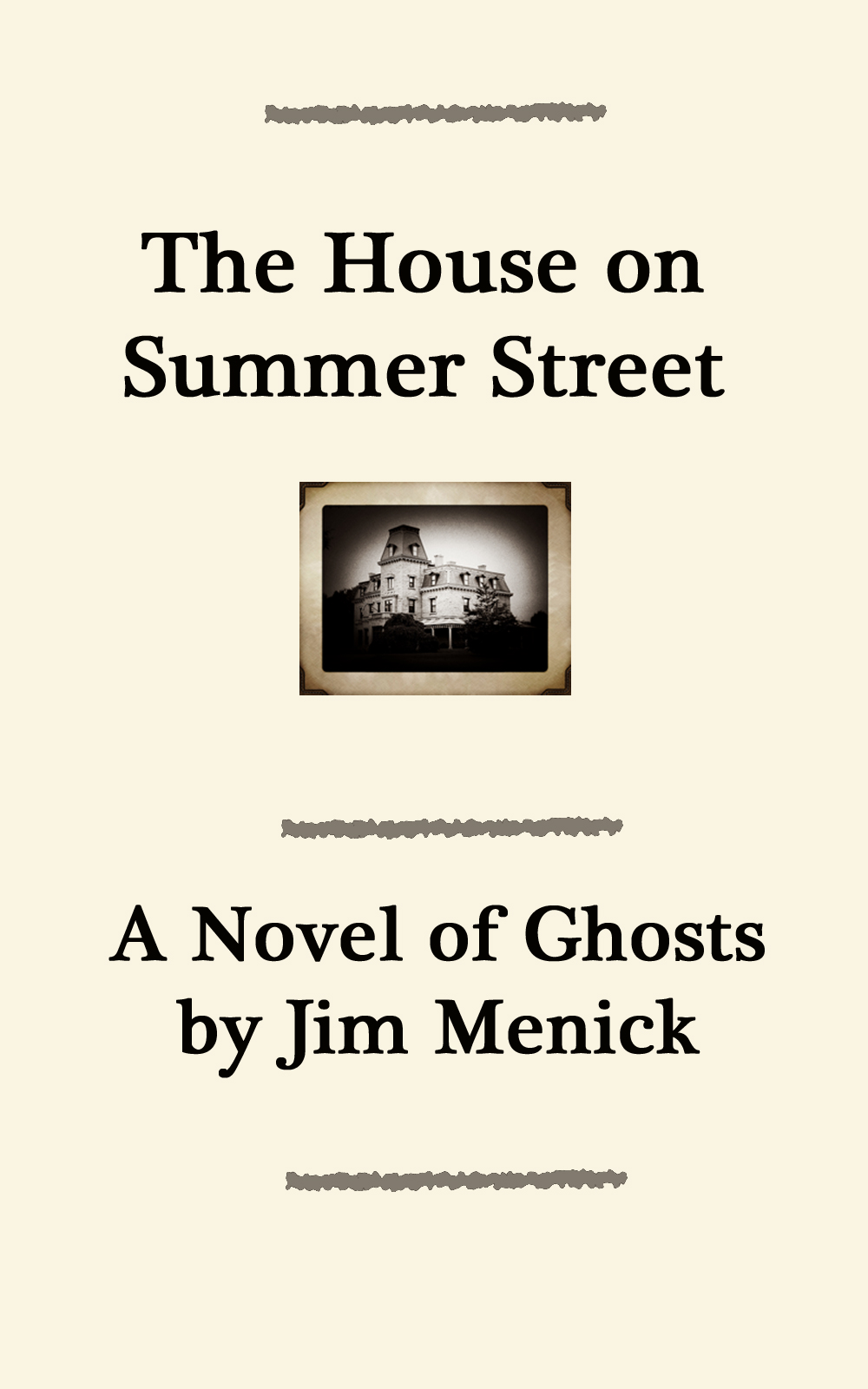
And here's a description:
A lot of things are happening all at once to Benjamin North. He’s starting middle school in a few weeks, his father has just remarried, which means that Ben now has a brand new stepmother (his dentist, of all people) and stepbrother (an annoying, nonstop eating machine), and on top of everything else, they’re all moving together into a new house that, to put it mildly, needs a little work. And if that weren’t enough, Ben discovers that the house seems to be haunted, a claim that no one else in his family believes.
But Ben finds an ally in his ghostly encounters. A mysterious girl in white whose name is Rose knows an awful lot about the dark history of this spooky old place. She will help Ben discover the deep secrets behind the spirits that roam these halls at night, and she promises to stand beside Ben when he finally faces the frightening truth of what is really going on in the house on Summer Street.
The process of getting it up on Amazon was pretty painless, even though there is no setting for the Save As that they wanted; the preview looked all right when I checked it, though. For the rest of it, you just click a few buttons, give them your tax info and your firstborn, and there you are. (For new members of the VCA, I outlined my adventures creating the cover a while back; as for writing the actual book, that was just, well, writing.)
If you want an audio sample, to wit, the first chapter, click over in the box on the top right of this screen.
And here's a description:
A lot of things are happening all at once to Benjamin North. He’s starting middle school in a few weeks, his father has just remarried, which means that Ben now has a brand new stepmother (his dentist, of all people) and stepbrother (an annoying, nonstop eating machine), and on top of everything else, they’re all moving together into a new house that, to put it mildly, needs a little work. And if that weren’t enough, Ben discovers that the house seems to be haunted, a claim that no one else in his family believes.
But Ben finds an ally in his ghostly encounters. A mysterious girl in white whose name is Rose knows an awful lot about the dark history of this spooky old place. She will help Ben discover the deep secrets behind the spirits that roam these halls at night, and she promises to stand beside Ben when he finally faces the frightening truth of what is really going on in the house on Summer Street.
The process of getting it up on Amazon was pretty painless, even though there is no setting for the Save As that they wanted; the preview looked all right when I checked it, though. For the rest of it, you just click a few buttons, give them your tax info and your firstborn, and there you are. (For new members of the VCA, I outlined my adventures creating the cover a while back; as for writing the actual book, that was just, well, writing.)
If you want an audio sample, to wit, the first chapter, click over in the box on the top right of this screen.
Thursday, May 16, 2013

Thursday, May 09, 2013
Then again, Oreos are the Walter Mondale of mass-produced baked goods
I am not particularly taken aback that my various blogs (i.e., this one and TVFT) attract occasional spam comments, but I am rather bemused that it’s always the same postings that get the comments. In the beginning I would go and erase them, but it’s not as if there’s some vast army of archivists scouring these babies for evidence of past indiscretions, or past discretions, for that matter, so it doesn’t really matter much. It does raise the question of spam in the first place, though. Why do obviously bogus messages from dubious sources with ludicrous misspellings continue to swell the interwebs? The answer is that somewhere there is a small number of people who cannot recognize bogusness, dubiousness and bad spelling, much less combinations of all three, who are the target of these messages. I guess we can presume that it’s the statistical deviation; everybody, except for the statistical deviation, knows a certain thing. The statistical deviation, on the other hand, thinks that a celebrity without spell-checking really wants them to lose weight, earn money and impress the ladies in matters physiological. It’s a funny world we live in. It does seem, though, that spam in general is dying out, or maybe it’s just that spam filters are finally working. Surprisingly, I get my worst spam in the highest volume via my DJ account. Additionally, I get a report every day of the spam that got caught by the filters. That’s my favorite. Who doesn’t appreciate the found poetry of a list of spam subject headers?
Speaking of technology, the NY Times today deferred to Feedly as the Google Reader replacement of choice. I’ve been using the app pretty much since day one of the demise announcement, and I have to admit that I’ve settled into it nicely. Breaking in the new app gave me a chance to update my feeds, which was a good thing, as I had accumulated a lot of barnacles. You don’t really need to aggregate a lot of aggregating sites, for one thing. The whole point of RSS is to eliminate the use of aggregate sites, except for a few that have particular value beyond always alluding to the obvious. BoingBoing falls into this category. Sure, it aggregates, but it also has original material, and as often as not, it points to sites that no one else is pointing to (at least, they’re not pointing to them until BoingBoing does). Part of the problem of an RSS reader is that one does tend to overload it, and unless you’re professionally trawling the internet for some reason or other, you really don’t want more feedage coming in than you can reasonably enjoy. If you find something interesting, in other words, you want to read it, as compared to being so overwhelmed by all your other unread articles that you just keep moving to keep up. As I was coming from a heavy need for material when I was feeding the DJ site with content, I had a lot of baggage to dump when it was just to entertain me. I still add and subtract, of course. Feed management is one of those modern chores that never fails to feel productive even though the end result may be anything but. One does need to keep busy during the off season, though.
I admittedly have not been moving as quickly on the audio of Summer Street as I would like. No particular reason, except my own inertia. Although it really isn’t that easy, especially working in the realization that I am far from professional at it. I listen to so many audios that I have no delusions about my own quality as a performer. Still, it is allowing me that one last go-through, and when it’s done, it will be done. I’m still going to publish this summer, and summer is rapidly approaching. That I’ll be away in June means that I really do have to get off the schneid. This weekend. I promise, I will start putting in the necessary time.
Speaking of technology, the NY Times today deferred to Feedly as the Google Reader replacement of choice. I’ve been using the app pretty much since day one of the demise announcement, and I have to admit that I’ve settled into it nicely. Breaking in the new app gave me a chance to update my feeds, which was a good thing, as I had accumulated a lot of barnacles. You don’t really need to aggregate a lot of aggregating sites, for one thing. The whole point of RSS is to eliminate the use of aggregate sites, except for a few that have particular value beyond always alluding to the obvious. BoingBoing falls into this category. Sure, it aggregates, but it also has original material, and as often as not, it points to sites that no one else is pointing to (at least, they’re not pointing to them until BoingBoing does). Part of the problem of an RSS reader is that one does tend to overload it, and unless you’re professionally trawling the internet for some reason or other, you really don’t want more feedage coming in than you can reasonably enjoy. If you find something interesting, in other words, you want to read it, as compared to being so overwhelmed by all your other unread articles that you just keep moving to keep up. As I was coming from a heavy need for material when I was feeding the DJ site with content, I had a lot of baggage to dump when it was just to entertain me. I still add and subtract, of course. Feed management is one of those modern chores that never fails to feel productive even though the end result may be anything but. One does need to keep busy during the off season, though.
I admittedly have not been moving as quickly on the audio of Summer Street as I would like. No particular reason, except my own inertia. Although it really isn’t that easy, especially working in the realization that I am far from professional at it. I listen to so many audios that I have no delusions about my own quality as a performer. Still, it is allowing me that one last go-through, and when it’s done, it will be done. I’m still going to publish this summer, and summer is rapidly approaching. That I’ll be away in June means that I really do have to get off the schneid. This weekend. I promise, I will start putting in the necessary time.
Tuesday, April 16, 2013
Fresh from the recording booth
I guess yesterday threw all of us for a loop. I mean, in our forensics universe, Boston looms way large, so immediate fears were for people we might know, quickly giving way to fears for people we don't know. And then anger. Life is tough enough without this sort of thing going on. Damn.
Still, something like this happens and then we get back to business. What else can we do?
I was going to post this yesterday, but I thought I'd give it a rest for a day. But now, as I say, back to business. It's from the annals of things that, if I had thought about it a little more, I would have expected exactly this outcome:
I motivated myself to get that first chapter of The House on Summer Street recorded over the weekend. It’s been a while, let me tell you. But the old microphone wasn’t far away, and after a little poking about in Audacity, I was ready to go. Then I opened the book, and read through the first chapter to reorient myself, and, good grief, I really enjoyed it. I like Ben, the narrator, and his voice is fun. And then I did the recording, and this is where, if I had thought about it, I would have expected the outcome. First, there are still the tiniest of textual errors, despite having combed through this thing like crazy innumerable times, and you catch them when you’re reading it aloud because they’re not misspellings but real words albeit the wrong words, like Dan for Dad, or there’s a comma where there should be a period. Easy stuff to miss when you’re proofing because the mind tricks you into seeing what should be there. Second, I really enjoyed myself as I was recording, and despite the amount of work involved, now I really want to do an audio of the whole book.
That’ll kill a few hours.
I had second thoughts when I went back to edit it. Do I really want to devote this much time to a recording? I have no idea what to do with the audio after I record it. As I said, I’ll use the first chapter as a teaser. But the whole thing? I just don’t know. I really can't sell it, and I don't mind giving it away, but I’m not exactly sure how. I don’t want to make it too easy for people, because I’d rather they read it that listen to it, but I don’t want to make it too hard, either. Oh, well. I’ll figure out something, if I do the whole thing.
On the forensic front, it was a rather successful weekend for the Sailors, winning not one but two divisions at the NYSFL championships. And both the winners made it to finals in their other event. Jeesh. I’m going to start taking coaching credit for our Speecho-Americans, rather than letting Spons, the speech coach, take it all for herself, even if I have nothing much to do with it. I mean, I do all the hard stuff. I entered them into the tournament on tabroom.com, for instance; that alone is worth something. And I ordered the bus! And I stayed out of their way with great efficiency the rest of the time; isn’t there a reward for that?
Of course, that pretty much puts paid to the Sailor year, except that both these guys are going to CatNats next month. And it’s still only April. I guess I will have plenty of time to do all the recording I want to do of Summer Street.
Still, something like this happens and then we get back to business. What else can we do?
I was going to post this yesterday, but I thought I'd give it a rest for a day. But now, as I say, back to business. It's from the annals of things that, if I had thought about it a little more, I would have expected exactly this outcome:
I motivated myself to get that first chapter of The House on Summer Street recorded over the weekend. It’s been a while, let me tell you. But the old microphone wasn’t far away, and after a little poking about in Audacity, I was ready to go. Then I opened the book, and read through the first chapter to reorient myself, and, good grief, I really enjoyed it. I like Ben, the narrator, and his voice is fun. And then I did the recording, and this is where, if I had thought about it, I would have expected the outcome. First, there are still the tiniest of textual errors, despite having combed through this thing like crazy innumerable times, and you catch them when you’re reading it aloud because they’re not misspellings but real words albeit the wrong words, like Dan for Dad, or there’s a comma where there should be a period. Easy stuff to miss when you’re proofing because the mind tricks you into seeing what should be there. Second, I really enjoyed myself as I was recording, and despite the amount of work involved, now I really want to do an audio of the whole book.
That’ll kill a few hours.
I had second thoughts when I went back to edit it. Do I really want to devote this much time to a recording? I have no idea what to do with the audio after I record it. As I said, I’ll use the first chapter as a teaser. But the whole thing? I just don’t know. I really can't sell it, and I don't mind giving it away, but I’m not exactly sure how. I don’t want to make it too easy for people, because I’d rather they read it that listen to it, but I don’t want to make it too hard, either. Oh, well. I’ll figure out something, if I do the whole thing.
On the forensic front, it was a rather successful weekend for the Sailors, winning not one but two divisions at the NYSFL championships. And both the winners made it to finals in their other event. Jeesh. I’m going to start taking coaching credit for our Speecho-Americans, rather than letting Spons, the speech coach, take it all for herself, even if I have nothing much to do with it. I mean, I do all the hard stuff. I entered them into the tournament on tabroom.com, for instance; that alone is worth something. And I ordered the bus! And I stayed out of their way with great efficiency the rest of the time; isn’t there a reward for that?
Of course, that pretty much puts paid to the Sailor year, except that both these guys are going to CatNats next month. And it’s still only April. I guess I will have plenty of time to do all the recording I want to do of Summer Street.
Thursday, April 11, 2013
Marketing
Back to Summer Street.
After you actually have everything finished as far as the work itself is concerned, there’s the problem of getting it where people can read it. You’ve got to sell it. Which raises the first question, sell it for how much?
I’ve been conflicted here, because the bottom line is that I don’t expect to sell a bazillion copies, nor do I expect to make a bazillion dollars. “No man but a blockhead ever wrote except for money,” is what Dr. Johnson said, and he’s probably right, but when push comes to shove, I think I’d rather side with the blockheads of life. At the same time, I already give away a bunch of writing, and I want to differentiate this from the freebies. People tend to assign values to items commensurate with their costs, which is unfortunate but something that must be considered. If I were to give the book away, it would not be valued particularly highly. If I were to sell it, people would think that it's worth more than if it were free.
So what should an ebook book cost? More specifically, an ebook by me? Well, I think it should be reasonable enough to qualify as a non-thought purchase. That is, I want people to buy it but not have to think twice about the price. If it were $15, say, that puts it into the category of the average big book by a big name. I don’t want to compete with that, and at the same time, when an ebook costs that much, I have second thoughts myself (even though I have nothing against paying $20 for the same book as a hardcover: the math of personal buying is an elusive beast). For Summer Street, I’m thinking somewhere ranging between $3 and $5, leaning toward the lower figure. Given that a third of any revenue goes to Amazon, I’ll never get rich at that rate. But as I already suggested, I didn’t write it to get rich. For that matter, I don’t think I have it in me to write to get rich. I write to write. What can I say?
After that, there’s the matter of publicizing it. Just making a book available does nothing to sell it, unless you are so sought after that people have been panting heavily since your last book for this one to come out. There are mere handfuls of writers in that category. For everyone else, you’ve got to let readers know its there. Honestly, I’m not looking forward to this part. I guess I’ll have to honk it on Facebook and Twitter, to the people to whom I’m already connected, a handful of whom might be moved to actually purchase it. I’ll sort of have to become the book for a while, with the image of the cover all over everything I do. Which is why the cover is so important. It is your core selling tool.
I’ve also figured I’ll record a little bit of it and give that away. Maybe the first chapter or so. I may not be the world’s greatest reader, but I’m not the world’s worst, and I certainly have a lot of experience performing Nostrum episodes. If I can handle the less than timeless prose of Jules and the Nostrumite, I ought to be able to handle my own. That, in fact, is my next step in the process, and I hope to get it done in the next week or two. I just need an afternoon alone at the Chez; the microphone is already set up to go. All I have to do is turn it on.
I may or may not be much of a writer; that’s for others to decide. But I know that I’m not an entrepreneur. Some people are born salesmen. I am anything but. But I’ve got to sell Summer Street, and I’ll do what I can.
Bear with me.
After you actually have everything finished as far as the work itself is concerned, there’s the problem of getting it where people can read it. You’ve got to sell it. Which raises the first question, sell it for how much?
I’ve been conflicted here, because the bottom line is that I don’t expect to sell a bazillion copies, nor do I expect to make a bazillion dollars. “No man but a blockhead ever wrote except for money,” is what Dr. Johnson said, and he’s probably right, but when push comes to shove, I think I’d rather side with the blockheads of life. At the same time, I already give away a bunch of writing, and I want to differentiate this from the freebies. People tend to assign values to items commensurate with their costs, which is unfortunate but something that must be considered. If I were to give the book away, it would not be valued particularly highly. If I were to sell it, people would think that it's worth more than if it were free.
So what should an ebook book cost? More specifically, an ebook by me? Well, I think it should be reasonable enough to qualify as a non-thought purchase. That is, I want people to buy it but not have to think twice about the price. If it were $15, say, that puts it into the category of the average big book by a big name. I don’t want to compete with that, and at the same time, when an ebook costs that much, I have second thoughts myself (even though I have nothing against paying $20 for the same book as a hardcover: the math of personal buying is an elusive beast). For Summer Street, I’m thinking somewhere ranging between $3 and $5, leaning toward the lower figure. Given that a third of any revenue goes to Amazon, I’ll never get rich at that rate. But as I already suggested, I didn’t write it to get rich. For that matter, I don’t think I have it in me to write to get rich. I write to write. What can I say?
After that, there’s the matter of publicizing it. Just making a book available does nothing to sell it, unless you are so sought after that people have been panting heavily since your last book for this one to come out. There are mere handfuls of writers in that category. For everyone else, you’ve got to let readers know its there. Honestly, I’m not looking forward to this part. I guess I’ll have to honk it on Facebook and Twitter, to the people to whom I’m already connected, a handful of whom might be moved to actually purchase it. I’ll sort of have to become the book for a while, with the image of the cover all over everything I do. Which is why the cover is so important. It is your core selling tool.
I’ve also figured I’ll record a little bit of it and give that away. Maybe the first chapter or so. I may not be the world’s greatest reader, but I’m not the world’s worst, and I certainly have a lot of experience performing Nostrum episodes. If I can handle the less than timeless prose of Jules and the Nostrumite, I ought to be able to handle my own. That, in fact, is my next step in the process, and I hope to get it done in the next week or two. I just need an afternoon alone at the Chez; the microphone is already set up to go. All I have to do is turn it on.
I may or may not be much of a writer; that’s for others to decide. But I know that I’m not an entrepreneur. Some people are born salesmen. I am anything but. But I’ve got to sell Summer Street, and I’ll do what I can.
Bear with me.
Wednesday, April 10, 2013
Annette mysteries
We have had a triple play of recently deceased iconic celebrities: Ebert, Thatcher and Funicello. The usual suspects have written up the appropriate eulogies at great length, and there's not much crossover among them, and I certainly have nothing in particular to add to what's already out there. I was in the great unwashed of Siskel & Ebert watchers and a follower of Ebert ever after, I lived in wide-eyed fear that some day I might come across Margaret Thatcher in the flesh and she would cut my head off with just a look, and I sat in front of our little black&white TV in the '50s and watched as many episodes as I could of "The Mickey Mouse Club." I'm just like everyone else in all of this, and I will miss each of these people accordingly.
 One thing that I did see that is unusual is this: Annette Funicello on your Kindle – and more . One does occasionally see these old star-oriented mysteries in antiques shops or even used bookstores. I have to believe that they're absolutely dreadful, but at the same time, I do get kick out of seeing them. Who knew that Annette had her share of them?
Oh, for simpler times...
One thing that I did see that is unusual is this: Annette Funicello on your Kindle – and more . One does occasionally see these old star-oriented mysteries in antiques shops or even used bookstores. I have to believe that they're absolutely dreadful, but at the same time, I do get kick out of seeing them. Who knew that Annette had her share of them? Oh, for simpler times...
Wednesday, April 03, 2013
The cover takes shape
The House on Summer Street is the story of a boy moving into a new house with his newly remade family. He is on the brink of middle school, and not terribly thrilled by his father’s new wife and her young son. The good news (?) is that the house seems to be haunted.
The house is very clearly described in the book as an old Victorian with a dead willow tree in the front. The title of the book being what it is, one would be hard pressed not to use an image of the house on the cover. Granted that the words and the image would apparently be the same, the words are straightforward and the image can add the necessary air of intrigue to them. A house is a house is a house. A spooky house is something else altogether. So, I had to get myself a spooky old Victorian. I headed over to your friendly neighborhood interwebs.
I looked long and hard for an image that included both the house and the tree, but came up with nothing. Of course, I knew I’d have to Photoshop whatever I came up with, so I separately found, first, a house, and secondly, a tree.


I love that house; I could move in tomorrow. The tree is obviously far from dead, but a little manipulation and I could probably make something of it. I eventually decided, however, that the two together just weren’t going to work. It wasn’t that my ‘shop skills weren’t up to it (although they probably weren’t) so much as my desire for white space as mentioned yesterday, and for keeping the design a rough cousin of Lingo.
So I went to work on the house. I decided I wanted it to look like an old photograph, and before long I realized that I had better tools for that on my iPhone than on my Mac. I dug into Camera+ and iPhoto and Instagram and started playing around. Eventually I came up with this:

This seemed suitably spooky and I put it on the cover like this:

The font looked a little light to me, so I went to this:

I was starting to be bothered that the underlying house image was not one that I owned. Granted, it was virtually unrecognizable, but the VCA knows my feelings about intellectual property, and just because it’s on the internet doesn’t mean you can have it for free. So I looked through my own pictures and found this one.

At this point, I was thinking that I needed to experiment with a fuller treatment. So I manipulated the photo:

And then I went whole hog:

Then I tried it with the other image.

I wasn’t satisfied with these visually, but more to the point, they were going too far in a wrong direction. To warrant a cover like these, the book ought to scare you to death and scar you for life, and it’s not that kind of book.
So I went back to my original idea, but this time I manipulated my own photograph:

And went back to, roughly, the original design:

And that’s about it. I may tinker some more, but it does capture the sense of the book well enough, and I doubt if my ‘shop skills could do much more than this sort of approach. I didn’t want it to look too juvenile, because although the hero is young and it probably was directed originally at a young audience, it’s not exclusively YA, and I think this fits the bill. In the end, should I have hired a designer? Probably. Can I live with this? Sure. It’s better than that crappy Lingo cover that replaced the gorgeous original illustration. And it’s always going to be postage-stamp size on a page here or on Amazon.
It’ll do.
The house is very clearly described in the book as an old Victorian with a dead willow tree in the front. The title of the book being what it is, one would be hard pressed not to use an image of the house on the cover. Granted that the words and the image would apparently be the same, the words are straightforward and the image can add the necessary air of intrigue to them. A house is a house is a house. A spooky house is something else altogether. So, I had to get myself a spooky old Victorian. I headed over to your friendly neighborhood interwebs.
I looked long and hard for an image that included both the house and the tree, but came up with nothing. Of course, I knew I’d have to Photoshop whatever I came up with, so I separately found, first, a house, and secondly, a tree.


I love that house; I could move in tomorrow. The tree is obviously far from dead, but a little manipulation and I could probably make something of it. I eventually decided, however, that the two together just weren’t going to work. It wasn’t that my ‘shop skills weren’t up to it (although they probably weren’t) so much as my desire for white space as mentioned yesterday, and for keeping the design a rough cousin of Lingo.
So I went to work on the house. I decided I wanted it to look like an old photograph, and before long I realized that I had better tools for that on my iPhone than on my Mac. I dug into Camera+ and iPhoto and Instagram and started playing around. Eventually I came up with this:

This seemed suitably spooky and I put it on the cover like this:

The font looked a little light to me, so I went to this:

I was starting to be bothered that the underlying house image was not one that I owned. Granted, it was virtually unrecognizable, but the VCA knows my feelings about intellectual property, and just because it’s on the internet doesn’t mean you can have it for free. So I looked through my own pictures and found this one.

At this point, I was thinking that I needed to experiment with a fuller treatment. So I manipulated the photo:

And then I went whole hog:

Then I tried it with the other image.

I wasn’t satisfied with these visually, but more to the point, they were going too far in a wrong direction. To warrant a cover like these, the book ought to scare you to death and scar you for life, and it’s not that kind of book.
So I went back to my original idea, but this time I manipulated my own photograph:

And went back to, roughly, the original design:

And that’s about it. I may tinker some more, but it does capture the sense of the book well enough, and I doubt if my ‘shop skills could do much more than this sort of approach. I didn’t want it to look too juvenile, because although the hero is young and it probably was directed originally at a young audience, it’s not exclusively YA, and I think this fits the bill. In the end, should I have hired a designer? Probably. Can I live with this? Sure. It’s better than that crappy Lingo cover that replaced the gorgeous original illustration. And it’s always going to be postage-stamp size on a page here or on Amazon.
It’ll do.
Tuesday, April 02, 2013
Creating a cover
According to Kindle, the next step after writing your book is to get a cover. Not surprisingly, this is also the next step in general publishing. After a book goes into production and is scheduled for launch, one meets with the art director to decide what it ought to look like. A good art director manages to understand what the editor of the book is talking about, and to translate those words into the sense of some sort of image. Once they agree, an artist is found to whom the art director can now speak directly in images. The art director is the translator, in other words, of the editors’ words into the artists’ images. The art director also has a sense of marketing, of knowing not only what will look good but what will catch the eye of the prospective buyer. We used to say that the cover image was the poster, so to speak, for the book, the only real selling tool most books ever have. It needs to work like a poster, grandly presenting the contents of the book, but it also needs to work like a book cover, i.e., this visual business which will be forever linked to the content (until subsequent editions come along, if any).
Not very many authors are drawn into this process, unless their commercial weight is so great that they can’t be avoided. Authors are, by definition, word people, and what they like or don’t like visually may or may not the right thing for a cover. Certainly major authors will be shown cover designs, and may even have veto power, but they seldom get too involved if they know what’s good for them. There’s a reason we don’t read the novels of Claude Monet or go to museums to see the paintings of Mark Twain. Some would say that the circuits of the brain that make one good at words are laid in such a way that one simply cannot also be good at images, and vice versa. I wouldn’t go that far, but in my experience, words are words and images are images, and it’s best to leave each to their appropriate craftsmen.
Kindle tells the aspiring self-publisher to acquire the services of a professional to create the cover. This, like their telling the self-publisher to acquire the services of a professional to help edit the text, is good advice. The only thing anyone will see when they look for your book is that cover image. Unless your name is so important that the image doesn’t matter (and if you look at the images on bestsellers written by the authors of former bestsellers, you’ll usually see the author’s name taking up a lion’s share of the cover geography), then the image matters. Something totally amateurish will simply make people assume that the text is also amateurish. Something unattractive will make people think the text is unattractive. Et cetera, et cetera.
I have not taken Kindle’s good advice on this.
First of all, I don’t want to pay the money. I’m not going into this thinking that I’m potentially making some great fortune, and I don’t want to lose money on the deal. Second of all, I’m not terrible at recognizing decent enough cover imagery. I’m not all particularly skilled at creating it, but I know stinky when I see it. My assumption was that I could put something together that would be okay. And then there was this:
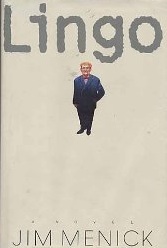
I wanted something that would be what you might call a companion to Lingo’s original cover. As you can see, it’s mostly empty space. I like empty space, and I figured I could probably design empty space as well as the next person. (I like this cover, although I have to admit that, when I first saw it, I was a little taken aback, because my image of Lingo was nothing like this image. But I got over that. It was a pretty nice cover, and it wasn't misleading. And to be honest, nobody ever asked my opinion in the first place. I was just the author.)
This, on the other hand, is the rather generic cover that is floating around now. If I remember correctly, it came about when the book was Print-on-Demand. (I didn't bother stripping out the Amazon stuff when I copied the image over.)

Not quite the same. When I saw this I was a lot taken aback, but realistically, the book had run its course and, well, once again, nobody ever asked my opinion. Say what you will, I was sure that I could do better; I only wish someone had asked.
And so, with an idea to come up with at least something congenial to the original Lingo cover, and using the tools at my disposal, I dug in.
Not very many authors are drawn into this process, unless their commercial weight is so great that they can’t be avoided. Authors are, by definition, word people, and what they like or don’t like visually may or may not the right thing for a cover. Certainly major authors will be shown cover designs, and may even have veto power, but they seldom get too involved if they know what’s good for them. There’s a reason we don’t read the novels of Claude Monet or go to museums to see the paintings of Mark Twain. Some would say that the circuits of the brain that make one good at words are laid in such a way that one simply cannot also be good at images, and vice versa. I wouldn’t go that far, but in my experience, words are words and images are images, and it’s best to leave each to their appropriate craftsmen.
Kindle tells the aspiring self-publisher to acquire the services of a professional to create the cover. This, like their telling the self-publisher to acquire the services of a professional to help edit the text, is good advice. The only thing anyone will see when they look for your book is that cover image. Unless your name is so important that the image doesn’t matter (and if you look at the images on bestsellers written by the authors of former bestsellers, you’ll usually see the author’s name taking up a lion’s share of the cover geography), then the image matters. Something totally amateurish will simply make people assume that the text is also amateurish. Something unattractive will make people think the text is unattractive. Et cetera, et cetera.
I have not taken Kindle’s good advice on this.
First of all, I don’t want to pay the money. I’m not going into this thinking that I’m potentially making some great fortune, and I don’t want to lose money on the deal. Second of all, I’m not terrible at recognizing decent enough cover imagery. I’m not all particularly skilled at creating it, but I know stinky when I see it. My assumption was that I could put something together that would be okay. And then there was this:
I wanted something that would be what you might call a companion to Lingo’s original cover. As you can see, it’s mostly empty space. I like empty space, and I figured I could probably design empty space as well as the next person. (I like this cover, although I have to admit that, when I first saw it, I was a little taken aback, because my image of Lingo was nothing like this image. But I got over that. It was a pretty nice cover, and it wasn't misleading. And to be honest, nobody ever asked my opinion in the first place. I was just the author.)
This, on the other hand, is the rather generic cover that is floating around now. If I remember correctly, it came about when the book was Print-on-Demand. (I didn't bother stripping out the Amazon stuff when I copied the image over.)
Not quite the same. When I saw this I was a lot taken aback, but realistically, the book had run its course and, well, once again, nobody ever asked my opinion. Say what you will, I was sure that I could do better; I only wish someone had asked.
And so, with an idea to come up with at least something congenial to the original Lingo cover, and using the tools at my disposal, I dug in.
Friday, March 29, 2013
Nostrum is back? Is Amazon buying them too?
I really don’t know what to make of this.
There was a posting yesterday on Jules’s Nostrum Nation blog that he and the Nostrumite were bringing back Nostrum. Again. They’re calling it Nostrum Series III, A Very Special (Batch o') Episode(s), (AKA the Codswallop Chronicles), and you now know as much about it as I do. He gave no timetable, and no indication why it was back or what it will cover. For that matter, he gave no indication of what he and the Nostrumite have been up to since they were last heard from a couple of years ago. Has all this talk about my writing somehow lit a fire under them to get back to their writing? Maybe they’re just jealous. I have no idea. I’ll see if I can track one or the other of them down over the weekend and get some details.
Anyhow, speaking of writing, this morning it was announced that Amazon will be buying Goodreads. Now I can’t say that I’m much of a follower of Goodreads; I don’t exactly need advice on reading, given how little I get to do on my own dime. And as the VCA knows, I’m not that big a user of social media. I especially don’t rely on the advice of strangers to recommend how I spend my time, or how I spend my mental energy. Trusted critics are one thing; the Great Unwashed are something else altogether. The Fifty Shades books, for instance, get an average of 4 stars according to Amazon customers. The likelihood that I would enjoy an average of 4 stars worth of Fifty Shadesness, however, is extremely small. If my daughter were to recommend a book I might like, however, I’d pick it up right away, and I’d probably like it. But that’s just me. Goodreads is a big deal in what you might call the reading community, and the last I heard, Amazon is something of a big deal in the bookselling community. Any question why I’m going to use Amazon as the outlet for The House on Summer Street? Amazon may or may not be the latest edition of evil incarnate, but when it comes to books, they are increasingly the only game in town. The are integrated vertically, horizontally, elliptically and widdershins. I can’t wait to hear how the publishing community takes this news. There are going to be some unhappy campers out there.
Come Monday, I’ll get back into writing up my adventures publishing the new book. This weekend should be fun; I’m popping down to NYC tomorrow for some museumness, and then dropping in on O’C, who is screening Willow for the assembled multitudes. Now, I can’t say I care one way or the other about Willow, but I do have a fondness for the assembled multitudes, which will include my daughter and JV and God knows who-all. Then Easter is a family day, out to eat at a local joint that does a nice Easter dinner complete with rabbit stew, which strikes me as either perfect or wildly inappropriate, much like having reindeer stew on Christmas Eve. It gets the Aged P out and about, however, which is a good thing once in a while. And then Monday night, we have a tentative workshop for the Sailor Speecho-Americans heading to the State finals, which means that I keep at least a marginal hand in such things for a little while longer.
There was a posting yesterday on Jules’s Nostrum Nation blog that he and the Nostrumite were bringing back Nostrum. Again. They’re calling it Nostrum Series III, A Very Special (Batch o') Episode(s), (AKA the Codswallop Chronicles), and you now know as much about it as I do. He gave no timetable, and no indication why it was back or what it will cover. For that matter, he gave no indication of what he and the Nostrumite have been up to since they were last heard from a couple of years ago. Has all this talk about my writing somehow lit a fire under them to get back to their writing? Maybe they’re just jealous. I have no idea. I’ll see if I can track one or the other of them down over the weekend and get some details.
Anyhow, speaking of writing, this morning it was announced that Amazon will be buying Goodreads. Now I can’t say that I’m much of a follower of Goodreads; I don’t exactly need advice on reading, given how little I get to do on my own dime. And as the VCA knows, I’m not that big a user of social media. I especially don’t rely on the advice of strangers to recommend how I spend my time, or how I spend my mental energy. Trusted critics are one thing; the Great Unwashed are something else altogether. The Fifty Shades books, for instance, get an average of 4 stars according to Amazon customers. The likelihood that I would enjoy an average of 4 stars worth of Fifty Shadesness, however, is extremely small. If my daughter were to recommend a book I might like, however, I’d pick it up right away, and I’d probably like it. But that’s just me. Goodreads is a big deal in what you might call the reading community, and the last I heard, Amazon is something of a big deal in the bookselling community. Any question why I’m going to use Amazon as the outlet for The House on Summer Street? Amazon may or may not be the latest edition of evil incarnate, but when it comes to books, they are increasingly the only game in town. The are integrated vertically, horizontally, elliptically and widdershins. I can’t wait to hear how the publishing community takes this news. There are going to be some unhappy campers out there.
Come Monday, I’ll get back into writing up my adventures publishing the new book. This weekend should be fun; I’m popping down to NYC tomorrow for some museumness, and then dropping in on O’C, who is screening Willow for the assembled multitudes. Now, I can’t say I care one way or the other about Willow, but I do have a fondness for the assembled multitudes, which will include my daughter and JV and God knows who-all. Then Easter is a family day, out to eat at a local joint that does a nice Easter dinner complete with rabbit stew, which strikes me as either perfect or wildly inappropriate, much like having reindeer stew on Christmas Eve. It gets the Aged P out and about, however, which is a good thing once in a while. And then Monday night, we have a tentative workshop for the Sailor Speecho-Americans heading to the State finals, which means that I keep at least a marginal hand in such things for a little while longer.
Subscribe to:
Comments (Atom)