
Showing posts with label musical. Show all posts
Showing posts with label musical. Show all posts
Tuesday, October 14, 2014


Friday, July 26, 2013
True Life Adventures
Boss: I love musicals. I like to binge on them.
Me: Excellent.
Boss: I don't like Andrew Lloyd Webber anymore, though.
Me: That's normal. It's a part of growing up.
Boss: The show of his that turned me off was Into the Woods.
Me: That's not Lloyd Webber. That's Sondheim.
Boss: It still sucked.

Me: Excellent.
Boss: I don't like Andrew Lloyd Webber anymore, though.
Me: That's normal. It's a part of growing up.
Boss: The show of his that turned me off was Into the Woods.
Me: That's not Lloyd Webber. That's Sondheim.
Boss: It still sucked.
Thursday, May 09, 2013
Wednesday, December 12, 2012
Sinatra
Born on this date in 1915, as a young lad Frank had the guts to partner up on the dance floor with Gene Kelly. He pulls it off too. (Then again, Kelly had the guts to sing along with Sinatra. He doesn't do too badly either.)
Monday, October 15, 2012
P. G. Wodehouse
There are some people in the world who think that the character name Gussie Fink-Nottle is about as good as it gets. And that's just one of the folks created, of course, by Sir Pelham Grenville Wodehouse in his legendary series of Bertie and Jeeves stories. Needless to say, one ought to read Wodehouse, who was a master of language, and for that matter, listening to him via audiobooks is highly recommended, but no one ever went wrong watching Fry and Laurie take on the roles.
Others have also played the parts, with various levels of success, and there was an Andrew Lloyd Webber show, your opinion of which may depend on your love, or lack thereof, for Andrew Lloyd Webber.
Old Plum, as he was known, got into a bit of trouble with the Nazis, raising the question of whether he was, in fact, a sympathizer or merely a naive dupe. Who knows? I have a sense from what I've read that he was pretty much just so wrapped up in his work that he was rather stupidly ignorant, but he's not the first artist to fall into that category. Anyhow, in addition to his books and stories, he did a lot of theater work, including the songs from this little ditty. Talk about a more innocent age...
In the hall of fame it will be Jeeves and Bertie who last the longest. Which is only right. Today is also Michel Foucault's birthday, but I have found that his work is seldom as comic as Wodehouse's, hence I have chosen to profile the one rather than the other.
Others have also played the parts, with various levels of success, and there was an Andrew Lloyd Webber show, your opinion of which may depend on your love, or lack thereof, for Andrew Lloyd Webber.
Old Plum, as he was known, got into a bit of trouble with the Nazis, raising the question of whether he was, in fact, a sympathizer or merely a naive dupe. Who knows? I have a sense from what I've read that he was pretty much just so wrapped up in his work that he was rather stupidly ignorant, but he's not the first artist to fall into that category. Anyhow, in addition to his books and stories, he did a lot of theater work, including the songs from this little ditty. Talk about a more innocent age...
In the hall of fame it will be Jeeves and Bertie who last the longest. Which is only right. Today is also Michel Foucault's birthday, but I have found that his work is seldom as comic as Wodehouse's, hence I have chosen to profile the one rather than the other.
Monday, July 16, 2012
Music: Cher
Cher does West Side Story. All of it.
As one of the YouTube commenters points out, if there ever was a video where the words "No description available" didn't begin to sum it up, this is it. It's from one of her specials in the late 70s.
Via Hairpin.
.
As one of the YouTube commenters points out, if there ever was a video where the words "No description available" didn't begin to sum it up, this is it. It's from one of her specials in the late 70s.
Via Hairpin.
.
Tuesday, July 03, 2012
George M. Cohan was born today. Yes, today
What? Whoa! Wait a minute! George M. Cohan was born on the 3rd of July?
Yep. Johnny Jones, of the play Little Johnny Jones, sings proudly that he was born on the 4th of July. But he was just a character in a play. Cohan was born on July 3, 1878—close, but no cigar. By the way, Jimmy Cagney was born on July 17; less close, and still no cigar. I mention Cagney because when most of us think of Cohan, it's Cagney who comes to mind, thanks to the film Yankee Doodle Dandy, which will probably be playing on half of the stations on your TV tomorrow from dawn to dusk and beyond. But Cagney wasn't Cohan any more than Cohan was Johnny Jones. He just played him in a movie.
There isn't a lot of footage of Cohan around. He did a couple of talkies and a few silents, so this material from Phantom President (1932) is a rare find. It's also part and parcel of its time, with Cohan in blackface for much of it. Minstrelsy was alive and well at the time, and Al Jolson near at the top of his fame. Times change... Anyhow, the film doesn't look all that great, but around 1:43 Cohan starts to sing and dance. Watch that! This is one of the greatest entertainers ever, captured doing his thing on film.
You might want to compare Jimmy Cagney's dancing in this link from Yankee Doodle Dandy. He does thrust himself around much as Cohan did. A lot of people think that Cagney just danced that way and that somehow in 1942 he recreated himself from his gangster movie roots, suddenly becoming a song-and-dance man for this movie. But Cagney was a Broadway hoofer for years before he was squashing grapefruits into his molls' faces. Even while he was making those gangster films for Warner Brothers he also made Footlight Parade. Watch Cagney dance here with Ruby Keeler in the Shanghai Lil number from that picture. He's still got a lot of back in it, but he's much more contained and, frankly, pretty good. At least, unlike Ms. Keeler, he doesn't have to keep looking at his feet!
And before you ask, Ruby Keeler was born on August 25th. Not even close.
Yep. Johnny Jones, of the play Little Johnny Jones, sings proudly that he was born on the 4th of July. But he was just a character in a play. Cohan was born on July 3, 1878—close, but no cigar. By the way, Jimmy Cagney was born on July 17; less close, and still no cigar. I mention Cagney because when most of us think of Cohan, it's Cagney who comes to mind, thanks to the film Yankee Doodle Dandy, which will probably be playing on half of the stations on your TV tomorrow from dawn to dusk and beyond. But Cagney wasn't Cohan any more than Cohan was Johnny Jones. He just played him in a movie.
There isn't a lot of footage of Cohan around. He did a couple of talkies and a few silents, so this material from Phantom President (1932) is a rare find. It's also part and parcel of its time, with Cohan in blackface for much of it. Minstrelsy was alive and well at the time, and Al Jolson near at the top of his fame. Times change... Anyhow, the film doesn't look all that great, but around 1:43 Cohan starts to sing and dance. Watch that! This is one of the greatest entertainers ever, captured doing his thing on film.
You might want to compare Jimmy Cagney's dancing in this link from Yankee Doodle Dandy. He does thrust himself around much as Cohan did. A lot of people think that Cagney just danced that way and that somehow in 1942 he recreated himself from his gangster movie roots, suddenly becoming a song-and-dance man for this movie. But Cagney was a Broadway hoofer for years before he was squashing grapefruits into his molls' faces. Even while he was making those gangster films for Warner Brothers he also made Footlight Parade. Watch Cagney dance here with Ruby Keeler in the Shanghai Lil number from that picture. He's still got a lot of back in it, but he's much more contained and, frankly, pretty good. At least, unlike Ms. Keeler, he doesn't have to keep looking at his feet!
And before you ask, Ruby Keeler was born on August 25th. Not even close.
Thursday, June 28, 2012
Richard Rodgers
Richard Rodgers was born on this date, June 28, in 1902. I think of his music as well-informed academically. He does things that look as much like etudes as popular songs. Take the song "Lover," for instance. It's a series of chords in half-step descending order, more of a challenge to the scale than a love song. I see that in a lot of his music, at least when I try to play it myself. Plenty of others of the Great American Songbook writers did similar things, but Rodgers seemed to do it most often. I see him as a formalist, in other words. I have no idea whether that's a popular opinion.
Rodgers's first musical partner was the lyricist Lorenz Hart, and their first big hit was "Manhattan." Somehow, I don't think the creation of that song was exactly like this:
That's from the film Words and Music. You've got to love the way Hollywood portrayed the act of songwriting. And this sort of portrayal was nothing new in 1948, when this movie was released. It goes back to practically the first talkies, like 1932's Love Me Tonight:
That, indeed, is the original lyrics of "Isn't It Romantic?" Lorenz Hart's lines always seem to be bursting with playfulness; unless you're really up on your standards, the comic lyrics of the song probably come as a surprise.
Rodgers's other great partner, Oscar Hammerstein II, appears way more conservative than Hart, or maybe the times had just changed from the sprightly revues of the 20s and 30s to the character- and plot-driven songs and plays of the 40s and 50s. Their first big hit together was Oklahoma, the entire plot of which revolves around which guy the girl will go out with on a date. In the London revival with the young Australian cowboy Hugh Jackman as Curly, the result seems...preordained.
If you haven't seen that version, watch it. It's a gem.
To a great extent, the life of Richard Rodgers is the life of the American theater. He won every award imaginable, he wrote dozens and dozens of standards, and his plays are still going strong, with a recent Broadway revival of South Pacific winning 7 Tony awards. And often, Rodgers's music stands alone:
And we would be remiss if we didn't mention the one Rodgers recording, with lyrics by Lorenz Hart, that Rodgers absolutely hated. Not the song itself, but one particular version...
The story is that Rodgers wanted to sue the pants off them, but cooler heads prevailed. Which worked out fine. He ended up making more money just collecting the royalties.
.
Rodgers's first musical partner was the lyricist Lorenz Hart, and their first big hit was "Manhattan." Somehow, I don't think the creation of that song was exactly like this:
That's from the film Words and Music. You've got to love the way Hollywood portrayed the act of songwriting. And this sort of portrayal was nothing new in 1948, when this movie was released. It goes back to practically the first talkies, like 1932's Love Me Tonight:
That, indeed, is the original lyrics of "Isn't It Romantic?" Lorenz Hart's lines always seem to be bursting with playfulness; unless you're really up on your standards, the comic lyrics of the song probably come as a surprise.
Rodgers's other great partner, Oscar Hammerstein II, appears way more conservative than Hart, or maybe the times had just changed from the sprightly revues of the 20s and 30s to the character- and plot-driven songs and plays of the 40s and 50s. Their first big hit together was Oklahoma, the entire plot of which revolves around which guy the girl will go out with on a date. In the London revival with the young Australian cowboy Hugh Jackman as Curly, the result seems...preordained.
If you haven't seen that version, watch it. It's a gem.
To a great extent, the life of Richard Rodgers is the life of the American theater. He won every award imaginable, he wrote dozens and dozens of standards, and his plays are still going strong, with a recent Broadway revival of South Pacific winning 7 Tony awards. And often, Rodgers's music stands alone:
And we would be remiss if we didn't mention the one Rodgers recording, with lyrics by Lorenz Hart, that Rodgers absolutely hated. Not the song itself, but one particular version...
The story is that Rodgers wanted to sue the pants off them, but cooler heads prevailed. Which worked out fine. He ended up making more money just collecting the royalties.
.
Tuesday, June 26, 2012
Dorothy Dandrige
The story of America is race, even when that story is hidden or buried. Pretending otherwise does not make it go away. The historical reasons for this are obvious, and do not need repeating. That the history is not history but on-going American life, does bear repeating, even with Obama in the White House. I mean, the dude is half-white, which in America, to an awful lot of people, means that he's black. At the point when one's racial makeup will be so far down the list of descriptors that it never even comes up, this story will have ended. But we're not there yet.
Hollywood has ever been a good reflection of America's racial prejudices in general. In the first half of the twentieth century, the roles open to African-Americans were essentially that of menials. To provide entertainment for the black audiences, there were entire lines of race movies with all-black casts, showing in special theaters to all-black audiences, a sort of shadow Hollywood, if you will. Today, of course, we have plenty of blacks in films, but if a film is mostly blacks, well, it might as well be a race movie because it's ghettoized as such. (Ditto television.)
We applaud those who have broken color lines, but not every pioneer was successful. The wonderful Dorothy Dandridge, for instance, would have owned Hollywood if she had been white. Instead, she died of an accidental drug overdose at the age of 42 with $2.14 in her bank account. Anne Helen Petersen's telling of the tale of Dandridge for Hairpin.com, Scandals of Classic Hollywood: Dorothy Dandridge vs. The World, is both sad and illuminating, and well worth reading.
From that article, I pulled this clip, which I re-post to cheer us all up. I mean, who can see the Nicholas Brothers (one of whom young Dorothy married) without a smile (aside from, of course, the audiences of the southern theaters at the time, for whom clips like this were expunged from the films so as not to upset their tender little bigoted hearts)? That's Dorothy in the middle, holding her own until the brothers really go to town and she slips off into the choo choo. She reappears at the end of a series of their trademark splits, no doubt wondering, as we all do, how they've managed to protect their private parts from the potential damage.
.
Hollywood has ever been a good reflection of America's racial prejudices in general. In the first half of the twentieth century, the roles open to African-Americans were essentially that of menials. To provide entertainment for the black audiences, there were entire lines of race movies with all-black casts, showing in special theaters to all-black audiences, a sort of shadow Hollywood, if you will. Today, of course, we have plenty of blacks in films, but if a film is mostly blacks, well, it might as well be a race movie because it's ghettoized as such. (Ditto television.)
We applaud those who have broken color lines, but not every pioneer was successful. The wonderful Dorothy Dandridge, for instance, would have owned Hollywood if she had been white. Instead, she died of an accidental drug overdose at the age of 42 with $2.14 in her bank account. Anne Helen Petersen's telling of the tale of Dandridge for Hairpin.com, Scandals of Classic Hollywood: Dorothy Dandridge vs. The World, is both sad and illuminating, and well worth reading.
From that article, I pulled this clip, which I re-post to cheer us all up. I mean, who can see the Nicholas Brothers (one of whom young Dorothy married) without a smile (aside from, of course, the audiences of the southern theaters at the time, for whom clips like this were expunged from the films so as not to upset their tender little bigoted hearts)? That's Dorothy in the middle, holding her own until the brothers really go to town and she slips off into the choo choo. She reappears at the end of a series of their trademark splits, no doubt wondering, as we all do, how they've managed to protect their private parts from the potential damage.
.
Friday, June 01, 2012
Gilbert & Sullivan
During a trivia night, I asked a group of teenagers to fill in the blank: "For I am the very model of a [blank]."
Blank indeed: blank stares all around.
Gilbert wrote the words, Sullivan wrote the music, and they were a big hit in their day. Patter songs, like that of the Major-General, were a feature in their operettas. So was patent silliness, like the encores in this trio. John Reed was a legendary G&S performer, and one imagines that his work with the D'Oyly Carte Opera Company is representative of how the shows were performed when they were originally produced.
I can't resist Todd Rundgren and Taj Mahal having their go at it, but John Reed was better.
We could go on. The movie of The Pirates of Penzance is a perfectly good starting point for G&S noobs, although fans of the Marx Brothers might prefer the 1920ish The Mikado with Eric Idle. It doesn't matter. Either way, don't think of these as dead old examples of an art form that is long dead. Today's musical theater is nothing more than G&S in modern dress: singing, dancing and joking around at a high level. And the music is wonderful, and the lyrics, for the most part, timeless.
"Ring the merry bells on board-ship, wend the air with warbling wild."
.
Blank indeed: blank stares all around.
Gilbert wrote the words, Sullivan wrote the music, and they were a big hit in their day. Patter songs, like that of the Major-General, were a feature in their operettas. So was patent silliness, like the encores in this trio. John Reed was a legendary G&S performer, and one imagines that his work with the D'Oyly Carte Opera Company is representative of how the shows were performed when they were originally produced.
I can't resist Todd Rundgren and Taj Mahal having their go at it, but John Reed was better.
We could go on. The movie of The Pirates of Penzance is a perfectly good starting point for G&S noobs, although fans of the Marx Brothers might prefer the 1920ish The Mikado with Eric Idle. It doesn't matter. Either way, don't think of these as dead old examples of an art form that is long dead. Today's musical theater is nothing more than G&S in modern dress: singing, dancing and joking around at a high level. And the music is wonderful, and the lyrics, for the most part, timeless.
"Ring the merry bells on board-ship, wend the air with warbling wild."
.
Marilyn
We've reached the point where Marilyn Monroe doesn't exist anymore. Instead, the girl born Norma Jeane Mortensen on June 1, 1926, has morphed into whatever the beholder wishes her to be. Needless to say, this arises to a great extent from the way she looked. Keep in mind that she died at the age of 36, which means that throughout her entire career she was pretty much always young (to varying degrees) and always sexy (ditto). She was referred to as a sex symbol during her lifetime, but worked hard to become a good actress. The pressure to be Marilyn Monroe was rough on her, as it would be on anyone. We don't have to look far nowadays to see people who can't handle the pressures of fame and publicity, but she was one of the first to suffer those pressures in a very public fashion (her stardom began as the studios were losing control of their publicity machines, not to mention the fact that her marriages to the world's greatest baseball player and the world's greatest playwright were noteworthy in and of themselves). Apparently she died as a result of those pressures.
One wonders what she would have been like if she had not died. Would she have matured into a great actress? Would she have faded away as her sexy image was passed along to younger actresses?
I'm betting that young people today don't know much about MM's work. They certainly know her name and her fame, but have they seen any of her pictures? Some Like it Hot is still one of the funniest movies ever made. It should be on everyone's must-see list. Bus Stop is corny fifties drama, but it's good corny fifties drama and MM is perfect in it. Watch The Misfits if you want to judge where her acting was headed. And if you want to see her shine at her best, check out How to Marry a Millionaire or one of her other signature roles, Lorelei Lee, in this one, Gentlemen Prefer Blondes:
Whatever you do, do watch the movies. The Marilyn Monroe that the movies created was the one on the screen. See that one, and let it go at that.
.
One wonders what she would have been like if she had not died. Would she have matured into a great actress? Would she have faded away as her sexy image was passed along to younger actresses?
I'm betting that young people today don't know much about MM's work. They certainly know her name and her fame, but have they seen any of her pictures? Some Like it Hot is still one of the funniest movies ever made. It should be on everyone's must-see list. Bus Stop is corny fifties drama, but it's good corny fifties drama and MM is perfect in it. Watch The Misfits if you want to judge where her acting was headed. And if you want to see her shine at her best, check out How to Marry a Millionaire or one of her other signature roles, Lorelei Lee, in this one, Gentlemen Prefer Blondes:
Whatever you do, do watch the movies. The Marilyn Monroe that the movies created was the one on the screen. See that one, and let it go at that.
.
Thursday, May 10, 2012
Frederick Austerlitz
He was born May 10, 1899. Was a kid in a brother-sister act in vaudeville, and broke big in the theater. Rumor has it that Adele was the real star of the act, and he almost quit after she quit the act to get married.
Introducing Fred to the movies: It's hard to believe he didn't immediately pack up and leave Hollywood after this, his film debut, but fortunately for us, he stuck it out. Key thing: look at how his head is held up at all times, and how she keeps looking at either his feet or her feet. That's not acting; that's being Joan Crawford in a dance number with Fred Astaire.
His best partner? Some say it was the one with whom he made it to the top:
But, obviously, this was his best partner, if you're just talking about dancing skill:
If you go to 2:34 in this clip, you'll see one of the last times he ever danced on film. Watch it without a tear in your eye, if you can. Coppola knew how to frame an exit. (Fred did do a little more hoofing in That's Entertainment Part 2, but it wasn't quite the same. It was sort of fun, though.)
We can say, with complete certainty, that there will never again be anyone like Fred Astaire. The world in which he could arise is long gone. No one will ever dance that way again. No one could. Thank God for movies, and the fact that we can still watch him whenever we want.
.
Introducing Fred to the movies: It's hard to believe he didn't immediately pack up and leave Hollywood after this, his film debut, but fortunately for us, he stuck it out. Key thing: look at how his head is held up at all times, and how she keeps looking at either his feet or her feet. That's not acting; that's being Joan Crawford in a dance number with Fred Astaire.
His best partner? Some say it was the one with whom he made it to the top:
But, obviously, this was his best partner, if you're just talking about dancing skill:
If you go to 2:34 in this clip, you'll see one of the last times he ever danced on film. Watch it without a tear in your eye, if you can. Coppola knew how to frame an exit. (Fred did do a little more hoofing in That's Entertainment Part 2, but it wasn't quite the same. It was sort of fun, though.)
We can say, with complete certainty, that there will never again be anyone like Fred Astaire. The world in which he could arise is long gone. No one will ever dance that way again. No one could. Thank God for movies, and the fact that we can still watch him whenever we want.
.
Monday, April 23, 2012
Hollywood's first great on-screen interracial couple
Shirley Temple, born April 23, 1928, is still alive and, one hopes, still kicking. Maybe not as she once did, but we'd understand that. She was one of the top box-office draws of the 30s, and was often paired with dancing partner Bill Robinson. This is one of their best:
They really were one of the movies' first interracial pairings, in a time when any but the most subservient of black faces were absent from the mainstream. One could say that a mature and polished performer like Robinson being matched up to a little kid is somehow off, but this was Shirley Temple we're talking about, and she was the big time. And the real deal. Not to mention that almost any excuse to capture the amazing Robinson on film is a good one, but the thing is, Temple was pretty amazing herself. She really could perform like a trouper, as her scenes with Robinson demonstrate: she's in there with him all the way. There were good reasons for her popularity.
As with most child stars, the fact that she aged gently slowly moved her out of motion pictures, but she never lost her charm and personality. She hosted a television anthology show in the 50s, and most famously proved that there was life after show business by being appointed US Ambassador first to Ghana and later to Czechoslovakia.
Happy Birthday, Shirley Temple, one of the last of the great movie legends.
They really were one of the movies' first interracial pairings, in a time when any but the most subservient of black faces were absent from the mainstream. One could say that a mature and polished performer like Robinson being matched up to a little kid is somehow off, but this was Shirley Temple we're talking about, and she was the big time. And the real deal. Not to mention that almost any excuse to capture the amazing Robinson on film is a good one, but the thing is, Temple was pretty amazing herself. She really could perform like a trouper, as her scenes with Robinson demonstrate: she's in there with him all the way. There were good reasons for her popularity.
As with most child stars, the fact that she aged gently slowly moved her out of motion pictures, but she never lost her charm and personality. She hosted a television anthology show in the 50s, and most famously proved that there was life after show business by being appointed US Ambassador first to Ghana and later to Czechoslovakia.
Happy Birthday, Shirley Temple, one of the last of the great movie legends.
Thursday, April 19, 2012
Tim Curry
April 19 being Mr. Curry's birthday, could we be amiss posting this?
Or this?
He's also had a rock career (without makeup):
The possessor of one of most mellifluous speaking voices around, he's done seemingly endless animated voices, originated the title role in Amadeus and the part of King Arthur in Spamalot on Broadway, and even done video games. The man does not seem to take a lot of days off.
Happy birthday, Tim Curry.
Or this?
He's also had a rock career (without makeup):
The possessor of one of most mellifluous speaking voices around, he's done seemingly endless animated voices, originated the title role in Amadeus and the part of King Arthur in Spamalot on Broadway, and even done video games. The man does not seem to take a lot of days off.
Happy birthday, Tim Curry.
Sunday, April 15, 2012
Quick take - Singin' and the Artist
Everyone thought Singin' in the Rain when they saw The Artist. Let's look at the facts: 'Singin' in the Rain': 60 Years Later, an Example of Film Nostalgia Done Right.
Sunday, April 08, 2012
Friday, April 06, 2012
Quick Take - Tim Rice
Jesus Christ Superstar and Evita are both on Broadway. (Come to think of it, so is The Lion King). Check in with the lyricist: Tim Rice reflects on stages of a life in theater.
Tuesday, April 03, 2012
Day and Night
April 3, 1924. In Ohio, Doris Day, nee Doris Mary Ann Von Kappelhoff, is born. In Nebraska, Marlon Brando, Jr., makes his first appearance. They were both destined to become show business icons, their images virtually defining their era. One of them was what we thought we were, or maybe what we wanted to be. The other was what we really were, or afraid we might be.
Day started out as a girl singer with the big bands, and played plenty of movie roles that could be described as out-of-character, if we think of in-character as the quintessential Doris Day persona of being competent, funny, virginal, probably a businesswoman, not necessarily looking for a man but going to get either Rock Hudson or Cary Grant before the movie is over. Even when she played the housewife, she embodied all those characteristics. Her character was a creation of the 50s and early 60s, as defined by the mainstream mores of the time. Pre-feminist, post-war, middle American. She was America's Sweetheart, Eisenhower era version.
Her astrological twin also played a variety of roles over the space of his career. An unusually large number of those roles became individually iconic, as compared to Day's general iconic impact. Think of Brando, and you'll think of Johnny in The Wild One ("What are you protesting against?" "What do you got?"), Stanley Kowalski or Don Corleone. What unifies those three? Beats me, except that Brando made them unforgettable. They too are creations of the times, and they seem way more real than Day's image, although they are hardly run-of-the-mill Americans. But what individual Americans actually are run-of-the-mill. You? Me? Maybe that's why we might have loved Doris Day as an image, but were wowed by Marlon Brando as a person.
To celebrate the dual birthday, let's have some singing. The 50s saw a lot of Broadway musicals made into Hollywood musicals. Most of them are a little drab, unfortunately. In the 50s Hollywood was making stunning originals like Gigi and An American in Paris, so The Pajama Game and Guys and Dolls, while they have their moments, are not classics. Still, here's a couple of those moments.
Day started out as a girl singer with the big bands, and played plenty of movie roles that could be described as out-of-character, if we think of in-character as the quintessential Doris Day persona of being competent, funny, virginal, probably a businesswoman, not necessarily looking for a man but going to get either Rock Hudson or Cary Grant before the movie is over. Even when she played the housewife, she embodied all those characteristics. Her character was a creation of the 50s and early 60s, as defined by the mainstream mores of the time. Pre-feminist, post-war, middle American. She was America's Sweetheart, Eisenhower era version.
Her astrological twin also played a variety of roles over the space of his career. An unusually large number of those roles became individually iconic, as compared to Day's general iconic impact. Think of Brando, and you'll think of Johnny in The Wild One ("What are you protesting against?" "What do you got?"), Stanley Kowalski or Don Corleone. What unifies those three? Beats me, except that Brando made them unforgettable. They too are creations of the times, and they seem way more real than Day's image, although they are hardly run-of-the-mill Americans. But what individual Americans actually are run-of-the-mill. You? Me? Maybe that's why we might have loved Doris Day as an image, but were wowed by Marlon Brando as a person.
To celebrate the dual birthday, let's have some singing. The 50s saw a lot of Broadway musicals made into Hollywood musicals. Most of them are a little drab, unfortunately. In the 50s Hollywood was making stunning originals like Gigi and An American in Paris, so The Pajama Game and Guys and Dolls, while they have their moments, are not classics. Still, here's a couple of those moments.
Wednesday, March 28, 2012
The unique Fred Astaire
Whatever it was that he did, he was the only major movie star of the studio era—perhaps of any era—to have had the career his talent meant him to have, and to have had it as long as he liked.
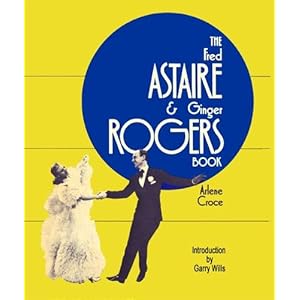 Dance critic Arlene Croce is the author of the indispensible The Fred Astaire & Ginger Rogers Book. Perhaps because she understands dance so well, she understands Fred Astaire. It's not just that she can discuss his style and appreciate what he did, but she can explain why. Astaire was unique. Although he was a child of Vaudeville and Broadway, it was in movies that he found his metier. He invented Fred Astaire as a movie performer:
What Astaire produced was himself, in all his variety—as soloist, as partner, as singer, as actor, as instrumentalist (piano, drums). He choreographed all his own numbers, usually with the assistance of his near double Hermes Pan; he supervised the filming and cutting; and before choreographing a number he worked out its whole musical structure... In short, wherever you looked in the musical as opposed to the scenic and dramatic process, you found Astaire.
Ostensibly in They’re the Top Croce is reviewing two books, one on Fred and one on his career with his sister Adele. She takes the opportunity to dissect the two, and to write an extremely informative piece, even to someone who knows Astaire backwards and forwards. Read it, if you have any interest in the art of film, the art of music, or the art of dance (or in Fred Astaire's case, the art of all three put together).
And here's Fred dancing solo in Flying Down to Rio in 1933:
Dance critic Arlene Croce is the author of the indispensible The Fred Astaire & Ginger Rogers Book. Perhaps because she understands dance so well, she understands Fred Astaire. It's not just that she can discuss his style and appreciate what he did, but she can explain why. Astaire was unique. Although he was a child of Vaudeville and Broadway, it was in movies that he found his metier. He invented Fred Astaire as a movie performer:What Astaire produced was himself, in all his variety—as soloist, as partner, as singer, as actor, as instrumentalist (piano, drums). He choreographed all his own numbers, usually with the assistance of his near double Hermes Pan; he supervised the filming and cutting; and before choreographing a number he worked out its whole musical structure... In short, wherever you looked in the musical as opposed to the scenic and dramatic process, you found Astaire.
Ostensibly in They’re the Top Croce is reviewing two books, one on Fred and one on his career with his sister Adele. She takes the opportunity to dissect the two, and to write an extremely informative piece, even to someone who knows Astaire backwards and forwards. Read it, if you have any interest in the art of film, the art of music, or the art of dance (or in Fred Astaire's case, the art of all three put together).
And here's Fred dancing solo in Flying Down to Rio in 1933:
Thursday, March 22, 2012
Proof that astrology is bunk
Today is a remarkable day in birthdays, at least to musical fans. Andrew Lloyd Webber and Stephen Sondheim born on the same day? Okay, in different places and different years, but still, both Aries. Yet aside from the fact that they've both written a show tune or two, how could you possibly connect the two?
Oh, wait a minute. There is a connection. (Interesting choice of piano player in the second video, by the way.)
Happy Birthday, Baron Lloyd-Webber and Mr. Sondheim. (And how come Americans don't make their stars into noblemen? We need to rethink the Revolution.)
Oh, wait a minute. There is a connection. (Interesting choice of piano player in the second video, by the way.)
Happy Birthday, Baron Lloyd-Webber and Mr. Sondheim. (And how come Americans don't make their stars into noblemen? We need to rethink the Revolution.)
Subscribe to:
Posts (Atom)