I found this completely absorbing.

Showing posts with label Science. Show all posts
Showing posts with label Science. Show all posts
Thursday, January 03, 2013


Monday, October 08, 2012
Wednesday, September 19, 2012
The Ig Nobel Awards
Good grief. The Igs are this week. We almost missed them.
First of all, here's a list of past winners. You'll note that last year the biology prize was awarded to the team that discovered that a certain kind of beetle mates with a certain kind of Australian beer bottle. There are many other achievements of this nature that are honored by the awards.
Long acceptance speeches are not allowed at the Igs. To prevent them, Miss Sweetie Poo arrives at the podium after a minute has elapsed, announcing that she's bored. Why the Sweetie Poo idea hasn't caught on at other award ceremonies is beyond me.
A tip of the hat to Slate for starting us on this path.
Tuesday, August 28, 2012
Sea monsters

This needs to be shared. After all, any list that includes Cthulhu, Globsters and the Land Shark is a list to be savored.
Sea Monsters From A to Z!
Friday, August 17, 2012
Tuesday, August 14, 2012
Your science dollars at work
This is sort of amazing. On the one hand, it's a human interest story, but at the same time, it's a science/tech story.
I mean, they just whip up spare parts on the old 3D printer? And it's the same material as Legos? There's more to see at the WREX site, if you want.
It's an amazing world we live in.
[Via]
I mean, they just whip up spare parts on the old 3D printer? And it's the same material as Legos? There's more to see at the WREX site, if you want.
It's an amazing world we live in.
[Via]
Thursday, July 05, 2012
Americans in space
I read A Brief and Incomplete History of Launching Animals Into Space with great nostalgia, especially for Ham, who was quite the celebrity in his day. Of course, it made sense to send animals into space first, to test the waters, so to speak. That’s one of the big stories in The Right Stuff, where the engineers intended to send the astronauts up just as they had the animals, in capsules without windows, and with no real controls. The Mercury astronauts referred to this famously as “spam in a can.” They won the argument to both see where they were going, and to have some control over the trip.
I’ve written about space exploration pretty regularly, because for my generation the idea was more than just something scientific that sounded sort of nice. We were raised on this stuff. On the one hand, for kids there were the regular Disney shows set in Tomorrowland, which sang the praises of outer space and man’s attempts to get there. These shows made it seem a foregone conclusion that before long we’d be on our way to the moon, then Mars, then the stars. From a historical perspective, this was simply the expansion of the American frontier that had theoretically been closed since the census of 1890. All of America’s story until then had been about its expansion. And then suddenly we were on both oceans and everywhere in the middle, from top and bottom, and there was nowhere else to go. Our Manifest Destiny had been met. Our story had reached an abrupt end, and when a couple of generations later the possibility of a new frontier arose, we were ready for it. Disney, for its part, wanted to make future astrophysicists out of all of us little Mousketeers. It was part of the American DNA.
 The problem was, space exploration also seemed to be in the Russian DNA. The Cold War was an amazing business. On the one hand, we continued to pile up weapons of mass destruction. At the same time, we competed in everything else. Ours were bigger than yours, faster, richer, better, nicer, whatever. The idea of the Olympics, athletes competing to represent their countries against the world, applied in every venue. But space was the big one. Whoever won space demonstrated that they had the money, the smarts, the technology, the engineering, the sheer wherewithal to do what was perceived as the hardest thing to do ever, that no one had ever done before. On top of that, there was the idea of control of space, that whoever owned the skies could control what was down below. This is why there were so many alien invasion movies in the 50s. What we were really scared of was Russians in space, so we shifted over to aliens and got a little national catharsis. And finally, in addition to demonstrating Number Oneness and Dominating the Sky, there was the final belief that whoever won space would claim it, and the next thing you would know, the moon or Mars would become Russian soil.
I’m not exaggerating any of this. When the Russians launched the first satellite into orbit in 1957, it was our national nightmare come true. As Sputnik (pictured above) circled the globe, it made little beeps that could be picked up on the ground via shortwave. That sound, played over regular radio, was the sound of terror hitting the American solar plexus.
We lost every early battle in the war of space, but managed to score big with Apollo 11. That seemed to be the endgame marker. We repeated a few times, and the Russians never did put a man on the moon. And then the world changed, and before long there was no more USSR and space seemed too expensive for the rewards being reaped, and today, it looks as if private enterprise and countries with something to prove will be the ones to eventually pick up the slack. The American search for a new frontier has ended. We’d rather just snipe at one another and believe that there were dinosaurs on Noah’s ark and generally go into the inevitable decline of empire that all empires eventually meet. In our case, it will be by forgetting that we live in a country established on the principles of freedom. Every freedom we limit, however we limit it, is a step in the direction of our spiritual dissolution. If you think I’m sounding a little hysterical, go out and watch a political campaign.
Meanwhile, as a kid, I remember looking up at the night sky when we launched satellites that could be seen by the naked eye. The communications satellite Telstar was one, if I remember correctly. They would publish in the local paper the times it would fly over us, and we’d go out and watch this blinky little light pass from one end of the sky to the other in a short couple of minutes. And we’d dream not of beating Russians but of expanding ourselves, of expanding the human adventure, in a direction that really made it an adventure. By the time we first heard the words, “Space, the final frontier,” in 1966, that idea was already a reality to us. That future, however, now sadly seems to be lost in the past.
.
I’ve written about space exploration pretty regularly, because for my generation the idea was more than just something scientific that sounded sort of nice. We were raised on this stuff. On the one hand, for kids there were the regular Disney shows set in Tomorrowland, which sang the praises of outer space and man’s attempts to get there. These shows made it seem a foregone conclusion that before long we’d be on our way to the moon, then Mars, then the stars. From a historical perspective, this was simply the expansion of the American frontier that had theoretically been closed since the census of 1890. All of America’s story until then had been about its expansion. And then suddenly we were on both oceans and everywhere in the middle, from top and bottom, and there was nowhere else to go. Our Manifest Destiny had been met. Our story had reached an abrupt end, and when a couple of generations later the possibility of a new frontier arose, we were ready for it. Disney, for its part, wanted to make future astrophysicists out of all of us little Mousketeers. It was part of the American DNA.

I’m not exaggerating any of this. When the Russians launched the first satellite into orbit in 1957, it was our national nightmare come true. As Sputnik (pictured above) circled the globe, it made little beeps that could be picked up on the ground via shortwave. That sound, played over regular radio, was the sound of terror hitting the American solar plexus.
We lost every early battle in the war of space, but managed to score big with Apollo 11. That seemed to be the endgame marker. We repeated a few times, and the Russians never did put a man on the moon. And then the world changed, and before long there was no more USSR and space seemed too expensive for the rewards being reaped, and today, it looks as if private enterprise and countries with something to prove will be the ones to eventually pick up the slack. The American search for a new frontier has ended. We’d rather just snipe at one another and believe that there were dinosaurs on Noah’s ark and generally go into the inevitable decline of empire that all empires eventually meet. In our case, it will be by forgetting that we live in a country established on the principles of freedom. Every freedom we limit, however we limit it, is a step in the direction of our spiritual dissolution. If you think I’m sounding a little hysterical, go out and watch a political campaign.
Meanwhile, as a kid, I remember looking up at the night sky when we launched satellites that could be seen by the naked eye. The communications satellite Telstar was one, if I remember correctly. They would publish in the local paper the times it would fly over us, and we’d go out and watch this blinky little light pass from one end of the sky to the other in a short couple of minutes. And we’d dream not of beating Russians but of expanding ourselves, of expanding the human adventure, in a direction that really made it an adventure. By the time we first heard the words, “Space, the final frontier,” in 1966, that idea was already a reality to us. That future, however, now sadly seems to be lost in the past.
.
Thursday, June 28, 2012
Today's Adorable Video
Did anyone else have a chemistry set as a kid?
If you like rainbows, or Muppets, or both, I found this via Mental Floss; they've got plenty more where that came from, but by singers, not chemistry teachers.
.
If you like rainbows, or Muppets, or both, I found this via Mental Floss; they've got plenty more where that came from, but by singers, not chemistry teachers.
.
DarwinTunes

This is from the abstract of the paper from the Proceedings of the National Academy of Sciences: "Music evolves as composers, performers, and consumers favor some musical variants over others. To investigate the role of consumer selection, we constructed a Darwinian music engine consisting of a population of short audio loops that sexually reproduce and mutate. This population evolved for 2,513 generations under the selective influence of 6,931 consumers who rated the loops’ aesthetic qualities. We found that the loops quickly evolved into music attributable, in part, to the evolution of aesthetically pleasing chords and rhythms."
The results are at DarwinTunes.org. You can listen as a track develops—evolves—from a vague electronic riff, if you can even call it a riff, to full-fledged music.
You just have to hear it to understand it.
[via]
Tuesday, June 05, 2012
Today's science videos: Nao
If you were looking for a personal robot, we've got one for you. They're about $15000, but there is a discount if you purchase in bulk.
We were originally intrigued by this first video, where each dancing Nao (pronounced "now") is responding to a central computer. This article explains how; it's something called quorum sensing, which is how many bacteria coordinate. (You learn something every day.)
After watching this, via Mental Floss, I got curious about these little suckers, and went to the Nao website. This is their promotional video:
Apparently it does not come with rocket launchers to get revenge on the dolt who knocked it over without so much as a "Pardonnez-moi." I would suggest such weaponry as a future enhancement.
There are other videos out there on various versions of Nao and the different things it can do. After watching them, all you'll need to do to get one for yourself is to dig up that spare $15000.
.
Thursday, May 24, 2012
Today's science video
We will now demonstrate and explain the Meissner effect:
And now for the explanation:
WTF?
Okay, we looked this up, and we really tried to understand it. It has something to do with superconductors starting to superconduct, but come to think of it, we really don't understand superconductors either, aside from a basic belief that they're more super than normalconductors. As a rule, people coming to Grinwout's for science training are going to go away about as trained as when they arrived.
Cool stuff, though. [Via Web Urbanist.]
.
Museum viewing

As a museum goer, I wouldn't necessarily say that I have a set pattern of approach. Much depends on the museum itself. Is it big or small? New to me or an old standby? Is there something I particularly want to see or am I just browsing through? These factors all must be taken into consideration. Still, I think I do have some repeated characteristics.
First, I try to figure out how a gallery is designed. Should I start on the left or right side? Since someone gave some thought to hanging those pictures (for argument's sake we'll assume we're looking at paintings, but a museum is a museum is a museum), I want to follow that thought. Probably things will be arranged chronologically. That makes sense, and I'll want to follow that chronology. Then there's the reading of the overall gallery tag, if any, the big set of text that our gallery has written to explain this particular room. I don't want to guess what the room is about. And I want whatever information is being given out beforehand. I could easily see someone wanting it the other way around. Look first to get a sense of the work, then read the explanation.
Next comes the hard part. Look at the damned picture. At the individual picture level, look at the thing first before reading the tag. I find that I can easily walk up to a picture and read the tag to find out what the picture is about, then I glance at the picture and go on to the next tag, and repeat the process, hardly spending any time at all considering the art. My problem is, I tend to be word-oriented. Although I came to the museum to see the pictures, not to read the tags, I could easily spend 90% of my time reading and only 10% looking. Obviously this is something to avoid, and I make a conscious effort to do so.
I've got a two-hour span of art attention. Doesn't matter what the art is, two hours later and I'm in the gift shop. Some museums are two-hour museums. Others are two-year museums that I approach two hours at a time. I have on occasion taken a lunch break after my two hours and been able to go back for more, stretching beyond my two hours, but as time goes by my brain fills up and I'm not really looking anymore. I'm not even reading the tags!
The last step is to discuss. I will compare notes with my wife on what we saw, especially if it was something new to us. Actually, sometimes this is the penultimate step, because I'll go on to do some back reading and maybe even write something up after the fact. The thing is, I consider art to be of paramount importance, so I don't just drop in on it once in a while and that's the end of it. But still, I have my two-hour limit. If I were being paid to look at art, in other words, at best I would be a part-timer.
There are numerous studies on how exhibitors should most effectively ply their trade. Anyone who goes to museums over a space of time will see fashions in how things are presented. We are in a period now where interactivity is considered very valuable, and where exhibits and sometimes entire museums are, as some would put it, Disneyfied. The idea that works can stand alone in their presentation to the general public has long gone. Compare the old galleries of the 19th century (like in Morse's famous painting above) to present galleries. In the old galleries, painting was piled on painting and the eye went where the eye went. Now the eye probably goes where the curator wants it to go.
What a Physics Student Can Teach Us About How Visitors Walk Through a Museum is an article from the Smithsonian that covers some of this. Apparently no one has scientifically looked at how people approach museums, and while this article isn't definitive by any means, it is thoughtful.
.
Friday, May 18, 2012
Wednesday, May 09, 2012
The Mouse in the lab
Disney Research is exactly what it sounds like, a branch of the company dedicated to research. Areas covered include computer graphics, wireless and mobile computing, robotics, behavioral sciences—everything you'd think a company like Disney might be interested in, and some things that sound a little bit out there. Of course, the basic Disney corporation has been innovative since Walt was sitting around in Kansas City trying to come up with cartoon ideas for Laugh-O-Gram, so an arm of the company dedicated to pure research (it was launched in 2008) makes sense, especially a big company like Disney.
Okay, that's the background. Get a load of this. (That breakfast-eating training system: is that the scariest thing you've seen in a while?):
Impressive, eh. We caught it via Wired, which started us looking into what, exactly, Disney was up to when it wasn't counting its money from the release of The Avengers (they own Marvel Studios). Now we know.
.
Monday, April 09, 2012
The latest on the moon
We could argue till the cows come home that we need to explore space. Or we could post this video.
Via Open Culture.
Via Open Culture.
Tuesday, April 03, 2012
On being first
In science, if one discovers, say, the force of gravity, the important thing is not so much the discovery as the fact that we now know the force of gravity, and our knowledge about the universe can proceed accordingly. Nevertheless, from the discoverer's point of view, nobody wants to be second. In science, being second means that someone else discovered or invented it first. Their name will go down in history. Yours will not.
Contrast this to art. With art, if you paint the Sistine chapel, well, you painted the Sistine Chapel. If you wrote War and Peace, you wrote War and Peace. There's no such thing as coming in second, because works of art are unique (or at least, have been unique up until the contemporary period, thanks to folks like Andy Warhol). Then again, all works of art flow historically from all previous works of art. Individual achievement incorporates prior achievements by others. Nowadays it's as simple as sampling a riff from a Beatle song, but for the Beatles, it was the absorption of the music that preceded them, the blues and skiffle and swing, and transforming it into Beatle music. Of course, samplers will insist that they are part of this tradition, and they may be right!
Creativity is a wondrous subject.
 Ian McEwan compares scientific creativity with artistic creativity in an article for The Guardian. He begins by telling the story of Darwin and Wallace. They had both been working on the subject of evolution, but Darwin hadn't published (although he had begun his work prior to Wallace), and then he received Wallace's papers, to make them public. Darwin was put in the position of having been the first, but making himself look like the second. Fired up by a sense of purpose, he wrote The Origin of Species. And that sense of purpose was informed by one thing:
The Origin, written in 13 months, represents an extraordinary intellectual feat: mature insight, deep knowledge and observational powers, the marshalling of facts, the elucidation of near-irrefutable arguments in the service of a profound insight into natural processes. The reluctance to upset his wife Emma's religious devotion, or to contradict the theological certainties of his scientific colleagues, or to find himself in the unlikely role of iconoclast, a radical dissenter in Victorian society, all were swept aside for fear of another man taking possession of and getting credit for the ideas he believed to be his.
In a word, Darwin couldn't abide not being the first.
McEwan's article covers a lot of philosophic, scientific, artistic and humanistic ground. It's called The originality of the species. It's worth a look.
Contrast this to art. With art, if you paint the Sistine chapel, well, you painted the Sistine Chapel. If you wrote War and Peace, you wrote War and Peace. There's no such thing as coming in second, because works of art are unique (or at least, have been unique up until the contemporary period, thanks to folks like Andy Warhol). Then again, all works of art flow historically from all previous works of art. Individual achievement incorporates prior achievements by others. Nowadays it's as simple as sampling a riff from a Beatle song, but for the Beatles, it was the absorption of the music that preceded them, the blues and skiffle and swing, and transforming it into Beatle music. Of course, samplers will insist that they are part of this tradition, and they may be right!
Creativity is a wondrous subject.
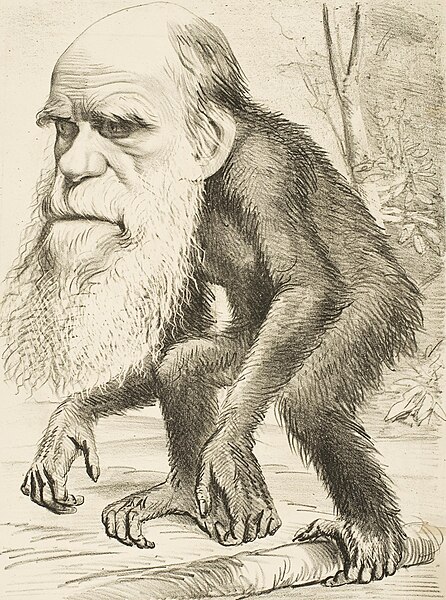 Ian McEwan compares scientific creativity with artistic creativity in an article for The Guardian. He begins by telling the story of Darwin and Wallace. They had both been working on the subject of evolution, but Darwin hadn't published (although he had begun his work prior to Wallace), and then he received Wallace's papers, to make them public. Darwin was put in the position of having been the first, but making himself look like the second. Fired up by a sense of purpose, he wrote The Origin of Species. And that sense of purpose was informed by one thing:
The Origin, written in 13 months, represents an extraordinary intellectual feat: mature insight, deep knowledge and observational powers, the marshalling of facts, the elucidation of near-irrefutable arguments in the service of a profound insight into natural processes. The reluctance to upset his wife Emma's religious devotion, or to contradict the theological certainties of his scientific colleagues, or to find himself in the unlikely role of iconoclast, a radical dissenter in Victorian society, all were swept aside for fear of another man taking possession of and getting credit for the ideas he believed to be his.
In a word, Darwin couldn't abide not being the first.
McEwan's article covers a lot of philosophic, scientific, artistic and humanistic ground. It's called The originality of the species. It's worth a look.
Friday, March 30, 2012
Falling cats
There is, at Grinwout's headquarters, a cat that flies around from surface to surface as if living in an endless feline Cirque de Soleil. You can't walk across the kitchen without him leaping in front of you from counter to counter, making any attempts at food preparation something less than pacific. You get used to this after a while, but you have to wonder: what is going on in that devious little mind of his: Why must he always climb up on things? And what will happen if he falls?

The answer to that last question is, probably, not much. Cats are very good at falling. We know this because, when cats fall, they don't get all damaged, or at least as damaged as you might predict. As Daniel Nasaw writes in the BBC Magazine:
With scientists unwilling to toss cats off buildings for experimental observation, science has been unable systematically to study the rate at which they live after crashing to the ground. In a 1987 study of 132 cats brought to a New York City emergency veterinary clinic after falls from high-rise buildings, 90% of treated cats survived and only 37% needed emergency treatment to keep them alive. One that fell 32 stories onto concrete suffered only a chipped tooth and a collapsed lung and was released after 48 hours.
Well that's the problem, isn't it? To test the hypotheses on plunging cats, scientists would have to keep tossing them off of extreme heights, and even the most resilient cat will eventually tire of such treatment. But still, the evidence is clear that cats do well in falls, and this article explains why. In a nutshell, it's because cats are arboreal, and like all arboreal animals, they've evolved ways of handling the inevitable unexpected trips to the ground.
This is interesting science: Who, What, Why: How do cats survive falls from great heights?
Via.
Thursday, March 29, 2012
Tuesday, March 27, 2012
The sewers of London
This is not about a new musical group. It is literally about the sewers of London, into which journalist Rose George traveled with a group of what are known as wastewater operatives, i.e., sewer workers.
Here's how the adventure begins:
I am presented with the things that will protect me in the hours to come: a white paper overall suit; crotch-high waders with tungsten-studded soles that will grip but won’t spark; a hard hat with a miner’s light; heavy rubber gloves, oversized; a ‘turtle’, a curved metal box that holds emergency breathing apparatus, to strap around my waist, along with a back-up battery; a harness to loop through my legs in case I need to be dragged out.
Being dragged out? That's a heartening thought.
What is found below the streets of London, running out into the Thames, is some of what you might expect, and some things you might find surprising. No alligators, alas. Not much wildlife at all, come to think of it. The good news is, you can read about it without any protective gear: Travels in London’s sewers. (Via.)
Subscribe to:
Posts (Atom)