Monday, February 09, 2026

In which YOU get to decide

 Chuck Barris - Wikipedia


Hey, kids! Now you can play our game at home, starting with that old favorite: WHAT WOULD YOU DO?


Early in the day I had eyes on a student judge who I could tell was, to be gentle about it, ill-prepared for her inaugural adventures at the back of the room. Sure enough, she didn’t acknowledge her ballot for round one—the most important thing I tell people they have to do when I conduct an opening judge meeting, which some people actually hear and pay attention to—but I had just seen her in the tab room and then heading up toward the debate room, so I knew things were at least going to happen, if not exactly according to Hoyle. Since it was a tight tournament, she got another ballot for round 2. Lo and B, she didn’t acknowledge that ballot either. And this time she didn’t show up. Before long one of the teams she should have been judging, and their coach, came into tab to set things aright. I got the message and told the team to go back up to the room and wait for me to find a solution. Then I went out into the hall where I know there was an available judge lounging about, and sent him up to the room to take over. And then, back in tab I slotted him in and removed the prodigal missing judge. 


Keep in mind that some time had passed. Up went the substitute judge to the third floor, and shortly thereafter down came the substitute judge from the third floor. Not only had the prodigal missing first judge finally showed up, despite no longer being listed as the judge, but the other team—not the ones who were in tab with me and their coach—was asserting that the first team needed to forfeit because they had showed up late for the round. (One never did find out where the other team was through all of this before now.) The prodigal judge, happy, I guess, to be relieved of duty, accepted this and sent the teams on their way. What, the substitute judge asked, happens now? We were more than a half hour away from start time, and both teams had dispersed into the ether, thinking that the round was a forfeit. 


WHAT WOULD YOU DO?


Well, here’s what I did. First, I swallowed my inclination to find and throttle the delinquent judge—I simply removed her from the pool for the rest of the day—and then subsequently I swallowed my inclination to find and throttle the other team that had unacceptably asserted that a forfeit was demanded. For the record, we tell the judges that only tab can declare a forfeit. But a team declaring one? Jeesh. For one reason or another by now it was too late to simply hold the round, even if I could find the missing teams in the labyrinth that is Bronx Science. 


There was no question that the first team was not late for the round, because they were in tab telling me about their missing judge, who I then replaced, so you might say they had a really good excuse for their so-called tardiness, if you wish to call it that. But on the other hand, say what you will, the other team was right in that the first team had been AWOL way after forfeit time. 


What I did was a double bye. If the coach of the other team had been at the tournament, we would have had a congenial little discussion (I don’t mean that sarcastically) to enlighten his students about rules and protocols, as they had veered parlously close to unacceptable arrogance in the situation. But, sadly, that team was in the hands of mere chaperones. If I had not been literally alone in the tab room at the time, maybe something else would have been decided. But it just happened that I was all on my lonesome for that particular piece of time, and perhaps running 8 divisions by oneself with all sorts of judge balancing does stifle one’s creativity a bit. 


What would you have done?

Friday, February 06, 2026

In which we stop to smell the non-roses

Saw a preview of the New York Botanical Garden's 2026 Orchid Show last night. I would say it's the best one ever, designed by someone called Mister Flower Fantastic. (There's an article about him in today's NY Times.) I can't recommend it highly enough. It goes away some time in April. If you can, catch it at night. Great lighting in the dark.


Books: Embassytown by China Mieville. Finished this one yesterday. Mieville is concerned here with the meaning of language, which might hold some interest for the odd structuralist debater out there. Along the way, his world-creating is way above average. Another one I'd definitely recommend. 

Debate: The Bronx Winter Local registration closed yesterday. Today it's all the setting up behind the scenes. One of the key things to do is to isolate the high school graduate judges in the JV/Novice pools and pull them in to judge the Varsity kids. In judging, variety is the spice of life. And just because a coach has only a couple of novices in the game tomorrow doesn't mean they shouldn't handle a varsity round or two. It's all in the pooling. When folks register their judges they're asked to identify them as either students or HS grads. With that info in hand, I can then do a bit of scraping around. I mean, there's more to tabbing a tournament than hitting the Make It So button and watching everyone immediately rush to their rounds. (Come to think of it, hardly anyone ever does immediately rush to their rounds. There are some judges especially who like to play hard to get. Which is why at tournaments I wear both good walking shoes and a grim expression. It's the perfect combination.)

Thursday, February 05, 2026

In which we cast our ballot and it stays cast

Debate: It ain't over till it's over, as the saying goes. In debate, on the other hand, once it's over, it's over.

The case in point: Saturday, after an elimination round ended with the judges voting 2-1, some time passed, and one of the judges on the winning side came in to change her vote. She had decided that she had voted the wrong way. At this point, anyone involved with the teams in the debate left the room, and the rest of us were tasked with deciding what to do. 

It was not a hard decision. As one person put it, in the olden paper-ballot days, once a ballot crossed the threshold, it was etched in stone. Submitting an online ballot comprises a similar petrifaction. This has long been the rule of thumb, and short of accidentally hitting the wrong button and coming running into tab immediately thereafter, waving your offending button-hitting hand in front of you and mea culpa-ing up and down the room including from the ceiling, which I have seen happen, once it's over the line, it's over. In the case in question, the original ballot stood. There was absolutely no disagreement among us. 

And here's the thing that happened, as we learned later, which underlines the correctness of this decision. In the round, after the ballots were cast, the one voter on the losing side, the squirrel as we say, gave their reasons first. Which means that after the round was over, an experienced judge laid out why they thought the losing side should have won. The person who came into tab was an inexperienced judge, and she had heard not only the round, but all these good reasons for voting the other way. After some thought after leaving the debate room, she decided that she really should have voted the other way, and came to us to try to effect that change. 

The issue was not the rightness or wrongness of the ballot. The tabroom is not responsible for insuring that every decision is correct. If for nothing else, the reason we have three-person panels in elimination rounds is that there is often reasonable disagreement on how a round went, and subjective analysis is, well, subjective. (There are also rounds where there is no question of who won, so there are both plenty of 3-0 decisions, as well as plenty of 2-1 decisions.) There may be no such thing as a "correct" ballot. But after a round, a judge sits there and decides, by whatever criteria, how to vote. They then cast their vote on that criteria. The ballots are collected, and that is the end of it. Anything could happen after a vote is cast: a judge goes online to research something in the round, a student who was observing talks to the judge and tells them why they're wrong (my students were always disagreeing with me), or as in the situation we're discussing, another judge's analysis of the arguments in the round changes their mind. 

If this were archery, whoever hits the target closest to the center would win. But this is not archery. Some of it is objective, some of it is subjective. Because of the subjective parts, we declare a moment beyond which a decision is set and irreversible. 

Case closed. 

(By the way, if we could recast our ballots after an election, wouldn't Harris now be President?)

TV: First of all, a little Eugene Levy goes a long way. On his show on Apple, "The Reluctant Traveler," he indeed goes a long way. I tired of it long before I ran out of episodes. Alternative travelers, if such a show type appeals to you, are Conan O'Brien ("Conan Must Go") and Richard Ayoade ("Travel Man"). And for the cosiest of cosy travelers, "Great Canal Journeys" with Timothy West and Prunella Scales. Three great series.

Great Canal Journeys 💕 Timothy West and Prunella Scales ...

Digging back into the 90s archives (thank you, Amazon) there's "The Thin Blue Line" starring Rowan Atkinson. Need I say more? Sadly only two seasons, but I'll take what I can get.

And finally, we just finished watching "Dept. Q" on Netflix. It's one of those shows where you immediately are taken by the detecting team or, I guess, you're not. I was. And now we eagerly await season 2 in God knows how many years from now. 


Wednesday, February 04, 2026

In which we go bananeras

Debate: Normally I let the resolutions wash over me, since I don’t have to work with anyone on them anymore. And normally I don’t find them particularly problematic. However, with March-April LD, I’m glad I’m not in it.


Resolved: The United States military ought to abide by the principle of non-intervention.


There is certainly an accepted principle of non-interventionism, which goes into all sorts of areas like sovereignty and R2P—Responsibility to Protect—and the like. The Enlightenment philosopher in me likes all that. I even like arguing isolationism…maybe. What I wonder about is how this resolution will actually play out in the front of the room. If one simply thinks only or intervention and realpolitik in 2026 in the USA, one might prefer to do Model UN instead for these two months. And if one were thinking historically, one might look up military intervention on Wikipedia to be met with the opening warning “Not to be confused with United States military deployments or United States involvement in regime changes," followed by a list of about seventeen and a half gazillion examples of military intervention going back to the Mayflower. My personal favorite is the so-called Banana Wars, which has its own ring to it, but which sounds even better in Spanish, Guerras bananeras. I could go around saying Guerras bananeras until the cows come home. 


Obviously the point of this resolution was its theoretical side. But in today’s LD, and in today’s America, good luck with that. I mean, I would go so far as to worry that although non-intervention is a recognized term of art that implies the word foreign, in these ICE-y times… Fortunately there isn’t much debate at this point in the year, at least around here, aside from the odd qualifier. Oh, yeah, and also our State Finals. Note to LDers at NY States: there’s a lot of lay judges sitting in the back of the room. If you don’t debate for them, your Sunday in the Bronx is going to be very, very peaceful, without the interruption of elimination rounds to disturb your solace. 


Listening (audit division): I am not big on cover versions of songs that do little more than imitate the original. If I want the original, I'll go listen to it. A cover version needs to be in some way a reimagining. Which isn't always easy.


Reimagining certain artists is especially difficult. In the age of artists who compose and perform the songs and are knee-deep in their arranging and production, the end result, as much as is humanly possible, is exactly what they wanted. This is very much true of the Beatles, who were, with their guru George Martin, pioneers in the recording studio (see "The Beatles Anthology" on Disney+). Recorded Beatles music was the apotheosis of Beatle music. What more could be said? So good covers of Beatles music is rare. After Joe Cocker, name two. So it becomes interesting to hear versions of Beatle songs that are reinterpretations or reimaginings or deconstructions or whatever that successfully break from the original recordings stuck in one's brain, and that challenge the canon. Different rhythms, different harmonies, radically different voicings—yes, please. I'll listen to that, out of curiosity if nothing else, but normally I would expect to be disappointed. Which brings us to the subject at hand, the album "This Bird Has Flown," from Reimagine Music in 2005. (Reimagine Music was the brainchild of a man named Jim Sampas. Jack Kerouac was his uncle. I'm sure we'll be dealing more with Sampas in the future.) this album is all of the US version of "Rubber Soul" by different artists in different ways, and I really like it. One or two of the songs I'm not a fan of, but most of it is not only  enjoyable but revelatory. The takes on the music are different from the originals, thus bringing out highly different aspects of the originals that you might not have thought of previously. At the same time, you hear how amazingly good these songs are simply as songs to begin with. I mean, yeah, sure, "Rubber Soul" is on my GOAT list, but at some point one may only be listening and not hearing. Now on this album I'm hearing these songs again fresh, both in the new interpretations and the recollection of the originals that inform them. As it turns out, most of the artists on this album are new to me, and I've captured them on the queue for the future, so we'll deal with them separately when the time comes. In the meanwhile, you can do worse than checking this particular album out now.


By the way, there's apparently at least a 50th or 60th anniversary tribute album as well. Much more to look forward to!


(I was going to write something very long and tedious about this one, but after much thought, I decided against it. It was either too obvious, or too complicated. And hell, it's long and tedious enough as it is!)

Tuesday, February 03, 2026

In which I don't know's on third

The Pennsbury Falcons Ice Hockey Club (@PHSICEHOCKEY) • Facebook


Last weekend was the Pennsbury tournament, officially known as the Pennsbury Falcon Invitational. This is a major hoop-de-do in the shadow of the Sesame Place theme park with well over a thousand entrants in every forensic event known to humankind. I was there helping out in the LD/PF tabroom. Pennsylvania Jeff, a graduate of Pennsbury and the coach at Strath Haven, is the chief cowboy at this rodeo, and he does an excellent job. This event is relatively overlooked east of the Hudson, which would be a shame if the PFI wasn’t already bursting at the scenes. 


Our venue, Pennsbury High School, comprises two major buildings, East and West, about a fifteen minute walk apart. This separation does not, apparently, mean that students stay in their building for classes during the school day. It’s minus ten degrees and the sleet is ripping the chrome off the Tin Lizzies? Get out there and walk over to your World Geography surprise quiz. Lexington in Massachusetts similarly sends its students into the rain and heat and gloom of night, but at least at that one it’s a quick pop out and pop back in. Fortunately the PFI debate tab staff was not subjected to any of this, with PF/LD running at East and CX running at West. In fact, the LD/PF tabroom even had a couple of comfy reclining chairs. Those Pennsylvanians know how to live, aside from subjecting their offspring to the rain and dark and gloom of night. 


Of course, as at any tournament, stuff happens. One of the biggest entrants, so big they required two buses, had one of their buses break down first thing Saturday morning. This meant that LD and PF got off to an hour-late start. Various ideas were kicked around for handling this situation, until finally Pennsylvania J figured a way to adjust the flighting of the first elimination round with augmented judging from a different division. It worked. That night we still finished up at the original scheduled time with the originally scheduled round. The best thing about this was that nobody panicked. We just went about our business, explored every imaginable possibility (none of the other cowpokes in tab was exactly at their first rodeo), and made it work. The nice thing about tabroom.com is that it makes it so that almost anyone can run a tournament. The nice thing about an experienced tab staff is that they can handle every contingency that would send any inexperienced tab staff out the window. A number of the tournaments in our region are run by virtually the same staffs that run the major end-of-the-year national tournaments. This group knows what it’s doing, even when the tournament doesn't.


A few things happened that are grist for further, lengthy discussion, and we’ll get to them eventually. Meanwhile, is there any way you can’t enjoy when you have to assign a substitute judge, and the name that pops to the top of the possibilities is named Hu? “Who is going into that round?” “Yes.” “I mean, who is judging?” “Yes.” This didn’t go on for long, but it does show that Abbott and Costello will never go away. 

Monday, February 02, 2026

In which drumsticks do not come into play

I am resolved to the idea that I am not exactly au courant. If I look at, say, the red carpet at a major cultural event, I can identify virtually none of the celebrities. It's not that I don't recognize A-listers anymore, but that even their names don't come close to ringing a bell. I do not find this particularly bothersome. I still know a lot of other stuff. It's not that I'm losing my mind to the ravages of age, but that my mind does not travel the realms of, say, contemporary pop singers, influencers, sports stars other than golfers (who are seldom on red carpets), etc. These are generational issues. I'll stick to my times, you are more than welcome to yours. 

It turns out, sadly, that there seem to be similar generational eras of language. I wanted to make a point about a debate issue this weekend at Pennsbury, so I turned to my young colleague and said that we needed to talk turkey.* She looked at me with that glazed expression that says to one and all, what do turkeys have to do with it? Later some minor issue arose, which I referred to as small potatoes. I would have thought that this one was common enough, but aside from her wondering if I planned to catalogue an entire Thanksgiving dinner, I did not get much of a response from her. When later I remarked, when I knew she had heard me perfectly well, that I don't chew my cabbage twice, we decided to call it quits on the idea that we were speaking a shared language. Later Kaz reported to me that someone she had been speaking to gave her that glazed expression when she used the word milquetoast. Given that the program I am writing this in accepts the word milquetoast without offering any absurd alternatives, I am left with no absurd alternative myself but to offer that theoretical glazed expression in return now. 

We are not talking about slang here. Slang comprises words that come and go with the speed of how long it takes from its invention by young people to its utterance by old people, at which point young people are no longer using it. We are not talking neologisms versus paleogisms (ironically, a neologism). We are talking about idioms, figures of speech if you will, or maybe tropes. The expression "talking turkey" can be traced back to the 1840s. We are talking the aspects of language that make it different from mathematics. And we are talking well-educated people here, teachers entrusted with the minds of impressionable adolescents. And these teachers simply do not understand English as she is spoken anymore. 

We are doomed. 

Turkey (Türkiye) | Location, Geography, People, Economy, Culture, & History  | Britannica

Debate: When my colleague and I were, I had hoped, about to talk turkey about debate, I referred her to the very long essay I had recently written that was, ultimately, a defense of parent judging. Immediately upon seeing the article on the screen she gasped a TL;DR** and scrolled down to the comments. There she read from some yabbo that I should be talking more about debate as I used to do in this blog and less about all this other crap. Since I almost never read the comments, I would have otherwise missed this insightful response to what I'm doing here. The thing is, as I no longer coach, I don't theoretically have any skin in the game. But I am what you might call a debate entrepreneur, or maybe a debate proselytizer, and even though I am no long working with debate students, I am still working with debate in general. I am very much a part of the debate ethos, so to speak. So, my fine feathered yabbo, I agree with you, and I will, going forward, get back to talking more about debate per se. 


* When I was in trade publishing, I had an author who spoke a brand of English that some say arose from the suburbs of Philadelphia. Maybe the Jersey Shore was more like it. He once brought a serious issue to me, saying that we needed to sit down and discuss turkey. Language, obviously, both evolves and devolves. 

** If this article had a halfway decent copyeditor, they would have flagged this and commented that you can't gasp a TL;DR.

Thursday, January 29, 2026

In which we take in a show

We hit the road yesterday to see the National Theatre Live performance of Mrs. Warren's Profession. These filmed performances are very well put together. The last one we saw was The Importance of Being Earnest with Ncuti Gatwa as Algernon. (The team that filmed Merrily We Roll Along could learn a thing or two from the NTL.) There is no question that watching these are very much like being at a play rather than a movie. This one shone brightly because of Imelda Staunton in the title roll. Her work in the third act as the embittered mother is absolutely thrilling. You get chills watching her. How often does that happen watching anything? On the surface, of course, the play is about prostitution—it was banned all over the place in its early days—but with Shaw, one sees hints of his complicated political thinking throughout, reading into it what one will. I haven't seen a play like that in a while. It makes me wish that NYC theater was more available (I find the costs ridiculous), and it makes me reconfirm my desire to see more plays when we visit London (where the costs are reasonable). 

Imelda Staunton and daughter light up Shaw's notorious br...

The first play I ever saw was on Broadway was Peter Pan with Mary Martin, so I do go back a long way theaterwise, seeing all sorts of original casts over the years. The best of it was when we lived in Manhattan in the 70s. Chorus Line, Chicago, Sweeney Todd... Obviously my bent was for musicals, but there were straight plays too, including bunches of Stoppard. The only difference is that with the straight plays you don't take home the original cast recording and play it for the next five decades. Nowadays, aside from family trips to London—last time there we introduced my granddaughter to the spectacle of The Lion King—our theater these days is mostly limited to the Hudson Valley Shakespeare Festival, which we support as patrons because of their education program. 

We live in a historical moment where the arts are being hit hard. Supporting the arts, sure, but also just bathing oneself in the arts is highly recommended. See Stoppard's Rock and Roll, for instance, for further elucidation. 

Listening (audit division): "Paradise and Lunch" by Ry Cooder. I'm rather happy that I didn't find out about Ry Cooder when I was younger; I don't think I could have financially afforded to keep up with his amazing output. I would have had to give up theatergoing! A brief bio: Cooder has played with [everybody] [ever] in addition to his own albums. Cooder discovered [most everybody else] [ever]. This album at hand is great. If nothing else, I'm a sucker for slide guitar. (And pedal steel guitar, while we're at it, which is probably somewhere in the Cooder resume). I've got a boatload more albums to queue up that are him, and then there's the "appears on," and then there's the ones he's merely associated with, e.g., "Let it Bleed." We'll be seeing more of Mr. Cooder in the future. 

Wednesday, January 28, 2026

In which we will do anything Carol asks of us

Pluribus rolled the cameras. Westgate Las Vegas rolled out the welcome.  Carol, this one's for you., Watch Pluribus now streaming on @AppleTV .


Watching: I was enjoying "Pluribus" quite a bit, but when I went to watch my next episode last night, I discovered that I had already watched the final episode. Good gravy! Talk about your cliffhangers! I mean, it should have been obvious, but I really wanted to see what was going to happen next—and then it didn't. So I went back to "For All Mankind," starting where I left off at the beginning of Season 4. I've seen this show referred to as one of the best shows no one is watching. Could be. I've been putting off going back for a while to it simply not to O.D. on it. I recommend it.

I don't binge, btw. I have 4 streaming channels to speak of, and I watch whatever I'm watching on one, then the next night I rotate to the next channel, and so forth, continually going around in a circle. I try to vary the mix so that they're not all SF-ish, but that's easier said than done. In addition to Mankind at the moment, there's "Fallout," "Stranger Things," and "The Punisher." More on all of them when the time is right. 

Listening (audit division): "Surfin' U.S.A." is very early Beach Boys. Most of it is filler behind the popular singles hits, which was the norm back then when somebody hit the charts: package their handful of hits (or hit, singular) with a bunch of passable fodder and make an album out of it. Those kids will buy anything! (For all I know this is still the norm; you can probably tell I don't really follow popular music much.) But there is no question that, if they weren't yet at their peak, the Beach Boys harmonizations were definitely already in place. Good old sibling harmony (with a cousin and neighbor thrown in for spice)! BTW, it's got mono and stereo versions of everything. Word on the street is that in these situations, the mono mix is preferable. 

Next up in the queue was The Incredible String Band. I've never really taken to them much over the years, and after listening to them juxtaposed against the BBs, I now clearly know why: they are bad singers. I mean, there are other bad singers out there who I like—Neil Young quickly comes to mind—but as Tolstoy would have put it, every bad singer is bad in their own way. The Incredible String Band plays relatively harmless music that you would have to fall over it at night in a drunken stupor for it to even marginally register with you, so any singing that isn't comparably light and airy is going to grate on sensitive ears. Even when they're singing the right notes, which happens occasionally, their voices are not up to the task. I will be giving up on this group now that I understand that, in the light of day, they are nowhere near incredible. 

Tuesday, January 27, 2026

In which a cabaret fan makes a damning announcement

Music (audit edition): After listening to Bobby Short live at Town Hall, I've finally decided that I'm just not a fan of Bobby Short. Don't get me wrong: I love cabaret. I've been to all the various venues in NYC, and I used to own a vast record collection of the stuff, including Bobby Short, back when one owned vast record collections. But ultimately there's something about Short's style that just doesn't work for me. What can I say? The man who owned the Cafe Carlyle is not my cup of tea. But if you haven't tried him yourself, you should. Maybe the Gershwin or Porter albums. He is, after all, a legend. If there is any argument here, I am definitely on the wrong side of it.

Short in 2000

Next up was the Pretty Things. It was their last studio album, and the first time I've ever listened to them. Interesting enough to go back and queue up their first album. We'll see. 

Following which, "There Are But Four Small Faces." The history of Small Faces is complex, to put it mildly, and the albums on Spotify seem to be all over the map. My first real exposure to them was when "Ogden's Nut Gone Flake" was released, which I immediately bought because of its round album cover. Today I consider it a GOAT. I used to have a CD of one of their early albums, or maybe it was a hodgepodge of their early music, but what's on Spotify now are hodgepodges on stilts. The album I was listening to this morning contained a bunch of songs, a bunch of the same songs in mono, some radio versions of those songs and other songs, some US radio versions, some remasters, some remasters of radio versions, some UK remasters of remastered US versions of acoustic demos of radio versions (in mono and stereo), a Captain Billy Whizbang secret decoder ring, etc., etc., etc.  Anyhow, the music is prototypical British rock, and for some reason the group never hit in the US, aside from the single of  "Itchykoo Park." After Steve Marriott left the group and Rod/n moved in and they were no longer Small, it was another story entirely, at least in popularity. In any case, always one of my favorite groups, Small or not, to this day. 

Games (sporting edition): I watched most of both of the playoffs on Sunday. Both teams I favored won. Go Mets!

Weather: When I walked out this morning to clear off the fire hydrant across the street, the snow in the driveway was up to my knees. The good new is that the forecast shows it will all start to melt around the middle of February. Meanwhile schools around here were closed today, but apparently kids were expected to attend virtually. We now live in a world without snow days. And that world is a sadder place. 

Monday, January 26, 2026

In which we go on a bit about the state of high school debate

National Speech & Debate Association | Connect. Support. Inspire.

I debated for a year or so in high school. Back then, debate comprised two-person teams, arguing what we would today called Policy debate. It was the only debate available. There was one topic a year, which we studiously researched throughout the season until my partner Duncan and I had a whole shoebox filled with index cards. The topic was socialized medicine in the US. In the ensuing 60 years Policy went from shoeboxes to giant Rubbermaid file boxes to computers. The evidence grew, going from hundreds of facts (our index cards were all facts about something or other, discovered through The Reader's Guide to Periodical Literature and deep digging in the stacks of our local libraries) to fact-like items to general opinions to God-knows-what that would take up today's norm of a computer memory's thousands of "cards" — at least the designation remained the same. Curiously, the topic hasn't changed much either, insofar as government + medicine hasn't quite been resolved yet, sixty years later, and comes up regularly in one kind of debate or another. 

As time passed, and the ability to amass information began to grow, things changed accordingly. Eventually what emerged were not a couple of schmeggies like me and Duncan, researching when we had a few spare moments, but machine-like team operations with dozens of students all researching regularly and pooling their resources. Big-time teams dominated, because they had the labor power to amass virtual Everests of evidence. Duncan and I would never have had a chance, even using the same modern tools. Giants ruled the earth.

There were also a lot of changes in the sense of what was going on in the rounds, with, shall we say, the hermeneutics of debate. For one thing, if you had a million pieces of evidence, you wanted to introduce as many of them as possible into your argument, so you had to talk fast. Really fast. Like a tobacco auctioneer (do they still have those?). So fast that only people trained in fast talking, e.g., other debaters and tobacco auctioneers, could have any idea what you were saying. And there was the introduction of the latest rhetoric theories and arguments from college debate, since as often as not college debaters were working with high school teams, and even more often than not judging their rounds. One of the most startling things I heard early on in my years as a coach was that a local debate coach with a national reputation, one of the leaders of the activity, considered himself unable to judge Policy. 

A monster had been created. 

Instead of trying to defeat the monster on its own ground, some teams, small and poorly financed—these monster teams by this point were traveling around the country almost every weekend to debate other monster teams—came up with the idea of not fighting the monsters but fighting monsterdom. They ran cases that were critiques of the situation, saying that the playing field was not level and arguing that not only should they not have to debate on an non-level playing field, but that they should be given wins because the situation was clearly demonstrating intrinsic unfairness. Some of this was based around race, and it almost became a cliche that if a Black team was running a racial critique, not voting for them for the win was an act of racism on the part of the judge. This was not exactly non-controversial. In any case, critiques became a common things, critiquing all sorts of aspects of the debate, as well as approaching topics from feminist, ageist, ableist, queer and other perspectives. They became known as kritiks, and ultimately Ks. 

Meanwhile, the National Speech and Debate Association (called the National Forensic League back then, resulting in an obviously problematic acronym) started up a new kind of debate to make up for the growing esoteric nature of Policy (seen if nothing else as too fast for human ears). Lincoln-Douglas was born, comprising one-person teams and theoretically dedicated to what was called Values. The idea would be not that Socialized Medicine was a good thing because 63.92% of people in the Okefenokee Swamp would not catch the yaws but because Kant had demonstrated that people giving other people medicine was deontologically the right thing to do. One way or the other, deontology vs consequentiality became the underlying positions, and/or the individual versus society. Enlightenment philosophy was the coin of the realm.

LD, as it was quickly abbreviated, became very popular. The speed wasn't there, and the content was relatively accessible compared to what the Policy monsters were up to. Read a touch of Mill and Locke and Kant and you were on your way. And coincidentally, how many other high school students were reading such things, so you were now way ahead of the game simply in general albeit hifalutin knowledge. When you finally got to college, you would have philosophy 101 knocked. 

The problems that eventually plagued LD were analogous to the ones plaguing Policy. The pedal kept getting closer to the metal and the speedometer just kept registering faster and faster. Then the blight of postmodernism struck. The college students who were coaching and judging high schoolers were themselves caught in the last gasps of PoMo in their college classes. At the point where most academics finally admitted that Derrida & company were mostly incomprehensible, college students were still knee-deep in the murk. Some of it was, indeed, fun (I enjoyed Baudrillard, for instance, one of whose ideas was that the best part of Disneyland was the parking lot) and some of it was materially useful (Foucault, definitely) but much of it was just impossible. I mean, where does one pull an ethical structure—remember, we were arguing right and wrong—from crazy old Nietzsche? (BTW, Policy in its own way wasn't immune to this sort of stuff.)

The next thing that happened to LD was that the topics, rather than concentrating on philosophical conundrums, started dealing with real world issues, the arguing of which required real world evidence, the sort of 63.92% of people in the Okefenokee stuff that Duncan and I had been dealing with, eventually evolving into the same God-knows-what of Policy. It was becoming for all intents and purposes one-person Policy. The whole K thing arrived at its doorstep as well. And I became that debate coach who couldn't judge his own activity. 

So what we had in the debate universe was a two-person event dominated by powerhouse programs, arguing about hermeneutics and critical theory and obscure philosophy at rates of speed incomprehensible to normal humans, and a one-person event dominated by powerhouse programs (because LDers too were now regularly traveling around the country in what was called the national circuit) arguing about hermeneutics and critical theory and obscure philosophy at rates of speed incomprehensible to normal humans. As an aside, all this cost a lot of money for plane tickets and private coaching and hotels and registration fees, which, of course, becomes yet another subject for a K.

At around the turn of the millennium, NSDA wanted another type of debate aimed at solving the problems (if you want to call them that—many people don't) of Policy and LD. NSDA wanted an activity that wasn't esoteric. With the financial support of Ted Turner, they created Ted Turner Debate, quickly renamed Controversy, and subsequently quickly renamed Public Forum. The  theoretical paradigm was that a general population lay audience would act as adjudicators. Certain people, essentially the "professional" college student type judges, were literally barred from judging the event. Among other things this would eliminate blazing speed as counterproductive. The topic would change every month, thus establishing a physical limit to the amount of research that could be done. And that topic would be something about current events, so that the debaters might actually learn something along the way other than how to debate. That is, by the way, the long and the short of it. What was the goal of debate educators? To learn about all sorts of content not covered in normal classroom, be it history or politics or morality or the like, or to learn how to debate in an academically rhetorical vacuum? Much of modern Policy and LD is the latter. The NSDA wanted the former. 

What happened quickly in PF, which certainly had its growing pains, with various rule adjustments as time went on, was that it became the main general debate activity. It didn't require a coach to learn all sorts of esoteric skills like the ones that edged out me and that famous policy coach from being able to judge our own activities. The general content meant that almost any teacher could have a go at it. And best of all, your judges were free. You didn't have to hire college kids for a tournament: you turned instead to the parents of the debaters. After all, the event was intended for a general community audience. And you wouldn't have to pay parent judges, who could also act as chaperones if needed. Parents were promoted from handing out cold debate ziti at local tournaments to virtual partners in their children's extracurricular education. 

Although PF started slowly, with lots of incumbents considering it second-rate debate, that bias eventually dissipated. While schools offering Policy and LD were dwindling, schools offering PF were beginning to boom. At tournaments, the Policy and LD fields were dwindling while PFers were breaking down the doors. (Not to put too fine a point on it, since PF was 2 people you could charge twice as much as LD while using the same space resources; all you had to do was put out another tray of debate ziti.) In my region of the northeast today, Policy is virtually dead, with only a handful of programs fielding any sorts of teams. LD, having taken the same road to esotericism, is also dying, but more slowly. When I started out in the mid-nineties, there were 6 schools within short driving distance doing LD and Policy. Only one of them still has a serious program, while only one new school has relatively recently started up an LD-only program. 4 high-level tournaments in the area have disappeared from the calendar, without any replacements. The numbers at surviving tournaments around the northeast tell the story. They're all PF teams up the wazoo, whereas it-is-what-it-is in LD and Policy (if Policy is even offered at all). 

(And this does not cover leagues of inner-city schools and the like, which are mostly or entirely PF, and/or middle schools that have taken up debate as an educational sideline and who use PF as their medium. Because PF is accessible to kids, teachers and lay judges, it is booming beyond its old boundaries. Nice!)

One thing I haven't mentioned that plays into PF's growth, which is in most cases at the expense of Policy and LD, is student burnout. To be a competitive debater in those older activities requires that, in effect, debate becomes your life. When you're not researching, you're on the road attending high-level tournaments. Plus you have to keep up your schoolwork, presumably at the A+ level that makes you a competitive debater. That was how I lost some of my best debaters: they just didn't want to do it anymore. They wanted a life that wasn't limited to debating. I can't say as I blamed them. Meanwhile, if for no other reason than that the topics kept changing rapidly, PF didn't really reward or require giving up your life for it. There was no such thing as a longterm casual LDer or Polician, whereas a PFer could do other things with their time if they were so inclined. I consider that a positive. 

In the end, it is the parent judging that has kept PF from going down the same road to extinction of LD and Policy. Some of the best PF people dislike the idea of parent judging. They can't do all the fancy stuff their colleagues in LD and Policy are doing. Of course, if a team gets assigned a college student judge up on all the latest, they can (and do) go to town. But the bread and butter of the activity is the parent judge. The debaters can't use extreme speed to load up evidence, and besides, the topics change too rapidly to amass that evidence in the first place. Ks are baffling to this audience, where Herman Uticks was a kid they vaguely remember from second grade. And since parents are cheap judging cannon fodder, they aren't going away any time soon. Most debate budgets have been slashed and slashed again over the years; the pandemic speeded up the process in many cases. The average public school doesn't have the money to employ high-level college student debate judges as ad hoc assistants or judges. The average public school has had to cut its participation because it can no longer afford bus transportation. Money, or lack of it, talks.

So, in this essay on present-day high school debate, we see Public Forum as the main event. And we see it staying relatively as it is. It is an event in which any school can start a program, at about as cheap as it can get. It's good for teachers, it's good for students, and it's good for parents, even if I haven't cited the benefits to them, chief among which is having a part, however small, in their teenagers' lives, which can be a difficult rarity at best. I'm sure PF will continue to evolve in some ways, but I don't think the underlying structure is going anywhere. Nor do I think there are many people who want to change that structure. They may have good reasons to want to do so, but can those reasons stand against the status quo? 

You know what I think. 

By the way, don't get me wrong. I do not dislike LD or Policy. Or Student Congress or Original Oratory or any forensics event. Each is valuable in its own way. And LD and Policy aren't going away completely. Large programs especially continue participating in those events, and there are certainly strong pockets of each around the country. In fact, we created the Online Debate League precisely to provide outlets for Policy (and later LD and PF) where there is no local tournament presence. I want every activity to live and thrive. I do think that LD and Policy are irretrievably lost in the doldrums, but they are not lost to the world at large and probably never will be. Hell, I'm on the team trying to save them. But I understand their problems and virtues, as I understand PF and its problems and virtues. At the core, I love high school debate for many, many reasons. If PF as it is practiced today is the most accessible and popular form of high school debate, and middle school debate, count me as all in on preserving it and, more importantly, keeping it growing. 

And there you are. Thanks for reading this to the end. You may be the only one who has. 


Saturday, January 24, 2026

In which take a few pots

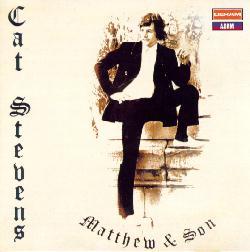
Music (audit division): Yet another artist on permanent rotation in the queue is Yusuf / Cat Stevens (the slashing is his current stage name). The album was "Matthew and Son," his first. It's interesting listening in some ways, because you can hear some Cat Stevens in it, but it's a mixed up and/or nascent Cat Stevens at best. Sometimes it sounds like he wants to be a mid-sixties rock star, and at other times it's messy and overproduced and doesn't know what it wants to be, and then it becomes folk music. It was not a hit in the US, nor were his two follow-up albums. It was "Tea For the Tillerman" in the US when I, and the rest of the country, heard the real, sui generis Cat Stevens for the first time (although I did shortly after Tea's release go back to "Mona Bona Jakon," released only months for Tea, which is also the real Cat Stevens but didn't have Tea's popularity). If nothing else, Tea has "Wild World," one of my favorite songs of all time, despite its controversiality as sexist. I don't know... 

Anyhow, since the days of Tea I have followed Y/CS closely and mostly with fondness. I was extremely happy when "An Other Cup" was released, marking his return to popular music. In today's America, he is persona non grata, and was apparently unable to obtain a visa for his most recent tour. His numerous humanitarian awards are listed on Wikipedia. 

Games: In other news, last night was our monthly poker game, in which most of the conversation revolves about who's in and whose deal it is. There are certain poker norms that would eliminate these fascinating discussions, namely betting in order around the table and, as we use two decks, leaving the shuffled deck to your right for the next dealer. But I seem to be the only one who believes in these ideas. And then there's the whole playing past their bedtime. We're lucky if we can get a game, which starts at around six o'clock, to last beyond eight o'clock. I'm not exactly a night owl, but I can usually make it until after sunset. [Sigh.]

Then again, I did win all of $11. This great fiscal success was, of course, the result of always betting in order and leaving the shuffled cards to my right. 

Friday, January 23, 2026

In which it is midnight at the oasis

Winter is coming. The forecast this weekend is for a bazillion feet of snow, mixed with ice, hellfire, toads, and the yaws. Time to batten down the hatches.

The downside of this weather is that I don't get to take my daily walk. I always do three miles, listening to my latest audiobook. Given extreme weather, icy streets and whatnot, winter walking can be sporadic at best. I've only managed to listen three times this last week to my latest audiobook. It's hard to keep track of things at that pace. An hour a day, on the other hand, is perfect. Even more perfect (a linguistic impossibility) was my 45 minute driving commute back in the day; you can consume a lot of content in an hour and a half. 

Music (audit division): "One Hour Mama, the blues of Victoria Spivey" from Maria Muldaur is the latest to pop up. I have been a Muldaur fan since her first solo album. I remember a colleague, who had just purchased the record, waving it around in his office and waxing poetic about it. In these pre-internet dark ages, that was about as close as one got to knowing what to listen to. So I bought it, and I've been listening to it, and all her other albums, ever since. This one sounds like it was recorded in the 1920s, which is absolutely perfect. And there's no irony in it. It's a real loving tribute. Muldaur is nothing if not a music historian. I've seen her live a few times when she's traveled to the East Coast, and always enjoyed her shows. And I've also been surprised that they are only sparsely attended. Her voice has mellowed over the years, but she's still there. 

Maria Muldaur

Muldaur is one of the few artists on total replay all the time in my audit queue. I listen to one of her albums, then put the next one at the end of the queue, and so on into infinity. If you're new to her (the heresy!) start with her first album. 

For your enjoyment, a classic performance: The Work Song  "Backs broke bending digging holes to plant the seeds... "

Thursday, January 22, 2026

In which we plan a coup

Music (audit division): I have no idea why I was listening to the Charlatans' first album, but there it was. I found the music interesting, with a lot of influences making the end result hard to pin down, which can be quite a good thing. Nothing jumped out at me, but I enjoyed it, and queued it up for another listen in the near future. Apparently they're a popular British band that's been around for four decades, but they're new to me. We'll see. This was followed by "Gypsy Cowboy," the second album from New Riders of the Purple Sage. Despite my Deadhead leanings, I've never been the greatest fan of the Riders, which had its roots in the Grateful Dead. A lot of their stuff is of the long and moan-y persuasion—and so is a lot of Dead stuff, TBH—but every now and then they pick up the pace and get off a good one. So I'll listen for the good ones, and occasionally pop one over to my main playlist. 

Debate: For years now the Lakeland tournament, officially known as the Westchester SomethingOrOther, has been in decline. It has TOC bids in Public Forum and Policy, which makes it appealing as a late qualifier, but merely limps along in Lincoln-Douglas. It also offers some MS stuff, to which I have paid little attention, aside from noting, back when we were live and in person, that MS kids are very, very, very young. And little. And as a rule, in my opinion, should not be physically mixed in with HS kids. (The whole subject of Middle School debate is an interesting one for another time.) Anyhow, lately the tournament is entirely virtual, and it seems to have been orphaned from its Lakeland roots, as well as, lately, some interim roots. So my inspiration this morning was that the Online Debate League should take it over. We would keep the tournament structure, but normalize it on the back end with the NYCFL infrastructure. This would insure the continuance of the tournament, and could perhaps even beef it up a bit. In reality, NYCFL and Lexington have been doing the heavy lifting on most of it for years now. And Lakeland, the tournament's origin, is a school in the NYCFL district. I mean, what's the downside? I proposed this to the others in the ODL this morning. We'll see where it goes. 

Games: I looked at the new NY Times game, Crossplay. As far as I can tell from playing it for about five minutes, it's Words With Friends, a fad which was, at its roots, Scrabble. Maybe it's something for a boring stretch during a tournament, but I don't see myself getting too involved with it. In other gamey news, today was Wordle 3 / Connections 4 / Genius with 1 pangram. It took me a while to figure out the Crossword gimmick, so a way above average 20 minutes on that one. 

Wednesday, January 21, 2026

In which we tune in to the occasional podcast

I've been listening to This Week in Tech for as long as I've been listening to podcasts, going back to when TWIT was always in the top ten. Once upon a time, podcasting was new.  It was, insofar as choice was concerned, analogous to the early days of television in that it was fairly limited. And I did literally listen on an iPod. Since that time, podcasting has come and gone and come and gone, but mostly now it's here to stay, providing mostly narrowcasting to audiences interested in whatever the podcast is covering. TWIT is my tech podcast, aimed at the listener fairly interested in general technology, hosted by longtime technologist Leo Laporte with a revolving roundtable of guests, mostly tech journalists but occasionally others as well. If you're curious about, say, the high points of this year's CES or Claude AI or the fact that the richest man alive (that schmegeggie) has a net worth four times greater than the second-richest man alive (that other schmegeggie), you've come to the right place. 

Family Listening to Their Radio, 1926.

I used to listen to audiobooks during my commute and podcasts during my morning treadmill exercising, but now it's books on my daily walk and podcasts in the car or cooking, so I admittedly listen less than I would like. I can't listen to anything just sitting there and listening. If I sit down I'll read or, as likely as not, nap. But I do never neglect to listen to Wait Wait... Don't Tell Me It is the perfect length for the weekly trip to the supermarket. 

And then there's the previously mentioned History of Rock in 500 Songs.  I can't imagine anyone interested in the genre not enjoying it, as well as picking up something new from it every time.

Needless to say, I do follow a couple of Disney podcasts. WDW Radio from Lou Mongello and Disney History Institute Podcast. You know who you are if you want to listen to these.

My last regular listen is You Must Remember This, a podcast about Hollywood by Karina Longworth. If you love (or at least used to love) movies, you'll like this one. Longworth takes a theme for the season, and then runs with it. The most recent one was "The Old Man is Still Alive," about the late films of great directors. With both this one and History of Rock,  you should start at the beginning. They're all good. 

Finally, there's the ones I listen to occasionally if the subject moves me. Mobituaries with Mo Rocca. Home Cooking with Samin Nosrat and Hrishikesy Hirway. Imaginary Worlds. And, oh, yeah, there's also Cocaine & Rhinestones, which I put on hiatus, and which I'll go back to if I ever catch up with 500 Songs.

Tuesday, January 20, 2026

In which no one expects the Spanish Inquisition

Watching: Last night I watched the final episode of "Etoile" on Amazon Prime. This series, from the Palladinos, show runners of, among other things, the wonderful "The Amazing Mrs. Maisal," was cancelled after one season. It's a shame. I would really love to see what happens next. It has good characters, and it's funny and smart, and there's all the ballet stuff. It's probably the dance aspect that brought it down: ballet is not America's Pastime, shall we say. Or maybe it was just too hifalutin in general; I mean, how big an audience is there for the likes of shoutouts to Umbrellas of Cherbourg

[Sigh.]

Debate: Bigle X ended satisfactorily. I spent the boring drive home wondering how Kaz, Lexington's coach, can make this boring drive easily eighty or ninety weekends during the season. Other than that, there's not much to report. Catholic Charlie and I challenged Kaz on the idea that there is no room more comfortable for tab than the one she always throws us into, but she insists there isn't. Nowhere on Lexington's campus is there a comfy chair for a poor overworked educator during normal working hours?

Feh.

Kevin P. Dincher: Planning Ahead - No One Expects the Spanish Inquisition!


Music: I realized this morning that I get a lot of my suggestions for music to add to the audit queue from reading the obituaries. Ralph Towner, guitarist for the group Oregon, just passed away. Having never heard of Ralph Towner or Oregon made it a shoo-in for listening at some unknown future date. Whether this is major ignorance on my part or not, I cannot tell. There are more things on Heaven and Earth, Horatio...

Sunday, January 18, 2026

In which the source of our serious fandom is explained

Debate: Shock of all shocks, the morning began with scraping ice off the windshield. But not that much, and one was off to the races pretty quickly, listening to Nilsson advising me to turn on my radio and hearing poor poor pitiful Warren Z complain that the young girls won't leave him be. There are worse ways to start a morning.

Word on the street is that bad weather is icummen in this afternoon, so we're accelerating the schedule as much as we can, which isn't much. More importantly, today's quarterfinal round has moved to tomorrow, so people heading for the hills today will reach them in plenty of time, while those of the elimination stripe will chime in tomorrow virtually. I'll leave tomorrow afternoon, after the worst is over. 

It must be Big Lex weekend. 

Sports ball: In recent years I've gotten marginally interested in football. I was saddened by Buffalo's loss yesterday, as I considered them the local favorite in the playoffs. With the exception of San Francisco, the closer a team is to my house, the more likely I am to root for them. SF is the exception because I once had a $1.00 49ers tee shirt I picked up at the local outlet mall, which insured my partiality until the grave. Who can argue with the $1.00 tee shirt? 

SAN FRANCISCO 49ERS GRIT '47 SCRUM TEE


Saturday, January 17, 2026

In which we chew some bubblegum music

Like so many people, I patiently wait for my jetpack, my flying car, and my gold made-in-America TrumpiePhone. No doubt you do too. It's lonely, living on the edge. 

Music (audit edition):
Obviously on a Beach Boys roll, next up was Bruce Johnston's "Surfin' Round the World." This album sounds as if Johnston was asked in the morning to write a record's worth of surf music, and then recorded it all that afternoon in one take. For Johnston, who subbed in for Brian Wilson on the road and wrote the songs that make the whole world sing, including "Disney Girls," this was an early effort, best forgotten. 

Following Johnston in the queue was a solo album by Ron Dante, lead singer of the Archies. If you've ever wondered where one goes from "Sugar Sugar," I can assure you, it's more of the same, only not as...good? Not terrible though; you can listen to it without your brains falling out. But that is, of course, the faintest of praise. 

The Archies (album) - Wikipedia

Listening (audiobook edition): I finished listening to Record of a Spaceborn Few by Becky Chambers on the way to Lexington. It's the third in her Wayfarers series. I enjoyed the first two more, but this one was fine. It's a rondo, circling from character to character, and it takes a while for the narrative to gel in one's mind, but finally it does come together. I've seen Chambers described as an author of cozy science fiction, a category I admittedly had never heard of, but it's not inappropriate. A lot of SF is dreary and dismal, and as far as I can tell, Chambers doesn't write that sort of book. Good for her. 

Friday, January 16, 2026

In which the sun rises bright over Big Lex weekend

It's as if the weather is luring you in. See my brightness! Feel my felicitous breezes! Glory in my glow! And then, tomorrow morning, we'll spend an hour shoveling snow off the car, hoping against hope that at least one hardy barista will have made it to the Starbucks down the road so that you can at least get a damned cup of coffee. The thing is, I've been to the Lexington tournament about 30 times now. It's in the middle of winter and I know what can happen. Oh, sure, they might throw a warm day at you as a tease, but once they've got you in their clutches...

Music: Meanwhile, I don't recall ever coming across Rebecca Kilgore before reading today's obituary in the Times. If you're a Songbook person, you need to add her to your list: https://open.spotify.com/playlist/37i9dQZF1DZ06evO0vxdLU?si=7cf4f5d15d2546e4

Movies: My generation was raised on the old Universal monsters. They were inescapable on local television. Fifth graders, the absolute target market for this brand of entertainment, would run into school on a Monday full of glee on having seen "The House of" one or another of the Wolfman or Dracula or Frankenstein, a film that would in fact include the Wolfman AND Dracula AND Frankenstein, and maybe an Invisible Man or two to boot. https://crimereads.com/universal-monsters-history/ does a good job of covering Universal's monsters from day one. 

The other genre we fifth graders were the absolute target market for was what I guess you would call Creature Features, not the designation of the local TV station but the movies that were shown in the local theater as Saturday matinees. The place would be packed with kids, the noisiest, least attentive audience imaginable, while on the screen cheesy aliens of one sort or another were attacking earth or greeting earthlings to make soup out of them or whatever. One of these—a good one—I remember clearly to this day: Enemy from Space. This was an entry in the Quatermass series (not that I knew that at the time) in which meteorites land on earth carrying an alien substance. When a human comes in contact with that substance, they become its slave, going on to collect those meteorites to gather that substance which they put into great vats of methane-breathing Jupiter monsters. The only way you could tell if a human was on their side was a telltale rash on their arms. I have to say, this one kept me up a night or two in my youth. The third of the Quatermass pictures was titled in the US Five Million Years to Earth, released in 1967. This one gave me the heebie jeebies when I was in college! Earth was invaded by a plague of scary looking locust creatures from Mars millions of years ago, giving rise to the idea of the devil and still giving off evil vibes in contemporary Swinging London Town. I think they may have spawned humans, making their legacy that much more complex. I highly recommend these Quatermass movies.

Game poster image


None of which has anything to do with the weather in Lexington this weekend, but if things get particularly Satanic, you'll have heard it here first.

Thursday, January 15, 2026

In which we wonder if we're missing something

Between college graduation and my first job, I stayed with my parents in Florida in order to have three wisdom teeth extracted at the same time, after which I was in incredible pain. Pumped full of demerol, I spent three or four days on a couch reading the Foundation trilogy. (Back then, trilogies were defined as a set of three books; nowadays, a trilogy is the first three books of a series that can go on forever if it sells well enough.) My sense of reality and fiction, dreaming and waking, was severely put to the test. It was an experience I have never forgotten. For a while recently I was afraid to watch the "Foundation" series on TV for fear of experiencing a dental surgery flashback. 

Little Shop of Horrors' Review: Jonathan Groff Feeds the Beast - The New  York Times

After my single extraction yesterday, I took a few Advil, had a glass of wine, and woke up this morning feeling keachy peen. Who says there's no benefits to old age? 

NY Time Puzzles: 4/4/1 pangram. Boring.

Reading (paper division): I finished Psmith in the City quickly enough. I have mixed feelings, as I can't quite figure out the character of Psmith. More study is needed. Meanwhile, the saga of finding the next book was abbreviated yesterday morning when we were sorting some books that my daughter no longer wanted and I found a pre-publication copy of a China Mieville book, Embassytown. I haven't read CM for a while, but everything I have read I have enjoyed, especially The City & The City, which I highly recommend. In that one, two cities essentially occupy the same space, and their separate sovereignties are more a matter of psychology than geography. Embassytown got off to a great start in a most complex fictional reality, and I look forward to digging down into it. 

Speaking of sovereignty, back in my coaching days I always found this to be a fascinating subject. I knew of no great philosophical discussion of the idea; most of the writings I could find were realpolitik, which may help understanding how things are but no help in figuring how things should be. Sovereignty is in the news these days, of course, what with China waiting for the US to invade Greenland in order to provide them with enough cover to invade Taiwan. I always hesitate to use any version of the word "real" when thinking about our President these days, but he has really committed various naval war crimes, really threatened every city, state and country that he doesn't like, especially if they don't like him, and really lied about everything he can possibly lie about, even when he's standing next to the truth in a neon pantsuit. The thing about sovereignty is that it is indeed slippery, and depends as much on others recognizing it as anything else (although big guns don't hurt). That is, if enough sovereign states agree that you too are a sovereign state, then there you are, and if you can't see the problems with that argument, you don't have what I would call the Debate Mind. Oh, well. If we follow our government's guidance to focus our diets around beef tallow, it will all become moot soon enough. 

Listening (audit devision): I have tried now many times to get on board with Dennis Wilson's "Pacific Ocean Blue" but without any great success. I don't hate it, and I can listen to it easily enough, but not much of it sticks with me. I bought the 2-disc version when it came out in 2008, knowing little or nothing about it. I would put it on the box every now and then, stubbornly thinking that I must be missing something. Now I stream it every now and then. I still wonder if I must be missing something. 

Wednesday, January 14, 2026

In which we begin to recover from dental assault

I had a tooth pulled today. Way in the back, because it was old and giving up the ghost. It will be replaced in a few months by a more modern version. 

Feh.

Listening (audit division): The Beach Boys, "Sunflower." There are some artists that I simply cycle through because they're worth it. In pre-streaming days, one had a bunch of CDs arranged alphabetically by artist. You would cycle your way through them, and in the long run give your music a good turning out without too much thinking about it. Streaming requires a more deliberate approach, otherwise you'll forget all your favorites and, let's say, never hear "Pet Sounds" again. Not that "Sunflower" is "Pet Sounds" caliber, but it's not bad. To be honest, I think it's overrated, but it's got some good songs and I don't mind listening to it every few years according to my new system. (As for "Pet," the truth is, I'll be sitting around minding my own business, and suddenly I'll think to myself—as compared to thinking to someone else—that I ought to listen to "Pet Sounds" for the gazillionth time. Which I do, coming away every time the better for it.)

Debate: This weekend is the Lexington Winter Tournament, AKA Big Lex, or as I like to call it, Bigle X. It's a long weekend, driving up Friday afternoon, returning Monday afternoon. It's one of the few times I work directly on anything with Joe V, and it's sort of intricate, with mutual judge preferences and varying obligation commitments, which makes it fun. One of the high points of the weekend is always the walk in Antarctic level temperatures to the local ice cream shop down on the main drag. You can bring back somebody a cone and not one single drop will have melted. In the olden days the main drag had a pub where you could grab a burger and a beer, the perfect break from tabbing. Ice cream will just have to do until, if ever, Lexington gets its pub act back together. 

Gaming: While I do not consider myself a gamer, I do have a PS5 and I do always have a game on the go. Lately it's Indiana Jones and the Great Circle. This is my kind of game, more puzzles that combat and a long narrative that goes from place to place and fun characters, especially our hero Indy. The last time I played, a day or two ago, I think I was devoured by a giant snake. On other fronts, I do play Balatro regularly, especially during the empty moments at tournaments. And I see that Apple Arcade will be offering a version of Civilization 7 shortly. Civ, of course, is that game that takes no prisoners, and that many of us hide from as much as we can, because once you start a new game, your life is no longer your own. I have versions on all my devices—Civ 5 on my Macs, God knows what on my iPad. If this new Arcade version is playable while not turning in one's soul, it will be well appreciated.