Sunday, February 22, 2026

In which we’re all about music

This is a diverse set off my audit queue, with some things worth talking about.


It started with Box of Frogs, a spinoff group from the Yardbirds. (So was Led Zeppelin, originally named The New Yardbirds. Then again, Clapton was in the original Yardbirds, replaced by Jeff Beck. Something of a breeding ground, I’d say.) I don’t know how I found them—500 songs, I guess—but I probably don’t need to say after the description so far that they were right up my alley. I immediately grabbed a track off their debut album (they only produced a couple of albums) for my main rock playlist and then threw the album back into the main rotation. Definitely worth more than one listen.


Then, following orders from a young colleague of mine, I forced myself to listen to “The Life of a Showgirl.” There is absolutely nothing about this music that appeals to me, but I have tried to listen to Swift in the past, and I can say honestly that this was better than most of what I’ve heard from her before. But I don’t have much truck with synthesizers, drum machines, and voices that sound like every other voice out there these days. I was raised on pianos and drums and all the other instruments in the music store, and singers who were unique. Come to think of it, when the singers weren’t unique, they were, well, just there. Go back to the big bands. Ella stood out. So did a few others. Most were sort of interchangeable. And, of course, people played their damned instruments, sometimes to hell and back. (The same holds true for all my music, be it jazz or show tunes or rock.) There does not seem to be much of a premium on that sort of thing nowadays. Anyhow, I listened to this, and I can report that fact back to my young colleague, and I’ll never have to listen to Taylor Swift again. Unless, of course she preforms during…


…halftime at the Super Bowl was Bad Bunny, and this was my first introduction to him. I followed this with a listen to X 100PRE. I have to say, I definitely enjoyed the show, because it was like a trip to the tropics, but the music, not so much. I love lots of Latin music, especially Brazilian music going back to sambas and Bossa nova up to tropicalia (thank you, David Byrne), but Reggaeton just eludes me. It’s the rapping, I guess, which is absolutely a generational thing. I can live with that. And I think Mr. Bunny will also be able to live quite happily without my joining his fanbase. 


What came up next in the queue encapsulated what I was thinking about what had come before: Levon Helm’s first solo album. Here was somebody singing with a distinct voice full of personality, and it was Muscle Shoals folks playing behind him, and I can’t imagine anything further removed from Swift or Bunny, although I think both of them would happily link up with Muscle Shoals for the right project. These two are not the biggest performers in the world because they are not musicians. They are just not my musicians. 


OK boomer…


Friday, February 20, 2026

In which we just briefly catch up

Just a bit of catch-up today. 


Debate: It’s odd to have nothing going on this weekend. But then again, after Presidents’ Day, the season winds down around here. After the online Westchester Classic next week, we’re into elims season. As for the Westchester, once again I’ll be with Kaz and Janet (who should change her name to Janey to agree with auto co-wrecks) working LD and Policy. Catholic Charlie and Joe V will probably also be physically with us, running the local online NY Regional and District tournaments. Even Rick Franco-Bono might show up. Good company at least. So far all I’ve done is put together a live doc from the bits and pieces of the ODL live doc. No big deal. Meanwhile people are beginning to register for our CFL Grands tournament in a few weeks, where our league decides who is going to Finals in D.C. on Memorial Day weekend. I’ve already made my arrangements to be there, looking forward to a couple of extra days as a tourist in Trumpopolis. Hopefully I won't run into any celebrations of Trump's founding of the United States 250 years ago. (Is he really that old?)


Reading (audio division): Finished listening to Coates’s Between the World and Me. It took me a while to get to this, and I’m glad I went for the audio version. Coates narrates, so hearing him in literally his own voice is pretty powerful. Required reading, obviously, especially during the Trump Administration. 


Television: Finished watching “Bookish” on PBS. Enjoyable second-tier British mystery stuff. If there’s a second season, I’ll watch it. 


Wednesday, February 18, 2026

In which we explore the Bottom Line

I was listening to a Gene Clark album this morning. Clark was an original member of the Byrds. (There was also a Clarke, and later a pair of Parsons. Say what you will about their music, the Byrds were great at attracting performers who would later make rock historians pull their hair out.) The group broke up in 1973, having reached their apotheosis with 1968’s “Sweetheart of the Rodeo.” Some time after that, Clark got back together with Roger McQuinn for some performances, and I saw the pair live downtown at a club called the Bottom Line in Greenwich Village. Clark played a six-string and McQuinn played a twelve string, and they ran through a whole slew of their Byrds hits. I had always been a big Byrds fan, and still am, which is why I was catching up on Clark’s post-Byrd career this morning. Thinking about that concert brought me back quite a bit—that was in the 70s, when the club was already music ground zero for a lot of people. What the thought of it made me reminisce about was, of all things, Country Music magazine.


In the 70s I was an editor at Doubleday & Co. I started there as a lowly intern and slowly shuffled my way up to full Editor. I spent a decade at the place before moving to Reader’s Digest, which turned out to be a good move for me. In those Dday years I handled some interesting books, and worked with some interesting authors. At one point, I got involved with Country Music. I’ve talked about country music here in general before. In the 70s, country was transforming from a particular kind of music enjoyed by country fans into the mainstream of popular music overall. There was disco, there was the birth of hip hop, there was the end of the 60s guitar bands, and there was country emerging into and engulfing the mainstream. This wasn't any great insight on my part; all you had to do was pay attention. As an acquisitions editor, one of those people out there trying to find new books to publish, I got involved with Country Music. I worked with the magazine’s editor to put together proposals for a few things that ultimately would become a set of 3 oversized trade paperbacks on individual aspects of Country (one on Western swing, one on the Country outlaws like Waylon and Willie, and one I can’t remember), plus a big mother of a hardcover on the history of Country music overall. I remember that Nick Tosches was going to the the Outlaws book, Doug Green (AKA Ranger Doug of the Riders in the Sky group) would handle probably the Western book, or maybe the big history—I forget which. The magazine editor and I hit it off, and enjoyed the usual publishing lunches back then, and since he was a bona fide journalist, he had access to the Bottom Line, and we saw at least one show there together. It featured Link Wray (my ears are still ringing, but I was introduced to the song “Red Hot” which became an instant favorite), and the editor and I sat in the back with the other critics/writers, food and drinks comped because, well, Publishing. There may or may not have been other shows we saw together. 


The high point of my Country Music slash Bottom Line period was seeing Dolly Parton. She was, till this point, Country only. But her promoters were pushing her to the mainstream, and a gig at the Bottom Line in New York City was key to it. Critics outside of Nashville would hear her, many for the first time, opening all sorts of doors for her, and New York itself would welcome her in high City style with a big celebrity bash at Windows On the World at the top of the World Trade Center, marking her own entree into the world of big celebrity. And I was there. First, there was the show, where I, like many others, was introduced to her for the first time, discovering a whole batch of great music I’d never heard before. And then I was literally introduced to her at the restaurant; for a while there was talk of doing a biography, which is why I was there in the first place, with the intended author who had already gotten close to the singer. As it turned out, the party was the event of the social season. Everyone who was Anyone was there. I noted when Mick Jagger arrived that he didn’t enter the room, he made an Entrance. As probably the biggest star there, his coming pulled the spotlight away from the SNL folks who had gotten there earlier. Mick was noticeably tiny, which I hadn’t been aware of previously, and noticeably accompanied by a retinue that included some very obvious bodyguards. Around this point in the proceedings, the veal cutlet sandwich I had had for lunch decided to do its worst, and I had to beg out with a roaring case of food poisoning just as the party was getting going. Don’t you hate when that happens?


The denouement of all this was disappointing. The Powers that Be at Dday didn’t agree with me that Country was the coming thing, and I got no support for my proposed projects, including the Dolly book. One way or another everyone I had met and worked with at or through Country Music went on successfully to other things. So did I, for that matter. Meanwhile Country music went on successfully to subsume all of its roots and rule the pop roost to this day. We could have been in there at the beginning with some great books. 


So it goes. 


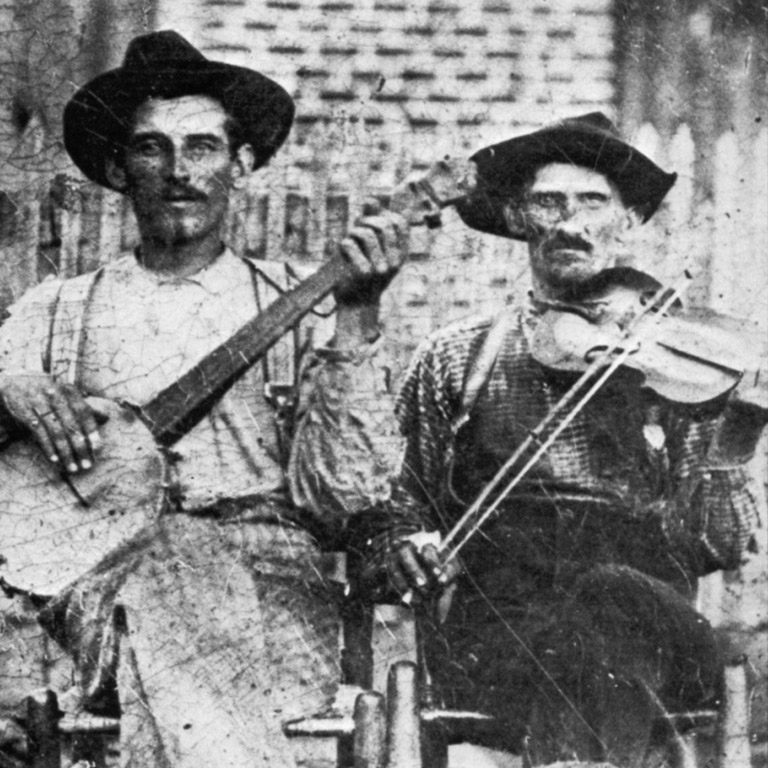
Old-Time Music and Dance Award: Alumni & Giving: Department of Folklore and  Ethnomusicology: Indiana University Bloomington

Tuesday, February 17, 2026

In which we spin a few vinyls


Music (Audit Queue Division): A few of the latest things crashing around my brain have been suggested from listening to 500 Songs.So blame Andrew Hickey, not me. 


There is a series of potpourri albums called Piccadilly Sunshine, subtitled British Pop Psych And Other Flavours, which I intend to comb through for hidden gems. From Volume #Whatever I pulled a song by a group called Lomax Alliance, which was then followed by Jackie Lomax’s solo effort, “Is This What You Want?” The album is loaded with big name performers, and includes producer George Harrison’s “Sour Milk Sea,” Lomax's biggest hit. Lomax has a distinctive voice, and this album has a distinctly Apple Records 1968 sound to it. Some good stuff overall. Lomax was never big in the US, so this stuff is mostly new to me.


Next up, Paul Jones, former singer of the classic “Do Wah Diddy Diddy.” After leaving Manfred Mann he cut this solo album, “My Way.” Very British Invasion, but a little too orchestrated for my taste. Still, interesting enough to stick with him. We’ll see where he goes next.  


To say that Ella Fitzgerald is one of my favorite artists of all time is to say my favorite thing to breathe is air. I owned a gazillion of her albums in my old CD collection, from big bands to jazz festivals to the songbooks to the smoky saloon singing of her later years with Joe Pass. The collaborations with Louis have made it into my GOAT collection which is otherwise 99% rock, because this music is wonderful, any time, anywhere, "beyond category" as Duke Ellington would say. The album “By Popular Request” was never one of my CDs. It’s a collection of covers of rock songs. The best that can be said about it is that one or two of the songs don’t make you wish she hadn’t tried to do this. The worst that can be said about it is that all the rest of the songs make you wish she hadn’t tried to do this. 


While I enjoyed her on the revived Muppet Show, I did not enjoy Sabrina Carpenter’s album “Man’s Best Friend.” She is not performing music for me. May she live long and prosper.


Finally, for now, Badfinger’s “Airwaves.” And we’re back again with that Apple sound but now it’s 1979 and the Beatles broke up roughly ten years ago and music has moved on. Okay stuff from a group that always did okay stuff and occasionally pulled off a good one. A reasonable enough listen. 


Monday, February 16, 2026

In which we go into outer and inner space

Debate: We talked last week about Harvard being a great way to spend too much money for a debate tournament. While I was home watching the golf at Pebble Beach—nice try, Scottie—dispatches arrived regularly from the front in Cambridge. Draw your own conclusions. 


Given their top-dollar price tag, you wouldn’t expect that at one venue they’re using the stairwell alcoves as debate spaces, but then again, given the teeming millions that they let in, it would appear, without any caps, you probably should expect it. They sent a message asking everyone to be quiet around the stairs, a great solution to overcrowding. At one debate venue, the wifi went out for the weekend, which is sort of like turning off the electricity and then announcing that they’ve also run out of candles and fireplace logs. In one building students were banned from bringing in water bottles. Today’s youths thrive on water, living under the darkest of clouds of potential dehydration. I mean, you might as well take away their wifi if you’re going to take away their water. And let’s face it, you’ll need to hydrate if you have to climb five flights of stairs to a JV PF round. (Fortunately I think this wasn’t the building where the stairs were otherwise packed with forensicians going at it full-bore.) My favorite was the Sunday message in the evening asking for any judge within a 20-minute radius to come back and take a speech round in one of three events, even though the round in one of the events had already happened. Much of the Sunday schedule went kablooie, it seems, but who knows why. As far as I know none of my tabbing colleagues were working the tournament. Hmmm...


Books (audio division): I finished volume skaty-eight of Ken Lozito’s First Colony series and have loaded volume skate-eighty-eight onto my cue. These are old-fashioned (in many, many ways) space opera, and either you like ‘em or you don’t, if one were to go by the comments. I think of them as the perfect audiobooks for an hour of mindless daily walking exercise, and they’re salted throughout my library. The narrator is the ubiquitous Scott Aiello which, if you’re an audiobook fan, should tell you a lot. You might like these, you might not. If you do like ‘em, there’s a lot of ‘em, so you’ll be set for life. In other words, if you like space opera, give 'em a try. 

Saturday, February 14, 2026

In which we cost a pretty penny

It’s the weekend, so just some glancing blows. 


Debate: The Harvard tournament is this weekend. Back in the day I used to tell my students that attending the Harvard tournament is completely unrelated to attending Harvard. In fact, winning the Harvard tournament is completely unrelated to attending Harvard. (Winning any Ivy tournament is unrelated to attending that Ivy, for that matter.) Let's look at one example. This year they’re listing 378 entries in varsity PF. The entry fee is $180. That’s $68,040 revenue, for one event. And they are conducting every other forensic event known to humankind, with similar numbers. In PF they are also listing 443 judges. My guess is that maybe one or two of those judges, at the very least the ones without paradigms, are, shall we say, not exactly the person you want in the back of the room when you’ve paid almost two hundred bucks to challenge 377 other competitors. (And of course anything we say here about money elides the the facts that: 1) you have to get to Cambridge in the first place, which many people do from rather startling distances, and 2) you have to get a hotel room or two in one of the most expensive cities in the country.) I’ve always said that you have to be very, very good to do well at Harvard, but that being very, very good is no guarantee of doing well. The numbers are simply against you. Yet people go, year after year, for one reason: the name of the tournament. The competition numbers rig the odds against you before you even sign up on tabroom, and you can blow your entire season’s budget on a handful of JVers in non-bid events. If this were called the Hubba Hubba Faceoff instead of the Harvard Invitational, would you even give it a second’s thought?


Oh yeah. There’s nowhere to park, either. 


Books (audio division): I gave up listening to H. G. Parry’s Declaration of the Rights of Magicians. This is the first of his Shadow Histories series, and it really is about human rights, albeit applied to the use of magic, peopled by real historical figures. I should have liked this on all counts, but I just couldn’t get into it. I’ve done one other Parry book in the past, however—The Magician’s Daughter—and I enjoyed that one quite a bit, so I guess it’s just this series that didn’t do it for me. 

Friday, February 13, 2026

In which we talk about good debate citizens

We are in a hiatus for Presidents’ Day. It kicks off with the Harvard Tournament (don’t get me started on that one) and then everyone goes to Goa for winter break. Next up on my agenda is the Westchester Classic in a couple of weeks, about which much might be said when the time comes. 


Meanwhile, there is a concept we casually refer to as being a good debate citizen. There is, to begin with, a debate community. This community is a complicated organism that comprises everything from simple two-school weekday afternoon scrimmages to the NSDA and NCFL mega-tournaments to National $ircuit tournaments where rich schools travel across the country to purchase their TOC bids. In the middle of the debate community is the bread-and-butter of local tournaments, often within a local or state organization. Whichever, big or small, it is all one community, with many different speech and debate activities, and many different approaches to those speech and debate activities. And everyone in that community is a debate citizen, one way or another.


So what is a good debate citizen? In a word, it is someone who prioritizes forensics overall as compared to their own particular interests. It is someone who believes that debate (and here I’m including speech but I don’t want to keep saying speech-and-debate or the more complete but non-mellifluous forensics) is intrinsically of value, and aims whatever they do toward the end of supporting that value. It is not about their own team winning competitions, although of course they support their students and applaud their wins and commiserate over their losses. It is not about their personal idea of what debate ought to be, where they are right and everyone else is wrong. It is not about ignoring your region in aid of bigger goals, being willing to travel to Cooch Behar to get a bid while ignoring the local high school event just around the corner. Being a good debate citizen, in a nutshell, is doing whatever it takes to get students—all students—as many rounds as possible. It is seeing debate in the broadest terms of education. It is seeing competition as a necessary evil, a means to an end, that end being education. 

Why do I bring all this up? No specific reason, no recent slight or malfeasance, but I think it always bears mentioning, because it underscores everything we do. In a world today where knowledge is under attack, where history is being rewritten in the most bluntly Orwellian fashion, where free speech is a commodity limited by what that speech is saying and who is doing the speaking, where freedom is limited to what other people say you should be or do, the activities of the debate community are in the foreground of true learning, of true free speech, of true personal freedom. Being a good debate citizen, putting the activity above your own interests in that activity, is what keeps this whole thing going. And keeping this thing going means putting out into the world educated human beings who have the personal ammunition to withstand the worst a blighted national culture throws at them. Will truth win in the end? I don’t know. But at least good debate citizens are doing their best to arm their soldiers the battle for it.  


George Reeves: A Superman Suicide? – (Travalanche)

Thursday, February 12, 2026

In which we have our heads in a book

Have Jim Butcher’s Dresden novels made it to the top of the Times bestseller list before? His latest immediately hit the top—more power to him—and I was reminded of an old saw in my Day Job, where we reckoned the best way to get on the Times bestseller list was to have been on the Times bestseller list in the past. There were a lot of reasons for this, and I won’t go through them now, but we thought this because some writers who had once been strong were now putting out something less than their best work, and nevertheless they were selling like the proverbial hotcakes. Authors’ names became brands, and people mulishly stuck to brandnames. I don’t think this is true of Butcher, though, that he’s past his prime. I like the Dresden books, but it’s some of his other work that I am really big on. The Codex Alera books were big hits with all of the DJ staff, and we passed these audiobooks around to practically everyone in the building. The Cinder Spires series is equally as good. Wikipedia says this new steampunk-ish series going to comprise nine books. I’m up-to-date, and a lot of books short of a nonet. C’mon, Jim!


In other publishing news, there have been a bunch of articles lately about the death of rack-size paperbacks. In a nutshell, as a business they’ve been replaced by e-books. I mean, I certainly do 90% of my reading on my Kindle, so I’m not surprised at this. Still, one can remember certain moments in one’s life that revolved around the little paperbacks. My parents used to dump me in the book section of Macy’s when I was a kid just past the Hardy Boys, and I could hang out there for hours. Later, in my adolescence, when one arrived at Grand Central Terminal for one reason or another there was a vast paperback collection at the bookseller downstairs, and walking through it one learned what literature was all about just by seeing the books there in real life. In the 70s there was a used paperback bookstore down the street from us on Columbus Avenue, which is now all mall franchise stores without the mall. It was from these piles of paperbacks in the mystery section that I randomly picked up a copy of Rex Stout’s The Doorbell Rang, and have since lost track of how many times I’ve visited the brownstone on 35th Street. At a church flea market in the 80s I bought half a dozen little Oz paperbacks when my daughter was 7 or so, having no idea that there was more than one of them, and subsequently spent countless hours thereafter reading them aloud, and every single other Baum and R.P. Thompson book we could get our hands on. 


So I wonder how the serendipity of book discovery will proceed in the future. The good news is that the number of independent booksellers in the US is growing, so the act of roaming the aisles and just absorbing the titles and the genres and the names of the authors will continue, but maybe a cheap portable book will no longer cap this particular journey. But books will survive. Reading is an elitist activity that helps define civilization. It opens us up to minds other than our own, going back as long as the written word has existed. It will keep on keeping on, one way or the other. 


Tuesday, February 10, 2026

In which we listen so that you don't have to


Music (audit division): There’s been a lot of movement in the audit queue that I haven’t been talking about. Time to catch up.


“Odyssey and Oracle” by the Zombies. There are those who place this among the rock album GOATs, and I have listened to it many times trying to figure out why. It’s not that I disliked it, but I didn’t find it particularly special. On this go-round, on the other hand, I really started to enjoy it. I may not be ready to put it into my own GOAT collection, but I put it right back into heavy rotation for another listen. All of which demonstrates how sometimes you have to give music a chance in order to appreciate it. (The album was released in 1968, so we're talking a lot of chances here. But over the years one kept seeing it come up in the conversation.) There has been enough music in my life over the years for me to realize that some music takes time and to act accordingly. Yes, more often than not you can dismiss something immediately for one reason or another (see below), but you need to discriminate. Is it an artist you’ve always otherwise liked? Was it really highly recommended by someone whose taste is similar to yours? Is it just different from what you’re used to? Be careful. A second listen never hurt anyone. 


Next up, the Mavericks, their self-titled album. I liked them back when they first arrived on the scene, and I had a few of their albums on cassette back when one had albums on cassette. It is a cliché that rock and roll died back in the 70s and was reborn as country, and the Mavericks are proof positive of this. They show a lot of influences, and when they’re country, well, they're good enough country if you're in the mood, but when they rock, they absolutely do rock. An easy group to like. 


The group Peppermint Trolley Company brought us the original theme song to “The Brady Bunch.” Having never watched the TV show (I was in college when it came on the tube; it was aimed at the generation a decade younger than mine), I wasn’t inclined to appreciate this album from yet-another psychedelic 60s band. After listening to them, I am still not inclined to appreciate them. Not bad, just run-of-the-mill stuff in the shadow of the real thing. That I never heard of them at the time (as I say, I was in college, and like everyone I knew, an avid music fan) is pretty telling. I have this vision of some middle-aged record executive puffing on his cigar and saying "That's what the kids like nowadays so let's throw it against the wall and see if it sticks." This one didn't.


The Rising Sons is early work—1971—by, most notably, Ry Cooder and Taj Mahal. Definitely of historical value and perfectly listenable. 


Foxy Shazam: See above where I say that often you can dismiss something immediately. For me, this group fits that bill perfectly. Contemporary heavy metal, I guess. I didn’t listen to enough of it to pin it down. The Skip to the Next Song button was invented for a reason. Skip. Skip. Skip. Skip...


Moving right along. Next up was Shelby Lynne, the “Restless” album. Again with the country music slash rock music. I am a BIG fan of Lynne, especially her Dusty Springfield album, but most everything else too. “Restless” is among her best. (Not that you care, but Lynne is the former sister-in-law of the artist Steve Earle, also a favorite of mine. Steve Earle has been married 6 or 7 times, depending on how you count a rematch.) (Another curiosity: Lynne won a Best New Artist 1999 Grammy for her sixth album.)


The next thing that popped up in the queue was a single song from a group called Sand. I have no idea why. In a word, not my cup of chamomile. 


Finally, the group Grapefruit. I wanted to dismiss this quickly but I decided that, as noted above, sometimes you have to give music another chance. The stuff was catchy enough, but didn’t resonate. Given its Apple Publishing roots, I figure I’ll try again with their compilation album “Yesterday’s Sunshine.” It can’t hurt.

Monday, February 09, 2026

In which YOU get to decide

 Chuck Barris - Wikipedia


Hey, kids! Now you can play our game at home, starting with that old favorite: WHAT WOULD YOU DO?


Early in the day I had eyes on a student judge who I could tell was, to be gentle about it, ill-prepared for her inaugural adventures at the back of the room. Sure enough, she didn’t acknowledge her ballot for round one—the most important thing I tell people they have to do when I conduct an opening judge meeting, which some people actually hear and pay attention to—but I had just seen her in the tab room and then heading up toward the debate room, so I knew things were at least going to happen, if not exactly according to Hoyle. Since it was a tight tournament, she got another ballot for round 2. Lo and B, she didn’t acknowledge that ballot either. And this time she didn’t show up. Before long one of the teams she should have been judging, and their coach, came into tab to set things aright. I got the message and told the team to go back up to the room and wait for me to find a solution. Then I went out into the hall where I know there was an available judge lounging about, and sent him up to the room to take over. And then, back in tab I slotted him in and removed the prodigal missing judge. 


Keep in mind that some time had passed. Up went the substitute judge to the third floor, and shortly thereafter down came the substitute judge from the third floor. Not only had the prodigal missing first judge finally showed up, despite no longer being listed as the judge, but the other team—not the ones who were in tab with me and their coach—was asserting that the first team needed to forfeit because they had showed up late for the round. (One never did find out where the other team was through all of this before now.) The prodigal judge, happy, I guess, to be relieved of duty, accepted this and sent the teams on their way. What, the substitute judge asked, happens now? We were more than a half hour away from start time, and both teams had dispersed into the ether, thinking that the round was a forfeit. 


WHAT WOULD YOU DO?


Well, here’s what I did. First, I swallowed my inclination to find and throttle the delinquent judge—I simply removed her from the pool for the rest of the day—and then subsequently I swallowed my inclination to find and throttle the other team that had unacceptably asserted that a forfeit was demanded. For the record, we tell the judges that only tab can declare a forfeit. But a team declaring one? Jeesh. For one reason or another by now it was too late to simply hold the round, even if I could find the missing teams in the labyrinth that is Bronx Science. 


There was no question that the first team was not late for the round, because they were in tab telling me about their missing judge, who I then replaced, so you might say they had a really good excuse for their so-called tardiness, if you wish to call it that. But on the other hand, say what you will, the other team was right in that the first team had been AWOL way after forfeit time. 


What I did was a double bye. If the coach of the other team had been at the tournament, we would have had a congenial little discussion (I don’t mean that sarcastically) to enlighten his students about rules and protocols, as they had veered parlously close to unacceptable arrogance in the situation. But, sadly, that team was in the hands of mere chaperones. If I had not been literally alone in the tab room at the time, maybe something else would have been decided. But it just happened that I was all on my lonesome for that particular piece of time, and perhaps running 8 divisions by oneself with all sorts of judge balancing does stifle one’s creativity a bit. 


What would you have done?

Friday, February 06, 2026

In which we stop to smell the non-roses

Saw a preview of the New York Botanical Garden's 2026 Orchid Show last night. I would say it's the best one ever, designed by someone called Mister Flower Fantastic. (There's an article about him in today's NY Times.) I can't recommend it highly enough. It goes away some time in April. If you can, catch it at night. Great lighting in the dark.


Books: Embassytown by China Mieville. Finished this one yesterday. Mieville is concerned here with the meaning of language, which might hold some interest for the odd structuralist debater out there. Along the way, his world-creating is way above average. Another one I'd definitely recommend. 

Debate: The Bronx Winter Local registration closed yesterday. Today it's all the setting up behind the scenes. One of the key things to do is to isolate the high school graduate judges in the JV/Novice pools and pull them in to judge the Varsity kids. In judging, variety is the spice of life. And just because a coach has only a couple of novices in the game tomorrow doesn't mean they shouldn't handle a varsity round or two. It's all in the pooling. When folks register their judges they're asked to identify them as either students or HS grads. With that info in hand, I can then do a bit of scraping around. I mean, there's more to tabbing a tournament than hitting the Make It So button and watching everyone immediately rush to their rounds. (Come to think of it, hardly anyone ever does immediately rush to their rounds. There are some judges especially who like to play hard to get. Which is why at tournaments I wear both good walking shoes and a grim expression. It's the perfect combination.)

Thursday, February 05, 2026

In which we cast our ballot and it stays cast

Debate: It ain't over till it's over, as the saying goes. In debate, on the other hand, once it's over, it's over.

The case in point: Saturday, after an elimination round ended with the judges voting 2-1, some time passed, and one of the judges on the winning side came in to change her vote. She had decided that she had voted the wrong way. At this point, anyone involved with the teams in the debate left the room, and the rest of us were tasked with deciding what to do. 

It was not a hard decision. As one person put it, in the olden paper-ballot days, once a ballot crossed the threshold, it was etched in stone. Submitting an online ballot comprises a similar petrifaction. This has long been the rule of thumb, and short of accidentally hitting the wrong button and coming running into tab immediately thereafter, waving your offending button-hitting hand in front of you and mea culpa-ing up and down the room including from the ceiling, which I have seen happen, once it's over the line, it's over. In the case in question, the original ballot stood. There was absolutely no disagreement among us. 

And here's the thing that happened, as we learned later, which underlines the correctness of this decision. In the round, after the ballots were cast, the one voter on the losing side, the squirrel as we say, gave their reasons first. Which means that after the round was over, an experienced judge laid out why they thought the losing side should have won. The person who came into tab was an inexperienced judge, and she had heard not only the round, but all these good reasons for voting the other way. After some thought after leaving the debate room, she decided that she really should have voted the other way, and came to us to try to effect that change. 

The issue was not the rightness or wrongness of the ballot. The tabroom is not responsible for insuring that every decision is correct. If for nothing else, the reason we have three-person panels in elimination rounds is that there is often reasonable disagreement on how a round went, and subjective analysis is, well, subjective. (There are also rounds where there is no question of who won, so there are both plenty of 3-0 decisions, as well as plenty of 2-1 decisions.) There may be no such thing as a "correct" ballot. But after a round, a judge sits there and decides, by whatever criteria, how to vote. They then cast their vote on that criteria. The ballots are collected, and that is the end of it. Anything could happen after a vote is cast: a judge goes online to research something in the round, a student who was observing talks to the judge and tells them why they're wrong (my students were always disagreeing with me), or as in the situation we're discussing, another judge's analysis of the arguments in the round changes their mind. 

If this were archery, whoever hits the target closest to the center would win. But this is not archery. Some of it is objective, some of it is subjective. Because of the subjective parts, we declare a moment beyond which a decision is set and irreversible. 

Case closed. 

(By the way, if we could recast our ballots after an election, wouldn't Harris now be President?)

TV: First of all, a little Eugene Levy goes a long way. On his show on Apple, "The Reluctant Traveler," he indeed goes a long way. I tired of it long before I ran out of episodes. Alternative travelers, if such a show type appeals to you, are Conan O'Brien ("Conan Must Go") and Richard Ayoade ("Travel Man"). And for the cosiest of cosy travelers, "Great Canal Journeys" with Timothy West and Prunella Scales. Three great series.

Great Canal Journeys 💕 Timothy West and Prunella Scales ...

Digging back into the 90s archives (thank you, Amazon) there's "The Thin Blue Line" starring Rowan Atkinson. Need I say more? Sadly only two seasons, but I'll take what I can get.

And finally, we just finished watching "Dept. Q" on Netflix. It's one of those shows where you immediately are taken by the detecting team or, I guess, you're not. I was. And now we eagerly await season 2 in God knows how many years from now. 


Wednesday, February 04, 2026

In which we go bananeras

Debate: Normally I let the resolutions wash over me, since I don’t have to work with anyone on them anymore. And normally I don’t find them particularly problematic. However, with March-April LD, I’m glad I’m not in it.


Resolved: The United States military ought to abide by the principle of non-intervention.


There is certainly an accepted principle of non-interventionism, which goes into all sorts of areas like sovereignty and R2P—Responsibility to Protect—and the like. The Enlightenment philosopher in me likes all that. I even like arguing isolationism…maybe. What I wonder about is how this resolution will actually play out in the front of the room. If one simply thinks only or intervention and realpolitik in 2026 in the USA, one might prefer to do Model UN instead for these two months. And if one were thinking historically, one might look up military intervention on Wikipedia to be met with the opening warning “Not to be confused with United States military deployments or United States involvement in regime changes," followed by a list of about seventeen and a half gazillion examples of military intervention going back to the Mayflower. My personal favorite is the so-called Banana Wars, which has its own ring to it, but which sounds even better in Spanish, Guerras bananeras. I could go around saying Guerras bananeras until the cows come home. 


Obviously the point of this resolution was its theoretical side. But in today’s LD, and in today’s America, good luck with that. I mean, I would go so far as to worry that although non-intervention is a recognized term of art that implies the word foreign, in these ICE-y times… Fortunately there isn’t much debate at this point in the year, at least around here, aside from the odd qualifier. Oh, yeah, and also our State Finals. Note to LDers at NY States: there’s a lot of lay judges sitting in the back of the room. If you don’t debate for them, your Sunday in the Bronx is going to be very, very peaceful, without the interruption of elimination rounds to disturb your solace. 


Listening (audit division): I am not big on cover versions of songs that do little more than imitate the original. If I want the original, I'll go listen to it. A cover version needs to be in some way a reimagining. Which isn't always easy.


Reimagining certain artists is especially difficult. In the age of artists who compose and perform the songs and are knee-deep in their arranging and production, the end result, as much as is humanly possible, is exactly what they wanted. This is very much true of the Beatles, who were, with their guru George Martin, pioneers in the recording studio (see "The Beatles Anthology" on Disney+). Recorded Beatles music was the apotheosis of Beatle music. What more could be said? So good covers of Beatles music is rare. After Joe Cocker, name two. So it becomes interesting to hear versions of Beatle songs that are reinterpretations or reimaginings or deconstructions or whatever that successfully break from the original recordings stuck in one's brain, and that challenge the canon. Different rhythms, different harmonies, radically different voicings—yes, please. I'll listen to that, out of curiosity if nothing else, but normally I would expect to be disappointed. Which brings us to the subject at hand, the album "This Bird Has Flown," from Reimagine Music in 2005. (Reimagine Music was the brainchild of a man named Jim Sampas. Jack Kerouac was his uncle. I'm sure we'll be dealing more with Sampas in the future.) this album is all of the US version of "Rubber Soul" by different artists in different ways, and I really like it. One or two of the songs I'm not a fan of, but most of it is not only  enjoyable but revelatory. The takes on the music are different from the originals, thus bringing out highly different aspects of the originals that you might not have thought of previously. At the same time, you hear how amazingly good these songs are simply as songs to begin with. I mean, yeah, sure, "Rubber Soul" is on my GOAT list, but at some point one may only be listening and not hearing. Now on this album I'm hearing these songs again fresh, both in the new interpretations and the recollection of the originals that inform them. As it turns out, most of the artists on this album are new to me, and I've captured them on the queue for the future, so we'll deal with them separately when the time comes. In the meanwhile, you can do worse than checking this particular album out now.


By the way, there's apparently at least a 50th or 60th anniversary tribute album as well. Much more to look forward to!


(I was going to write something very long and tedious about this one, but after much thought, I decided against it. It was either too obvious, or too complicated. And hell, it's long and tedious enough as it is!)