Friday, January 23, 2026

In which it is midnight at the oasis

Winter is coming. The forecast this weekend is for a bazillion feet of snow, mixed with ice, hellfire, toads, and the yaws. Time to batten down the hatches.

The downside of this weather is that I don't get to take my daily walk. I always do three miles, listening to my latest audiobook. Given extreme weather, icy streets and whatnot, winter walking can be sporadic at best. I've only managed to listen three times this last week to my latest audiobook. It's hard to keep track of things at that pace. An hour a day, on the other hand, is perfect. Even more perfect (a linguistic impossibility) was my 45 minute driving commute back in the day; you can consume a lot of content in an hour and a half. 

Music (audit division): "One Hour Mama, the blues of Victoria Spivey" from Maria Muldaur is the latest to pop up. I have been a Muldaur fan since her first solo album. I remember a colleague, who had just purchased the record, waving it around in his office and waxing poetic about it. In these pre-internet dark ages, that was about as close as one got to knowing what to listen to. So I bought it, and I've been listening to it, and all her other albums, ever since. This one sounds like it was recorded in the 1920s, which is absolutely perfect. And there's no irony in it. It's a real loving tribute. Muldaur is nothing if not a music historian. I've seen her live a few times when she's traveled to the East Coast, and always enjoyed her shows. And I've also been surprised that they are only sparsely attended. Her voice has mellowed over the years, but she's still there. 

Maria Muldaur

Muldaur is one of the few artists on total replay all the time in my audit queue. I listen to one of her albums, then put the next one at the end of the queue, and so on into infinity. If you're new to her (the heresy!) start with her first album. 

For your enjoyment, a classic performance: The Work Song  "Backs broke bending digging holes to plant the seeds... "

Thursday, January 22, 2026

In which we plan a coup

Music (audit division): I have no idea why I was listening to the Charlatans' first album, but there it was. I found the music interesting, with a lot of influences making the end result hard to pin down, which can be quite a good thing. Nothing jumped out at me, but I enjoyed it, and queued it up for another listen in the near future. Apparently they're a popular British band that's been around for four decades, but they're new to me. We'll see. This was followed by "Gypsy Cowboy," the second album from New Riders of the Purple Sage. Despite my Deadhead leanings, I've never been the greatest fan of the Riders, which had its roots in the Grateful Dead. A lot of their stuff is of the long and moan-y persuasion—and so is a lot of Dead stuff, TBH—but every now and then they pick up the pace and get off a good one. So I'll listen for the good ones, and occasionally pop one over to my main playlist. 

Debate: For years now the Lakeland tournament, officially known as the Westchester SomethingOrOther, has been in decline. It has TOC bids in Public Forum and Policy, which makes it appealing as a late qualifier, but merely limps along in Lincoln-Douglas. It also offers some MS stuff, to which I have paid little attention, aside from noting, back when we were live and in person, that MS kids are very, very, very young. And little. And as a rule, in my opinion, should not be physically mixed in with HS kids. (The whole subject of Middle School debate is an interesting one for another time.) Anyhow, lately the tournament is entirely virtual, and it seems to have been orphaned from its Lakeland roots, as well as, lately, some interim roots. So my inspiration this morning was that the Online Debate League should take it over. We would keep the tournament structure, but normalize it on the back end with the NYCFL infrastructure. This would insure the continuance of the tournament, and could perhaps even beef it up a bit. In reality, NYCFL and Lexington have been doing the heavy lifting on most of it for years now. And Lakeland, the tournament's origin, is a school in the NYCFL district. I mean, what's the downside? I proposed this to the others in the ODL this morning. We'll see where it goes. 

Games: I looked at the new NY Times game, Crossplay. As far as I can tell from playing it for about five minutes, it's Words With Friends, a fad which was, at its roots, Scrabble. Maybe it's something for a boring stretch during a tournament, but I don't see myself getting too involved with it. In other gamey news, today was Wordle 3 / Connections 4 / Genius with 1 pangram. It took me a while to figure out the Crossword gimmick, so a way above average 20 minutes on that one. 

Wednesday, January 21, 2026

In which we tune in to the occasional podcast

I've been listening to This Week in Tech for as long as I've been listening to podcasts, going back to when TWIT was always in the top ten. Once upon a time, podcasting was new.  It was, insofar as choice was concerned, analogous to the early days of television in that it was fairly limited. And I did literally listen on an iPod. Since that time, podcasting has come and gone and come and gone, but mostly now it's here to stay, providing mostly narrowcasting to audiences interested in whatever the podcast is covering. TWIT is my tech podcast, aimed at the listener fairly interested in general technology, hosted by longtime technologist Leo Laporte with a revolving roundtable of guests, mostly tech journalists but occasionally others as well. If you're curious about, say, the high points of this year's CES or Claude AI or the fact that the richest man alive (that schmegeggie) has a net worth four times greater than the second-richest man alive (that other schmegeggie), you've come to the right place. 

Family Listening to Their Radio, 1926.

I used to listen to audiobooks during my commute and podcasts during my morning treadmill exercising, but now it's books on my daily walk and podcasts in the car or cooking, so I admittedly listen less than I would like. I can't listen to anything just sitting there and listening. If I sit down I'll read or, as likely as not, nap. But I do never neglect to listen to Wait Wait... Don't Tell Me It is the perfect length for the weekly trip to the supermarket. 

And then there's the previously mentioned History of Rock in 500 Songs.  I can't imagine anyone interested in the genre not enjoying it, as well as picking up something new from it every time.

Needless to say, I do follow a couple of Disney podcasts. WDW Radio from Lou Mongello and Disney History Institute Podcast. You know who you are if you want to listen to these.

My last regular listen is You Must Remember This, a podcast about Hollywood by Karina Longworth. If you love (or at least used to love) movies, you'll like this one. Longworth takes a theme for the season, and then runs with it. The most recent one was "The Old Man is Still Alive," about the late films of great directors. With both this one and History of Rock,  you should start at the beginning. They're all good. 

Finally, there's the ones I listen to occasionally if the subject moves me. Mobituaries with Mo Rocca. Home Cooking with Samin Nosrat and Hrishikesy Hirway. Imaginary Worlds. And, oh, yeah, there's also Cocaine & Rhinestones, which I put on hiatus, and which I'll go back to if I ever catch up with 500 Songs.

Tuesday, January 20, 2026

In which no one expects the Spanish Inquisition

Watching: Last night I watched the final episode of "Etoile" on Amazon Prime. This series, from the Palladinos, show runners of, among other things, the wonderful "The Amazing Mrs. Maisal," was cancelled after one season. It's a shame. I would really love to see what happens next. It has good characters, and it's funny and smart, and there's all the ballet stuff. It's probably the dance aspect that brought it down: ballet is not America's Pastime, shall we say. Or maybe it was just too hifalutin in general; I mean, how big an audience is there for the likes of shoutouts to Umbrellas of Cherbourg

[Sigh.]

Debate: Bigle X ended satisfactorily. I spent the boring drive home wondering how Kaz, Lexington's coach, can make this boring drive easily eighty or ninety weekends during the season. Other than that, there's not much to report. Catholic Charlie and I challenged Kaz on the idea that there is no room more comfortable for tab than the one she always throws us into, but she insists there isn't. Nowhere on Lexington's campus is there a comfy chair for a poor overworked educator during normal working hours?

Feh.

Kevin P. Dincher: Planning Ahead - No One Expects the Spanish Inquisition!


Music: I realized this morning that I get a lot of my suggestions for music to add to the audit queue from reading the obituaries. Ralph Towner, guitarist for the group Oregon, just passed away. Having never heard of Ralph Towner or Oregon made it a shoo-in for listening at some unknown future date. Whether this is major ignorance on my part or not, I cannot tell. There are more things on Heaven and Earth, Horatio...

Sunday, January 18, 2026

In which the source of our serious fandom is explained

Debate: Shock of all shocks, the morning began with scraping ice off the windshield. But not that much, and one was off to the races pretty quickly, listening to Nilsson advising me to turn on my radio and hearing poor poor pitiful Warren Z complain that the young girls won't leave him be. There are worse ways to start a morning.

Word on the street is that bad weather is icummen in this afternoon, so we're accelerating the schedule as much as we can, which isn't much. More importantly, today's quarterfinal round has moved to tomorrow, so people heading for the hills today will reach them in plenty of time, while those of the elimination stripe will chime in tomorrow virtually. I'll leave tomorrow afternoon, after the worst is over. 

It must be Big Lex weekend. 

Sports ball: In recent years I've gotten marginally interested in football. I was saddened by Buffalo's loss yesterday, as I considered them the local favorite in the playoffs. With the exception of San Francisco, the closer a team is to my house, the more likely I am to root for them. SF is the exception because I once had a $1.00 49ers tee shirt I picked up at the local outlet mall, which insured my partiality until the grave. Who can argue with the $1.00 tee shirt? 

SAN FRANCISCO 49ERS GRIT '47 SCRUM TEE


Saturday, January 17, 2026

In which we chew some bubblegum music

Like so many people, I patiently wait for my jetpack, my flying car, and my gold made-in-America TrumpiePhone. No doubt you do too. It's lonely, living on the edge. 

Music (audit edition):
Obviously on a Beach Boys roll, next up was Bruce Johnston's "Surfin' Round the World." This album sounds as if Johnston was asked in the morning to write a record's worth of surf music, and then recorded it all that afternoon in one take. For Johnston, who subbed in for Brian Wilson on the road and wrote the songs that make the whole world sing, including "Disney Girls," this was an early effort, best forgotten. 

Following Johnston in the queue was a solo album by Ron Dante, lead singer of the Archies. If you've ever wondered where one goes from "Sugar Sugar," I can assure you, it's more of the same, only not as...good? Not terrible though; you can listen to it without your brains falling out. But that is, of course, the faintest of praise. 

The Archies (album) - Wikipedia

Listening (audiobook edition): I finished listening to Record of a Spaceborn Few by Becky Chambers on the way to Lexington. It's the third in her Wayfarers series. I enjoyed the first two more, but this one was fine. It's a rondo, circling from character to character, and it takes a while for the narrative to gel in one's mind, but finally it does come together. I've seen Chambers described as an author of cozy science fiction, a category I admittedly had never heard of, but it's not inappropriate. A lot of SF is dreary and dismal, and as far as I can tell, Chambers doesn't write that sort of book. Good for her. 

Friday, January 16, 2026

In which the sun rises bright over Big Lex weekend

It's as if the weather is luring you in. See my brightness! Feel my felicitous breezes! Glory in my glow! And then, tomorrow morning, we'll spend an hour shoveling snow off the car, hoping against hope that at least one hardy barista will have made it to the Starbucks down the road so that you can at least get a damned cup of coffee. The thing is, I've been to the Lexington tournament about 30 times now. It's in the middle of winter and I know what can happen. Oh, sure, they might throw a warm day at you as a tease, but once they've got you in their clutches...

Music: Meanwhile, I don't recall ever coming across Rebecca Kilgore before reading today's obituary in the Times. If you're a Songbook person, you need to add her to your list: https://open.spotify.com/playlist/37i9dQZF1DZ06evO0vxdLU?si=7cf4f5d15d2546e4

Movies: My generation was raised on the old Universal monsters. They were inescapable on local television. Fifth graders, the absolute target market for this brand of entertainment, would run into school on a Monday full of glee on having seen "The House of" one or another of the Wolfman or Dracula or Frankenstein, a film that would in fact include the Wolfman AND Dracula AND Frankenstein, and maybe an Invisible Man or two to boot. https://crimereads.com/universal-monsters-history/ does a good job of covering Universal's monsters from day one. 

The other genre we fifth graders were the absolute target market for was what I guess you would call Creature Features, not the designation of the local TV station but the movies that were shown in the local theater as Saturday matinees. The place would be packed with kids, the noisiest, least attentive audience imaginable, while on the screen cheesy aliens of one sort or another were attacking earth or greeting earthlings to make soup out of them or whatever. One of these—a good one—I remember clearly to this day: Enemy from Space. This was an entry in the Quatermass series (not that I knew that at the time) in which meteorites land on earth carrying an alien substance. When a human comes in contact with that substance, they become its slave, going on to collect those meteorites to gather that substance which they put into great vats of methane-breathing Jupiter monsters. The only way you could tell if a human was on their side was a telltale rash on their arms. I have to say, this one kept me up a night or two in my youth. The third of the Quatermass pictures was titled in the US Five Million Years to Earth, released in 1967. This one gave me the heebie jeebies when I was in college! Earth was invaded by a plague of scary looking locust creatures from Mars millions of years ago, giving rise to the idea of the devil and still giving off evil vibes in contemporary Swinging London Town. I think they may have spawned humans, making their legacy that much more complex. I highly recommend these Quatermass movies.

Game poster image


None of which has anything to do with the weather in Lexington this weekend, but if things get particularly Satanic, you'll have heard it here first.

Thursday, January 15, 2026

In which we wonder if we're missing something

Between college graduation and my first job, I stayed with my parents in Florida in order to have three wisdom teeth extracted at the same time, after which I was in incredible pain. Pumped full of demerol, I spent three or four days on a couch reading the Foundation trilogy. (Back then, trilogies were defined as a set of three books; nowadays, a trilogy is the first three books of a series that can go on forever if it sells well enough.) My sense of reality and fiction, dreaming and waking, was severely put to the test. It was an experience I have never forgotten. For a while recently I was afraid to watch the "Foundation" series on TV for fear of experiencing a dental surgery flashback. 

Little Shop of Horrors' Review: Jonathan Groff Feeds the Beast - The New  York Times

After my single extraction yesterday, I took a few Advil, had a glass of wine, and woke up this morning feeling keachy peen. Who says there's no benefits to old age? 

NY Time Puzzles: 4/4/1 pangram. Boring.

Reading (paper division): I finished Psmith in the City quickly enough. I have mixed feelings, as I can't quite figure out the character of Psmith. More study is needed. Meanwhile, the saga of finding the next book was abbreviated yesterday morning when we were sorting some books that my daughter no longer wanted and I found a pre-publication copy of a China Mieville book, Embassytown. I haven't read CM for a while, but everything I have read I have enjoyed, especially The City & The City, which I highly recommend. In that one, two cities essentially occupy the same space, and their separate sovereignties are more a matter of psychology than geography. Embassytown got off to a great start in a most complex fictional reality, and I look forward to digging down into it. 

Speaking of sovereignty, back in my coaching days I always found this to be a fascinating subject. I knew of no great philosophical discussion of the idea; most of the writings I could find were realpolitik, which may help understanding how things are but no help in figuring how things should be. Sovereignty is in the news these days, of course, what with China waiting for the US to invade Greenland in order to provide them with enough cover to invade Taiwan. I always hesitate to use any version of the word "real" when thinking about our President these days, but he has really committed various naval war crimes, really threatened every city, state and country that he doesn't like, especially if they don't like him, and really lied about everything he can possibly lie about, even when he's standing next to the truth in a neon pantsuit. The thing about sovereignty is that it is indeed slippery, and depends as much on others recognizing it as anything else (although big guns don't hurt). That is, if enough sovereign states agree that you too are a sovereign state, then there you are, and if you can't see the problems with that argument, you don't have what I would call the Debate Mind. Oh, well. If we follow our government's guidance to focus our diets around beef tallow, it will all become moot soon enough. 

Listening (audit devision): I have tried now many times to get on board with Dennis Wilson's "Pacific Ocean Blue" but without any great success. I don't hate it, and I can listen to it easily enough, but not much of it sticks with me. I bought the 2-disc version when it came out in 2008, knowing little or nothing about it. I would put it on the box every now and then, stubbornly thinking that I must be missing something. Now I stream it every now and then. I still wonder if I must be missing something. 

Wednesday, January 14, 2026

In which we begin to recover from dental assault

I had a tooth pulled today. Way in the back, because it was old and giving up the ghost. It will be replaced in a few months by a more modern version. 

Feh.

Listening (audit division): The Beach Boys, "Sunflower." There are some artists that I simply cycle through because they're worth it. In pre-streaming days, one had a bunch of CDs arranged alphabetically by artist. You would cycle your way through them, and in the long run give your music a good turning out without too much thinking about it. Streaming requires a more deliberate approach, otherwise you'll forget all your favorites and, let's say, never hear "Pet Sounds" again. Not that "Sunflower" is "Pet Sounds" caliber, but it's not bad. To be honest, I think it's overrated, but it's got some good songs and I don't mind listening to it every few years according to my new system. (As for "Pet," the truth is, I'll be sitting around minding my own business, and suddenly I'll think to myself—as compared to thinking to someone else—that I ought to listen to "Pet Sounds" for the gazillionth time. Which I do, coming away every time the better for it.)

Debate: This weekend is the Lexington Winter Tournament, AKA Big Lex, or as I like to call it, Bigle X. It's a long weekend, driving up Friday afternoon, returning Monday afternoon. It's one of the few times I work directly on anything with Joe V, and it's sort of intricate, with mutual judge preferences and varying obligation commitments, which makes it fun. One of the high points of the weekend is always the walk in Antarctic level temperatures to the local ice cream shop down on the main drag. You can bring back somebody a cone and not one single drop will have melted. In the olden days the main drag had a pub where you could grab a burger and a beer, the perfect break from tabbing. Ice cream will just have to do until, if ever, Lexington gets its pub act back together. 

Gaming: While I do not consider myself a gamer, I do have a PS5 and I do always have a game on the go. Lately it's Indiana Jones and the Great Circle. This is my kind of game, more puzzles that combat and a long narrative that goes from place to place and fun characters, especially our hero Indy. The last time I played, a day or two ago, I think I was devoured by a giant snake. On other fronts, I do play Balatro regularly, especially during the empty moments at tournaments. And I see that Apple Arcade will be offering a version of Civilization 7 shortly. Civ, of course, is that game that takes no prisoners, and that many of us hide from as much as we can, because once you start a new game, your life is no longer your own. I have versions on all my devices—Civ 5 on my Macs, God knows what on my iPad. If this new Arcade version is playable while not turning in one's soul, it will be well appreciated. 


Tuesday, January 13, 2026

In which the morning starts out with wonders aplenty

I got birthday greetings this morning from a California psychiatric practice. It is not my birthday, I am not in California, and I am not one of their patients. I also got a daily ad to sign up for Mint Mobile. I've been a Mint Mobile customer for quite a few years now, and really don't need two different accounts for my one phone. And from the real world, an administrative request from tabroom to approve Rather Large Bronx on next's year's NYCFL calendar. I guess thinking ahead (it's in October, on the same weekend it's been on since time immemorial) never hurt anybody.

A great day for email, eh? On the other hand, I zipped through the puzzles, Wordle in 4, Connections in 4 (purple first), close to a personal record on the crossword and 2 pangrams in the Bee (and always to the genius level, because I won't eat breakfast otherwise). Based on this omen, the day ahead looks promising. 

Listening (audit division): Sagittarius, "Present Tense." I did not know this album back when it came out in 1968. If I had, it would either have become an all time favorite or if I heard it at someone else's place, I'd never talk to that person again. I've listened to it twice now and still can't decide. 1968 has a lot to answer for. 

A Haunting in Venice [DVD, Region Free]

Watching: A Haunting in Venice is probably the least of Branagh's Hercule Poirot movies. I had read somewhere that it was the best, but it wasn't. That would be Orient Express. But overall, I can't say I'm a fan of Branagh's interpretation of the Belgian detective. Yeah, sure, who isn't spoiled by David Suchet, but that doesn't mean that other people can't give it a go. But Branagh is too angsty rather than fussy, and that just doesn't grab me as what Dame Agatha would want. Nice to see Michelle Yeoh, though. 

Monday, January 12, 2026

In which we send another tournament into the books

Debate: The ODL tournament Saturday went off with only the most minor of hitches. One judge suffered a blackout the night before and didn't get online until around noon, but online he finally did get. A no-show student judge turned out to have been dropped by the coach not through the tournament email, which I always have in front of me, and not in my private email, which I check regularly, but in my old vestigial email that I check every few days without fail to follow the news from IGN. Otherwise, rounds were scheduled and rounds took place, and at the end of the day a swell time was had by all. I mostly handled this one alone, since I had nothing else going on. I've been known to work an ODL and a live tournament simultaneously, and while it can be done, it's pretty exhausting. This one was merely tiring, and the first thing I did when the last shot was fired was to hit my comfy chair and take a nice little catnap. 

Obits: This morning Times readers were treated to a double blast of 60s flashback. Bob Weir and Erich von Däniken both got write-ups that demanded to be read. I'm not a deadhead in the sense of quitting my job and camping out for a year with my little portable tape recorder, but I have been a fan since their second album, "Anthem of the Sun." (Their first album was nothing special, and nothing particularly Dead-ish.) I only saw them live once, and they were disappointing, but that was always the risk with them, that you might come away awed for life or totally cold. As for von Däniken, Chariots of the Gods was required reading in the 60s for anyone even remotely SF-ish. It wasn't that you took it with a grain of salt, but that you marveled that anyone in their right mind would take it even with that grain of salt. Apparently some people still do, but then again, being in one's right mind nowadays is a rarity few if any of us enjoy. Which is why, after the obits, I read little of the rest of the paper.

Listening (audit playlist division): Sedaka comes after Diamond and then Young if you search for Neil in Spotify. Oh well. "Sedaka's Back" is a compilation of songs he released in England for Elton John's Rocket Record Company. As you listen to it, you realize that the man is a hell of a songwriter. Good songwriting, and good songs, contain things you don't expect, unusual chord changes or notes that other people wouldn't have put there, complete constructions that are musical narratives. It's a communion of craft and art and inspiration that results in something the listener will ultimately luxuriate in. It is not just a collection of great lyrics, although often the greatest popular songs are written both by the music person and the lyricist person. Some people, of course, could do both. Perfection is reached when you can listen to the music without the words, or listen to the words without the music, and still love every minute of it. It took George and Ira both to come up with "When every happy plot / Ends in a marriage knot / But there's no knot for me" usually sung as "there's no knot, not for me" while Cole alone wrote to ascending notes "flying too high with some guy in the sky is my idea of nothing to do" with all those eye sounds... But I digress. (I always digress. It's my inner Tristram Shandy.) Sedaka is in the Songwriter's Hall of Fame, deservedly so. I will continue to listen to all of his work, and grab pieces here and there to add to my main playlist. He is irresistible. (Disney connection? Of course. Does the name Neil Moussaka ring a bell, Food Rocks fans?)

Listening (podcast division): I mentioned "A History of Rock in 500 Songs" a day or two ago. It is exactly what it sounds like, and it is excellent. I'm up to "Sympathy for the Devil," which means I've actually ived through everything the mind behind it, a guy named Andrew Hickey, has said so far. There was no question that people my age really cared about music in the 60s, and followed things as closely as one could when there was no internet. We learned from liner notes more than any other source, plus whatever we picked up on the street. And we didn't go behind the curtain all that much; it was the music that counted, not the producers or arrangers or even in many cases the artists. For instance, I couldn't have told you back then much about all those people were cited in Echo in the Canyon, or more to the point, that they were all in Laurel Canyon. But nevertheless I had all their records and knew their music intimately. So Hickey is, for me, filling in many gaps. He also does good technical analysis, and roots things in their historical time. I cannot recommend this one enough. 

Satanic Majesties Request ...

In the Sympathy podcast (broken down into 4 long parts, and covering more than just that song or that album), there is discussion of "Their Satanic Majesties Request." It is, indeed, the least Stones album of any Stones album, and Hickey does talk about the whole psychedelic era where everyone was throwing the kitchen sink at their recordings, trying to achieve their own Sgt Pepper.  That the Stones next released "Beggars Banquet" was not necessarily, he says, a return to form, as the beginning of what over time would be their real form. I think there's a few songs before Banquet that, ten years later, would not have fit poorly in later albums, but one makes one's own judgments when it comes to taste and preferences. In any case, I mention it because the podcast got me wondering, because Hickey claimed that the mono version is better than the stereo. And of course, Spotify offers both. So yesterday morning I gave it a try, in mono. 

Verdict: better than I remember. Good? Well, okay. Pretentious? Well... But one can apply the old line, a bad record from the Stones is better than a good record from (mostly) everyone else. I can live with that.

I did own the original vinyl, by the way, with the reticular cover. I ended up passing it along to a collector when I was tossing out my mostly worthless vinyl, scratched into oblivion by a series of cheap stereos.

Saturday, January 10, 2026

In which we roll along Merrily


I have this wonderful memory of seeing the revival of Kaufman and Hart’s original 
Merrily We Roll Along on Broadway in the 70s, thus beginning my relationship with the show. Alas, my research has uncovered that Merrily was never revived on Broadway, in the 70s or at any other time. My guess is that I am confusing it with Once in a Lifetime. Oh well. At least I got the Kaufman and Hart part right. 

I do know, however, that I first saw the original musical show at a revival at the Donmar Warehouse in London. This was 2000, and the show pulled down an Olivier for Best Musical. It was a small venue, and it was, as far as I could tell, roughly the original version of the show, with the leads played by young people going back in time. I certainly knew the original score from the record, and could bum-bum-bum-di-dum along with the whole show. The fact that we were in London and this Sondheim rarity was there at the same time made seeing it an imperative. Back then you got your Sondheim wherever you could.


We later went on to see the version of the Menier Chocolate Factory production on the West End. Half-price tickets at Leicester Square and the next thing you know, there’s this whole new and way better play, different music, a great show, mature actors going back in time making for a much better fit. I don’t think this was terribly different from the Roundabout version at roughly the same time, aside, of course, from being fully staged. Merrily had been revolutionized. It could raise its head as one of Sondheim’s best. 


I did not see the Harry Potter version in the theater, but instead this week saw the film of that version. It’s changed some more, but it’s fairly well set now as what I’ve already seen. I enjoyed it, of course, and all the actors were great, especially Lindsay Mendez, although while Radcliffe and Groff did manage to collect a pair of Tonys, Mendez, who was nominated, lost out to Kecia Lewis. So it goes. (Mendez did win one in 2018, so it’s not like her mantelpiece is exactly bare.) But while I enjoyed the movie, which was sold out because someone at our local art house doesn’t understand what people will do to see a Sondheim show and therefore scheduled too few screenings, I didn’t love it. It is, precisely, a filmed play. What this should mean is that we, the film audience, get to see the play that the theater audience was watching. But for reasons that I understand but don’t agree with, the director has chosen to focus in way too much on one performer at a time, regardless of the number of people on stage at that time. It’s not as if the other performers turn their backs and have a quick smoke and check their phones while the lead performer is singing or whatever. It’s an ensemble. I want to see the ensemble. I want to see the whole thing. I don’t want to miss anything. In this version, you miss a lot. 


Anyhow, the question raised above is one that will keep Companyheads up at night. What are the top 5 Sondheim musicals? Should that include only Sondheim words and music, or should we count the pure lyrics ones? Should you allow the film versions to shade your opinion? I mean, Sweeney Todd with no chorus is, as far as I’m concerned, no Sweeney Todd at all. Does the documentary of the recording of Company cast album count? All I know for sure is that in my listing, I do not include Passion. Do you?


Friday, January 09, 2026

In which we tee off with Bing, sing "Kumbaya" with the Weavers, namedrop "The Great One," and fail to find Ry Cooder

LISTENING (Morning audit edition): Once the Andrews Sisters were joined by Bing Crosby on my playlist, I lost interest in them. Despite my attempts to understand Der Bingle, and I think I do, I don't necessarily care to listen to him. I would not be bringing him to my desert island, regardless of how important he was to popular singing. One of the great musical juxtapositions is a visit to Seattle's Museum of Popular Culture, where locals especially lauded are Crosby, Hendrix and Nirvana—there's a Supergroup for you. There's other subjects of interest in this Gehry-design building on the grounds of the 1962 Seattle World's Fair, including a science fiction museum. And when you're finished your visit, you can ride up to the top of the Space Needle. FYI, there's a sign on the ground floor explaining that you will be perfectly safe if there happens to be an earthquake during your visit. Who doesn't breathe a sigh of relief reading that?

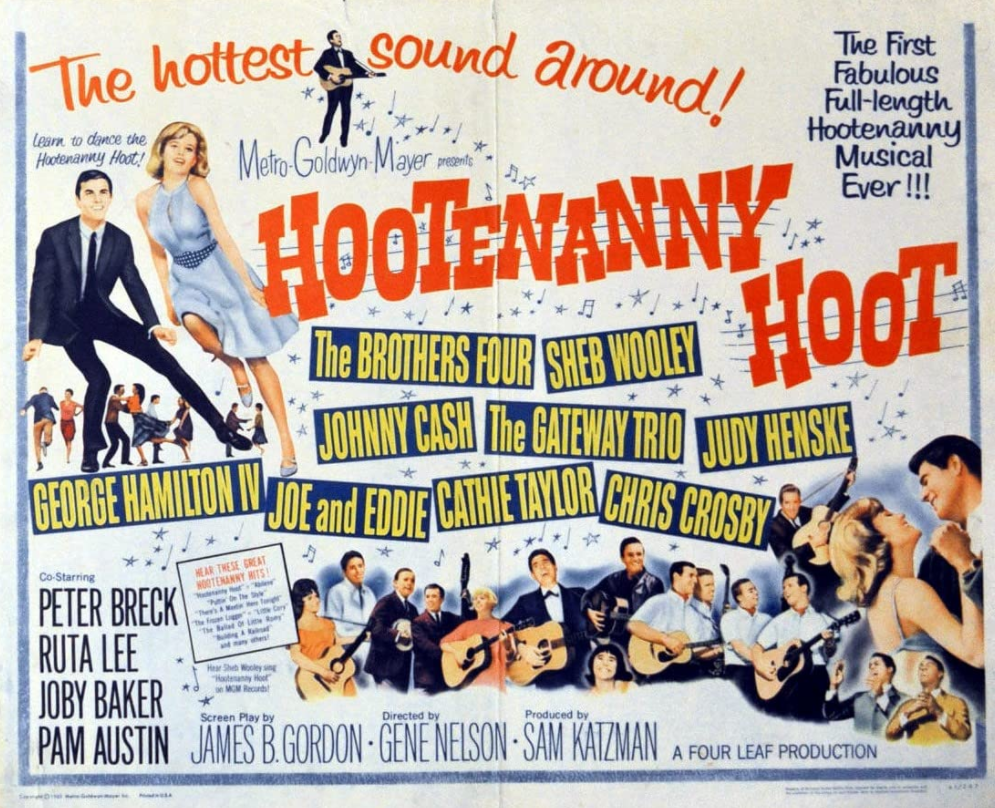
Following Bing and the sisters were the Weavers. God knows why I felt I needed to listen to them. It was 1963 again, when I saw Peter, Paul and Mary perform at a local high school. I think I'm over the whole hootenanny thing now, and I only made it through a couple of tracks before skipping out during "Goodnight Irene." You would have done the same.  

Musical Monday: Hootenanny Hoot (1963) | Comet Over Hollywood

Next up, "Friar Tuck and His Psychedelic Guitar." And no, I've never really wanted to hear an ironic (?) cover of Tommy Roe's "Sweet Pea," so I didn't get far with this one. The music ranged from gentrified rock music for the June Taylor Dancers that you might hear on the Jackie Gleason Show in the 1950s to punk noise to some actually decent psychedelic guitar riffs that seemed to come out of nowhere. This one was on the playlist because of the connection to the ubiquitous 60s figure (and present-day virtual unknown) Curt Boettcher. (This is what happens when you listen to "A History of Rock in 500 Songs." You just follow the leads wherever they take you.) I followed this one for about four tracks, just trying to figure out what in tarnation it was supposed to be. Tarnation offered no answers. 

Next up, the Rising Sons. I think their presence in the queue was an attempt to listen to a group of that name featuring Ry Cooder and Taj Mahal, recorded early in their careers. (Ry Cooder—talk about ubiquitous figures!) This does not seem to be them, and some serious digging came up with nothing on Spotify or Apple Music, except that Rising Sons seems to be the name of about half the groups that have ever recorded. None of this would matter much but I sort of enjoyed this music, which sounded to me like an early 70s group that just missed the boat of popular 60s music. And when I looked, the issue date was indeed 1971. I may never learn more about them, but I'm definitely giving this one a more serious second listen. It all sounded worthy of another look. 

(And studying the poster above, I find it hard to believe that the Hootenanny Hoot dance never caught on. Incidentally, director Gene Nelson played Will Parker in the movie of Oklahoma! You know, "Everything's Up to Date in Kansas City." That Will Parker. Nelson went on to direct more TV shows than you can shake the proverbial stick at.)

In which we confront one of life's greatest challenges

The question is, what to read next?

I find the Jackson Brodie novels a little bit of work, but a good kind of work. Atkinson writes these in a circular fashion, where one doesn't so much follow the plot as follow the characters in their individual narratives, a sort of literary quadrille where you have to keep your eyes closely on everyone for fear of heading off in the wrong direction and throwing the whole dance out of whack. None of the characters are simple, no matter how minor. And no character is all that minor. No wonder I love her work.

Finishing off a Brodie, therefore, Big Sky in the case at hand, causes one to take a deep breath. One is always reading a book: there is no discernible gap between ending one and starting another. But the book that gets started has to contrast in a good way with the book just finished. Normally I wouldn't go for a mystery to follow a mystery; I like to shake things up a bit. But going through my unread Kindle books (my metaphorical nightstand), nothing jumped out. SF as a genre was out, because I'm still listening to Chambers's Record of a Spaceborn Few. A nonfiction title might make sense, but I just wasn't in the mood. In these situations, there are two possibilities. The first is to pull something out of a short story collection. Even if the genre were still mystery, the commitment is so short, usually a single sitting, that the potential genre conflation is not particularly problematic. The second option, the one I took, was to grab a Roderick Alleyn novel. In fact, I have a whole folder of nothing but Ngaio Marsh, as these were practically being given away for a while on Kindle daily deals. 

So why Marsh and Alleyn, obviously dead center in the detective mystery genre, to follow the Atkinson detective? Well, here's the thing about the Alleyn novels. If Atkinson is choreographing a quadrille, Marsh, although juggling plenty of characters, maps out a step-by-step marching narrative in which it becomes almost a surprise when the enterprise turns into a detective story. She creates a setting and fills it with characters different from story to story, and then lets those characters go about their rather unified business—putting on a performance, moving from New Zealand to England, whatever—for roughly about half a novel. And then something goes horribly wrong, as we theme park fans like to say, and she brings in the series regulars of C.I. Alleyn and D.I. Fox, and maybe Troy (artist spouse) and journalist Nigel Bathgate, and the mystery is now pursued most intricately. For me, it is the first half of these novels, which read as simply mainstream period tales, that are the best part, and which remove it from the curse of genre, and thus allow it to follow straight on the heels of a previous mystery without a great collision. 

As noted previously, the Marsh chosen was Surfeit of Lampreys. I read it pretty quickly, and then, well, there we were again, having to pick another book. For a few days I took the other option and read some SF stories. And then, wanting something to last for more than a single sitting, I riffled through the Kindle once again and turned up P. G. Wodehouse's Psmith in the City. There's a little more cricket than I can follow easily—pretty much any cricket is a little more cricket than I can follow easily—but then again, it's Wodehouse, and one bears with it. Old Plum never fails to satisfy; I've read all the Jeeves and Woosters, and many of the Blandingses, on paper and then in audiobooks, and even enjoyed them in dramatizations. (The Fry and Laurie Jeeveses seem to be unaccessible on my streaming services, but Amazon has a quite enjoyable Blandings series to make up for it.) (And speaking of Fry, oh, well, I'll save that for another time.)

And thus the great conundrum of what to read next is, for a few moments, solved. Of course, in a day or two we'll have to go through the whole thing again. So be it. 

Thursday, January 08, 2026

In which we throw together another ODL


We closed registration for the fifth of our Online Debate League events last night. The tournament is Saturday.

I can go back way into the darkest days of the pandemic and find my musings on what we might do with the idea of virtual tournaments after it was all over. It was something that had never before been possible, that was devised and pretty quickly institutionalized by the reigning arbiter of debate activity, the National Speech and Debate Association. The tools were—and still are—there. In-person events are inarguably preferable, but we now had an engine for something else altogether. How to enable that engine was the question. 

A few regular tournaments on the calendar, for one reason or another, have simply gone completely virtual. Space is the usual reason for this. It seems that it has become ever harder for hosts to find enough rooms for a tournament. Colleges and high schools, after the forced hiatus of the pandemic, see no reason to reopen their doors to the thundering horde of forensicians anymore. There's liabilities and custodial concerns and at times even simple ignorance of what these debate people are actually talking about. You want what? When? For the whole weekend? Some venues haven't disappeared completely, but they've split up into partially in-person, partially virtual. Maybe one or two divisions are on the campus, the others are on the computers. There's even the option of hybridization, where some of the participants are there and others are online, which I think is the least attractive of the possibilities, offering neither the benefits of a live tournament nor of a virtual tournament. I showed up in an empty classroom in Paducah after a five hour bus trip to debate some schmegeggie on my laptop? Na'ah. 

The calendar, at least in the Northeast, has more or less completely gone back to live, although some folks have moved toward live for most of the tournament and virtual for the last few elims. This allows everyone to get home after the main body of the event, and limits the virtuality to the elite handful of top performers and judges. This seems to please everyone, more or less. It allows for gentler scheduling of the main event, it empties the buildings, and it gets people home at the most decent hour. 

And then there's our ODL, the Online Debate League. As I said above, thinking about what we could do virtually after virtual was no longer a necessity was the genesis of the project. The thing that especially started it was the simple reality that the northeast has practically no live policy debate anymore. Few schools have policy teams, and few tournaments offer policy divisions. Once upon a time policy was the only debate. Now it's not. (The reasons for this are complicated and a whole other discussion, so we'll table that discussion for now.) But there still are schools, mostly big programs, that still have policy teams. So we created the Online Policy League to provide rounds for those schools. The price is virtually at cost (we do have to pay to use the NSDA's tools), and location is of no consequence. We'd offer novice, intermediate, and varsity divisions. And we'd see what would happen.

The OPL did pretty well. We ran some tournaments, and people came, not crazy high numbers but enough to warrant continuing to do it. Over time we polished up the back end of what we were doing as we got the hang of it. And from there arose the ODL, which aimed to bring LD and PF into the arena. An argument could be made that LD is on the same diminishing track as Policy (again, a subject for another day), and offering rounds seemed like a good thing. And at that point, why not throw in PF too? Yes, PF, unlike LD and CX, is thriving and probably the default high school debate activity these days, and once you've opened your virtual doors to everyone else, what's the harm of including PF? Additionally, we officially folded the league into the infrastructure of the NYCFL, so we'd have some way to handle the financial side of things, operating under the umbrella of a real institution. Et voila, ODL. 

We're rounding the final turn of this season's set of tournaments. I'll be honest with you: I wish it were bigger. I wish more people were taking advantage of it. We had to do a bit of juggling for Saturday's tournament to make it viable, combining a division or two, that sort of thing. Ultimately it will be fine and it will achieve the express goal of the league, to provide rounds, and the educational experience that comes with the rounds, to any interested school. My thing has always been, the more rounds the better. Want to get good? Practice. (What a revolutionary idea.) ODL, if nothing else, is good practice. It is something to prepare cases for, it is a place to try out your ideas, it is a place to get the hang of things, to maybe get judged by someone who will be judging you later in the month at a live high-stakes event. Whatever. I don't feel a terrible need to justify its existence. I just wish I knew of ways to get more people aware of that existence. 

Oh, well. This was, realistically, only year one. I don't think any of us are planning to throw in the towel just yet. At least I'm not. I've got nothing to lost. 

Wednesday, January 07, 2026

In which bei mir bist du schon


LISTENING: Andrew Hickey, in A History of Rock Music in 500 Songs, goes into great detail about the unique harmonic connection among the voices of family members when discussing the Everly Brothers. It's called sibling harmony, and it's connected to shared genetics and growing up together hearing one another's voices. In fact, Hickey uses the Boswell Sisters' "Rock and Roll" as his shared genetics theme music. 

I mention this because this morning we turned over from listening to a very complete Fats Waller collection to the Andrews Sisters, who followed the Boswells as pop culture's major sister singing act. And yes, it's the harmonies that grab you. I love to hear vocal harmonies, which often just blow one away. Take, for instance, the Beatles "Because." Obviously the lads were not related, but somehow their harmonizing, epitomized here, was always something unique. As for the Andrews Sisters, it was a combination of ingredients, from talent to personal charms to working with some of the great Big Bands and the right songs with the right arrangements. I always envision them as in the photo above, completely connected to WWII, either in their lyrics or personal appearances or movie bits. Somehow they ended up in some Abbott and Costello movies, which were regular fodder on 50s television, which is my generation's first association with them, as they were very much of our parent's generation. The sisters' personal story, of which I knew nothing until I did some research this morning, is pretty complicated, with all kinds of sibling disputes over the years. A point of interest: If you're a Disney fan, you'll appreciate (and enjoy) Over Here!, written by the Sherman Brothers, which, according to Wikipedia, in addition to starring the two surviving Andrews girls, introduced newcomers John Travolta, Treat Williams, Marilu Henner, Samuel E. Wright and Ann Reinking. I wouldn't have minded seeing that one. 

Looking at my audit playlist, I see that I have many days ahead of me of Patty, LaVerne and Maxene. I'll try not to bore you to death with them. 

Tuesday, January 06, 2026

In which we have our heads in a book

Easily 50 years ago, Isaac Asimov gave a little talk to the Doubleday staff about how no one was reading books anymore. His point was that, in fact, no one had ever been reading books anymore, and that no one probably ever would. In other words, reading was an elite activity. Recent statistics bear him out. In 2025, no one is still ever reading books anymore, not just printed books but e-books or even audiobooks. The percentage of readers is low, albeit consistently low over time. So one shouldn't bemoan reading as a lost art; it's an art that has never really been found. The reading of books is something very few people do, and that very few people have ever done, at least in the USA. (For all I know the Balinese are knocking back three novels a week each, not to mention the busy library users in Cooch Behar, but I like to stick to what I have some knowledge about. Sometimes.)

If you are reading this, you are probably among this literary elite. Since most of the time you're probably reading for entertainment, you might not be all that proud of yourself. Yeah, I know, every couple of years you try yet again to read Proust in the original Greek, but mostly you're chewing on the latest Grisham or working your way through the complete Agatha Christie or other such pleasurable pursuits. There's nothing wrong with that. One of the things that people who don't read lose is the sheer fun of luxuriating in storytelling. It's like deliberately not listening to music. If you don't read whatever it is you want to read you cut off and waste a whole part of your brain that probably isn't good for anything else. And the same holds true for music, that you don't have to ponder Schopenhauer when you're happy listening to King Gizzard & the Lizard Wizard*. They both fill up that music part of the brain, although in different capacities, just like books fill up the book part.

Obviously, therefore, I would maintain that reading—any reading—is good for the brain, i.e., for your intelligence. You're pushing words around the mental corridors, if nothing else. You may be learning something, however inadvertently, a fact or two about history or science that you otherwise would not have known. You may increase your own empathy by seeing something—anything—through someone else's eyes, be it the French aristocracy or dragons or star-crossed lovers. Whatever. Go for it! And encourage it in others. If you find a book or an author you really like, pass it on. Recommend them to a friend. Give them a copy. Everyone will be happier and wiser for it. 

If you keep reading this blog, I'll be making plenty of recommendations. A couple of days ago it was Mitford's The Pursuit of Love. You probably haven't finished it yet, much less the two sequels, so I'll leave you with that one for a while. 


*They're real. I googled weird band names. 

Monday, January 05, 2026

In which we attempt to discuss that singular anomaly...

READING: On finishing Jane Gardam's God on the Rocks a short while ago, I read Kate Atkinson's 5th Jackson Brodie novel, Big Sky, and I am now in the middle of Ngaio Marsh's tenth Alleyn novel, A Surfeit of Lampreys. Meanwhile, on the audiobook front, I am listening to Becky Chamber's third Wayfarer book, Record of a Spaceborn Few. And yesterday I went on a bit about Nancy Mitford. I bring all this up because I can distinctly recall a time in my life—fifth grade—when I strongly believed that those of the male persuasion like myself should stick to writers of that same male persuasion. That was the way of manly reading! Women writers wrote for girls, obviously. I firmly held this belief until reading Wuthering Heights around that time, and that was the end of that. 

And now one has to wonder where to branch to next. More on Gardam, Atkinson, Marsh or Chambers? Something on series detectives? Idiotic beliefs of children? Other books read in 5th/6th grade?  Required reading in schools? Majoring in English? Jane Austin?

Well, all of these have their interest, perhaps, and I no doubt will get to them eventually, but what caught me up before thinking about any of this was the unlikelihood that one person in a hundred nowadays would get the reference in the post title. I have had a number of conversations lately where I have made some reference or used some idiom that I thought was as common as dropping the name of Mickey Mouse, only to be met with blank stares. That's not terribly unpredictable given that I'm older than God and my references draw from as far back as the Truman Administration. But in this case I have a deeper concern. When was the last time anyone listened to that infernal nonsense Pinafore? How often does one go off into a wild jig while singing "Ring the merry bells aboard ship / Rend the air with warbling wild"? And that singular anomaly, the lady novelist? No, G&S, she is missed. Very much so. 

I know. There is a small but sturdy band of Savoyards who show up for the rare Mikados and Penzances that pop up hither and yon, but there are probably more folks sitting through the twentieth hour of "Parsifal" than singing along with "Poor Wand'ring One." The idea of operetta is an idea that has mostly run its course. I mean, when was the last Nelson Eddy / Jeanette MacDonald revival at the local art house?  (Thank God for that.) You can probably get the odd Strauss or Lehar at a regular opera house, but that's about it. This music once was a reliable pillar of popular culture. Now it's for the rarified amongst us. Well Lah. Di. Dah. I'm agin' it. I rotate G&S* in my show tune listening as regularly as Sondheim. 


Gilbert & Sullivan Caricature Print, 1881. Art Prints, Posters & Puzzles  from Granger

I'm not suggesting you trade in your "Hamilton" album for "Iolanthe," but at least give a streaming listen to "The Mikado," the best of them all**. If you want a livelier up ramp, dig out the 1983 "Pirates of Penzance" movie. I promise you there will be many more G&S quotes in this blog going forward. At least this way you'll have some idea what I'm talking about. 


* Today's mnemonic device: Sullivan wrote the music, and there's a U in Sullivan and a U in music.

** All right, you want to piss and moan about cultural appropriation. It was written in 1885, you muttonhead. 

Sunday, January 04, 2026

In which we use the bloodhounds to hunt down the children

Reading: I tend to run two or three weeks behind in my New Yorker reading. So just yesterday I read their review of a biography of Jessica Mitford. Ah, the Mitfords. They continue to pop up generations after you think they're gone for good. 

For years now, whenever I've gone to a secondhand bookstore, I've been on the lookout for The Sisters, a joint biography of the 6 daughters of this amazing family. After reading about Jessica yesterday I gave in and grabbed a copy for Amazon for my Kindle.

My attraction to the clan started with Nancy. A few years ago I serendipitously fell into a copy of The Pursuit of Love, and I was lost forever. She may be one of the funniest writers I've ever read. By now I've read all of her novels, and I have a copy of her Frederick the Great biography leering at me from the hypothetical bedside table (although there's probably not a lot of yucks in that one). I'll probably head over to Jessica's Hons and Rebels at some point, assuming that The Sisters doesn't satisfy the biographical craving. 

Normally I don't pursue the private lives of writers I like, but the Mitford clan, reflected in the Radlett clan of Pursuit, takes the cake. Only P. G. Wodehouse, maybe, or real life, could have created them. Each of the daughters' lives unfolded in what can only be described as a dramatic fashion. Bright young things, scandalous affairs, Nazi lovers, fame, fortune, misfortune, dismay, and all that other good stuff that the modern-day reality star dynasties can only dream about. 


Mitford in 1932

If you're interested in Nancy—whom I highly recommend—start with The Pursuit of Love. Turn your back on the various TV series for the time being; they're perfectly good for the plot but the writing is something to be enjoyed on its own. After that, how far you are willing to venture down the Mitford rabbit hole is entirely up to you. 

Listening: Fats Waller is still providing the morning soundtrack, and I realize that there's more than one Fats to contend with. His solo playing is often quite different from his usually more mellow band recordings: very lively and intricate and enough to make any amateur want to hang up his ivories and take up bongos. The man was also a virtuoso on the organ, but I have to admit that these pieces are not among my favorites. And then there's his rendition of "Dinah." To understand two geniuses in one swell foop, I recommend queueing up Fats's Dinah followed by Thelonius Monk's solo Dinah. Monk is one of my other piano gods, and his work on the song, in some respects a bit of an evolution of Waller's, demonstrates beyond a doubt both how jazz evolved over time, and from one man to the other, and how personality can show in one's playing.  

Saturday, January 03, 2026

In which we get up

For someone of the insomniac persuasion, one of the great joys of retirement is the lack of an alarm in the morning. One wakes up when one wakes up, as a general rule making up for any disturbances the previous night. You sleep as much as your body wants you to sleep, not how much your job wants you to sleep. I do, of course, still have to wake up early on debate days, and I've got my phone alarm set for nuclear blast to make up for my diminished hearing abilities, but those days are occasional, and most mornings maybe it's six o'clock, maybe it's eight o'clock, and always it's whenever. Then it's a question of easing out of bed as the spirit moves me.

Eat your heart out.

The first activity of the day is reading first The NY Times and then the local Gannett paper. Having conceded that the grifter in the White House can do way more than I can ever cover in ConstiToonies, I've given up looking for fodder in the corners of his administration, my regular source. (There's not much humor potential in an all-out war on Venezuela, for instance, which seems to be the latest news from the center of the administration debacle.) So I read the interesting stuff in the papers. Today my longest article was the piece on the West End's Paddington. I haven't seen the movies, but I have to admit I will probably try to see the play sooner rather than later, along with granddaughter Rowan. My debate colleague Frank O'Bono gave it high marks (as has every critic under the sun), and it sounds perfectly familial. Maybe this fall. As for the local paper, today as usual it was only the funnies, (or comics, if you prefer), but sometimes there's something interesting in there about road closures or new restaurants or new roads or restaurant closures. 

PUZZLING: The second activity of the day is the Times's puzzles. Wordle first (in 2 today, which always seems like a disappointment as it doesn't come close to percolating the little grey cells, although it does earn you a little badge), then Connections (in 6 today, with a lot of staring and seeing nothing), then the Crossword (in about 12 minutes this morning, which is a nicely satisfying time), then the Spelling Bee (always as long as it takes to get to Genius; today was run-of-the-mill with only 1 pangram that I could find). Breakfast usually goes along with the Bee since it has no timer and can be done with one hand on the computer (all of the above is on the Mac, not the phone or iPad) while one shoves egg into the maw with the other. 

And then it's off to face the day.


Friday, January 02, 2026

In which your pedal extremities are colossal

It's been a while since I've done any blog writing. This whole thing started when I was both coaching debate and working my day job, and then I retired first the former and a bit later the latter, and the narrative thread pretty much disappeared. I was busy with this, that, and the other, tabbing a lot of tournaments, creating comix (e.g., ConstiToonies), keeping quite busy, thank you very much, but I did miss just good old-fashioned writing. So here we are again.

LISTENING: I listen to rock/pop/contemporary albums in the morning. Half an hour to an hour, maybe. I create playlists called Audit, followed by a number. Whenever I see an artist or group unknown to me mentioned favorably, I'll go to Spotify and add them to the latest audit list. (I keep the number of tracks of each of these lists roughly at 300, for manageability's sake.) I'll also occasionally throw in an artist or group that I think I know inside and out, because otherwise in the streaming world you end up never listening to your old favorites. And when an artist I've never or only vaguely heard of dies, they too get tossed onto the pile. As I listen to these audit playlists, occasionally a track will strike me as worth saving, and I'l add it to one of my main playlists. (More about them another time.) And if the performer strikes my fancy, I'll add more of them to future audits.

I mention this because this morning I was treated to a compilation of Fats Waller music. As a piano player myself there are certain performers who have a special appeal to me, and Waller is one of them. Obviously his left hand is a machine, but his right hand also intrigues me. There's all these interstitial diddly diddly diddly riffs that he just throws off because he can that make his music light and sweet while keeping it swinging at the same time. And he has that fun entertainer's singing voice that takes over after what is usually a long piano opening to a number. Plus he wrote a hell of a lot of songs, many of them now standards. (Come to think of it, I've seen "Ain't Misbehavin'" a number of times, both on broadway and on tour and I think even on television.) How did he make his way onto one of the audit lists, which are mostly rock? Well, I hadn't listened to him in a while and his name just popped into my head and then I popped him into an audit. No better reason needed.

By the way, if you want to follow up on this, head over to YouTube to watch him perform. There's a decent amount of material, including his Soundies and his performing in "Stormy Weather." 

I just love his work.

(So, apparently, does Maria Muldaur: https://youtu.be/O7RUhBdakx4?si=L1rYpSanwqQqCdbk)